
AZZA Silentium Case Review: Knowing the Limits
- Posted in
- Cases/Cooling/PSUs
- quiet
- AZZA
Noise and Thermal Testing, Overclocked
As I mentioned before, the overclocked testbed is expected to be a shade too much for the AZZA Silentium. It'll run, but thermals tend to overpower cases like this one and result in similar or higher noise levels under load than competing cases that are geared for performance rather than acoustics, and usually at noticeably higher temperatures.
Again I've included the test results of the Nanoxia Deep Silence 1 and Fractal Design Define R4; note that both of these cases also offer decent radiator support (something the Silentium lacks.)
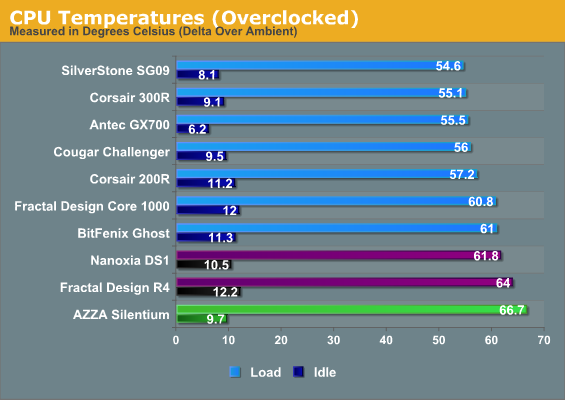
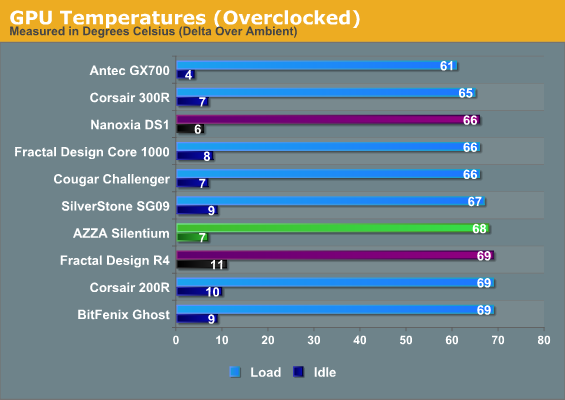
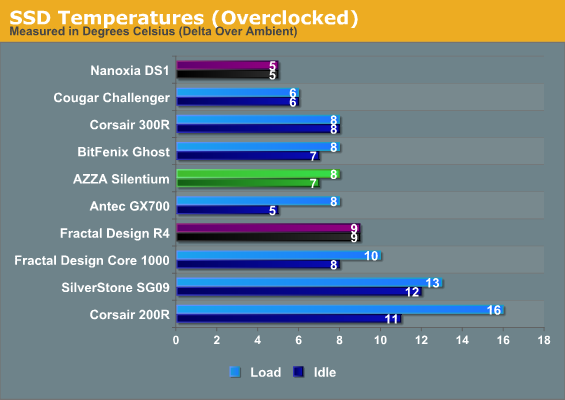
Uh oh. When we start seriously pushing the Silentium it loses measurable ground to the Ghost and the Define R4. The Define R4 is a more expensive case, but the Ghost is the same price.
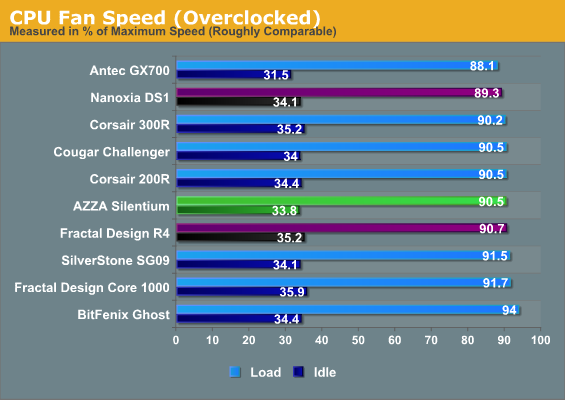
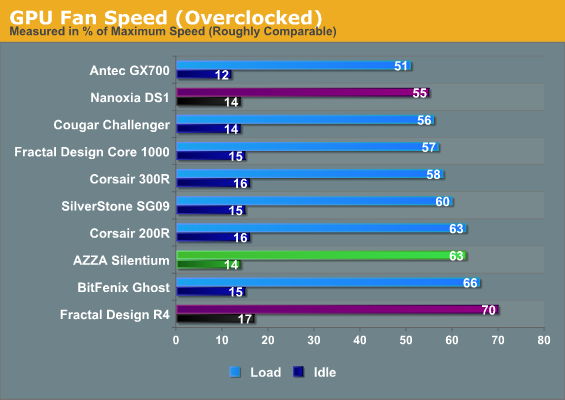
The R4, Ghost, and Silentium are still basically on the same ground while Nanoxia's DS1 continues to operate in a class of its own.
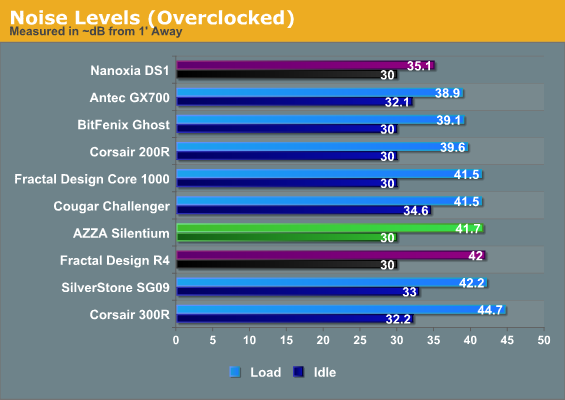
Remember what I said about noise levels in silent cases? This is what happens. The Ghost is able to do the best job of keeping our overclocked testbed quiet, but again the DS1 is able to handle the increased thermal load more gracefully.
We have to keep in mind that the Silentium simply isn't designed for this usage scenario, and that's fine. But in the process, cases like the Ghost and R4 start to look like better deals. The R4 is more expensive, but the Ghost isn't.
Originally published at https://www.anandtech.com/show/6705/azza-silentium-case-review-knowing-the-limits (Wayback Machine).