
Dell Precision M6700 Notebook Review: The Enterprise Split
Workstation Performance
Here's the one place where the Clevo notebook will be unable to keep up: workstation performance. The Dell Precision M6700's i7-3920XM and Quadro K5000M can finally stretch their legs here, as these are the benchmarks the M6700 was really designed for. Since I only have results for a couple of mobile workstations, I'm including the desktop workstations I've reviewed as reference points.
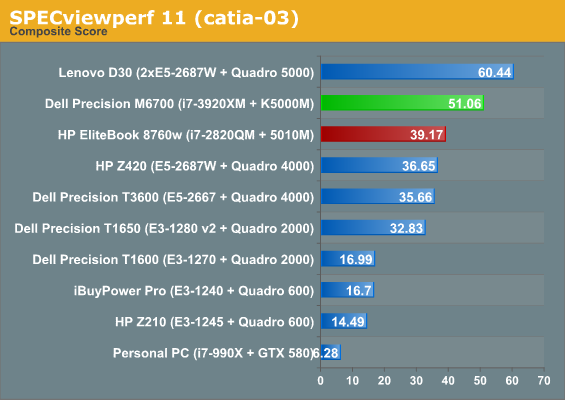
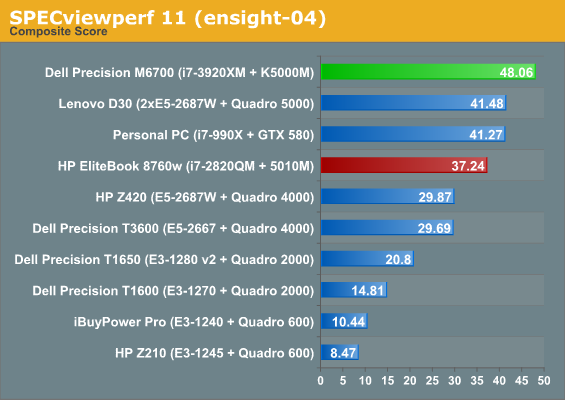
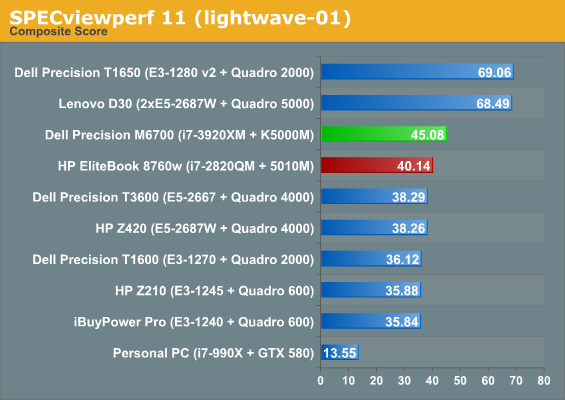
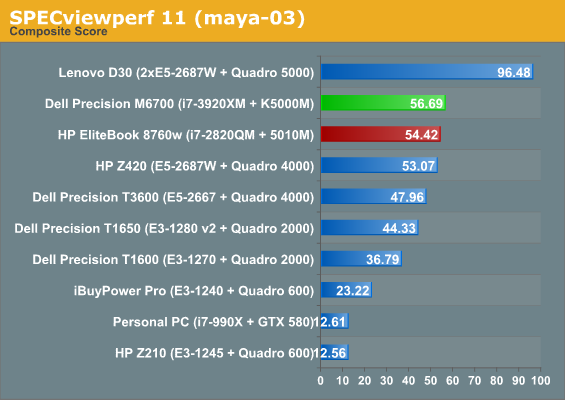
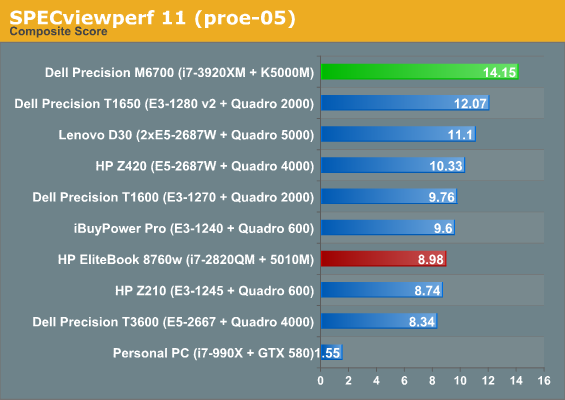
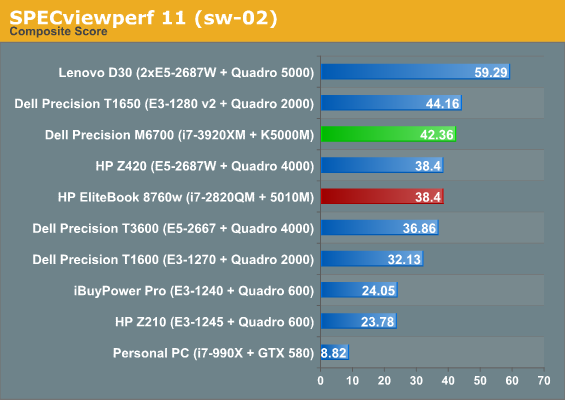
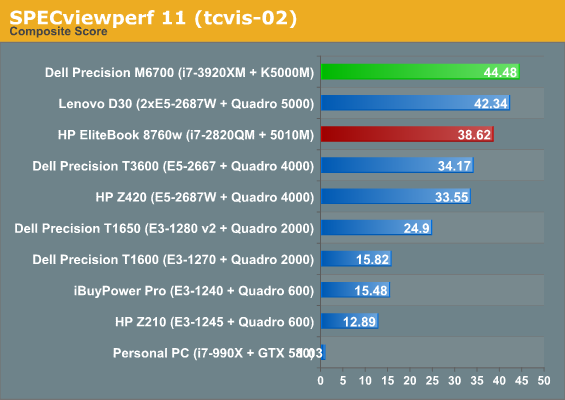
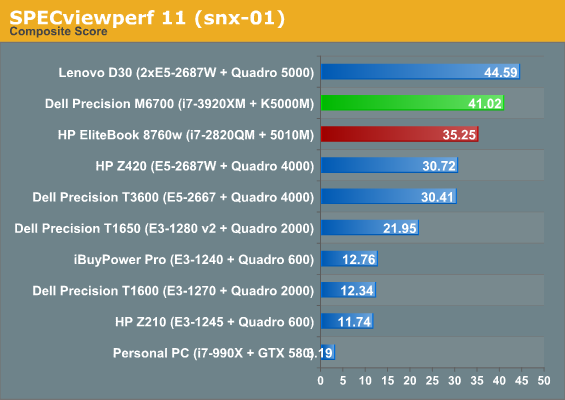
The sheer brute force of the Quadro K5000M, despite its substantially weakened FP64 performance, is enough to get it to score consistently better than the last generation GF100-based Quadro 5010M. Unless you need a high end desktop workstation GPU and a chip with more than four cores, Dell's Precision M6700 is capable of being a very potent workhorse. Remember that a Quadro 5000 desktop card costs almost $2,000 on its own; that puts the M6700's steep workstation price tag into a bit of perspective.
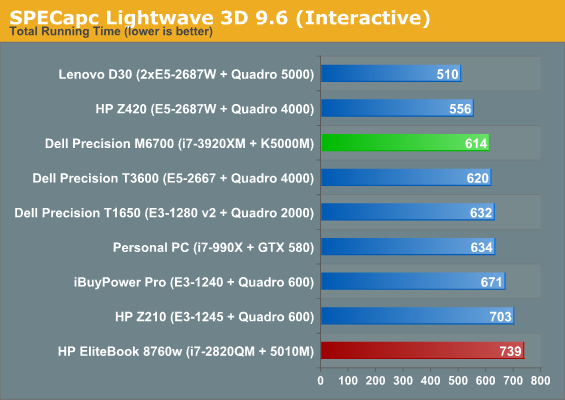
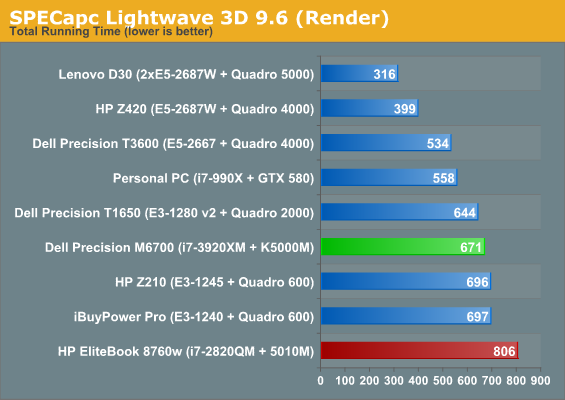
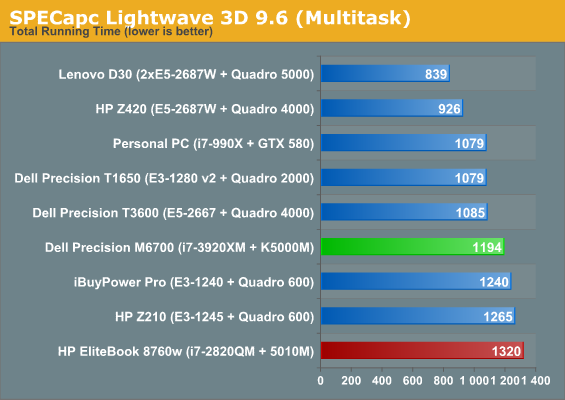
The M6700's CPU unfortunately gets hit harder in SPECapc Lightwave. Faster CPUs with higher core counts are the order of the day here, and though the i7-3920XM may be able to keep pace with a top-of-the-line Ivy Bridge CPU in short bursts, eventually its turbo speed settles down. Switching to a desktop workstation can still shave 33% off of Lightwave's render time, but you'll pay through the nose for it.
Originally published at https://www.anandtech.com/show/6512/dell-precision-m6700-notebook-review-the-enterprise-split (Wayback Machine).