
The Intel SSD DC S3700 (200GB) Review
Final Words
Intel is back, but with an enterprise focus. The S3700 is one of the most exciting drives I've had the opportunity to test. Its architecture is more than just a better, faster evolution of designs that came before it, the S3700 is truly something new.
I view the evolution of "affordable" SSDs as falling across three distinct eras. In the first era we saw most companies focusing on sequential IO performance. These drives gave us better-than-HDD read/write speeds but were often plagued by insane costs or horrible pausing/stuttering due to a lack of focus on random IO. In the second era, most controller vendors woke up to the fact that random IO mattered and built drives to deliver the highest possible IOPS. I believe Intel's SSD DC S3700 marks the beginning of the third era in SSD evolution, with a focus on consistent, predictable performance. At least compared to the drives/controllers used in this article, Intel's S3700 appears to be ahead of the curve. I suspect the next major eras will be the transition to PCIe based interfaces, followed by the move away from NAND altogether (there may be another distinct period in between those two as well).
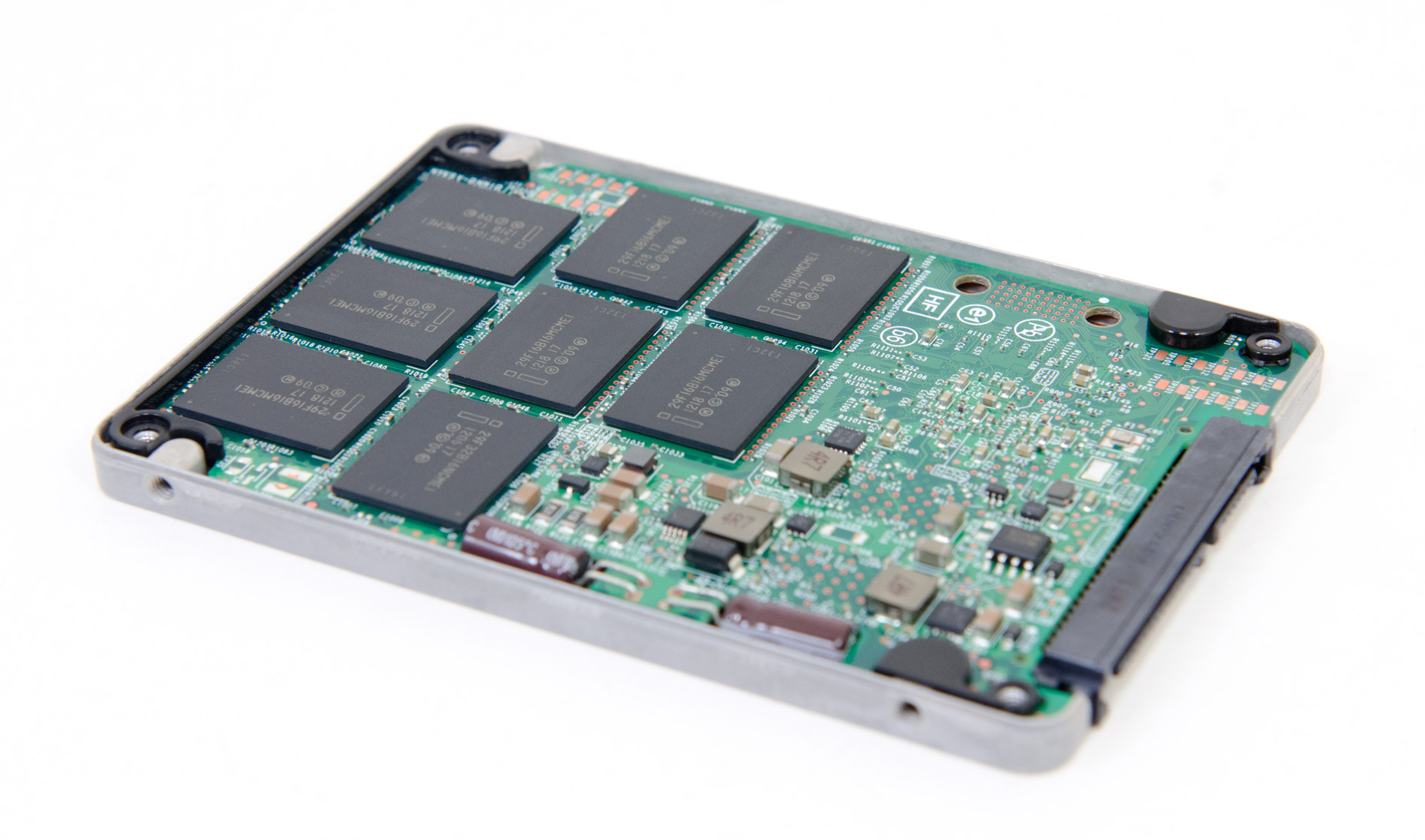
The S3700 is an extremely exciting SSD. For its indended market, the S3700 continues Intel's push to reduce the cost of enterprise storage. The days of spending thousands of dollars on a relatively small amount of NAND for use in a server are over. Intel is guaranteeing 1 - 14PB of write endurance on the S3700, which should be more than enough for the vast majority of workloads (even overkill for many). Performance and IO consistency are both very good, at least when dealing with 4KB random writes. With the exception of smaller-than-4KB, unaligned IO performance the S3700 is among the fastest enterprise SATA SSDs we've tested. It's a clear improvement over all of Intel's previous drives.
With the exception of power consumption, the S3700's controller is the true third generation successor to Intel's X25-M G2. It focuses on a new aspect of performance that, until we move to SATA Express, should be the target for all high-end SSD controllers going forward. Depending on the application, consistency of performance can be just as important as absolute performance itself. I can't stress this enough: we are largely saturating 6Gbps SATA and random IO is more than good enough for many, delivering a better experience should be everyone's target going forward.
It's good to see Intel back in the saddle with a competitive home grown controller, my only complaint here is that I wish we could have the same technology applied across the entire market. Although less profitable, the consumer SSD space is in need of more high quality competitors that push the industry forward. Without Intel aggressively playing in both the consumer and enterprise spaces I worry that we'll see a race to the bottom with manufacturers focusing on reducing cost without necessarily prioritizing innovation. The IO consistency offered by the S3700 is something I know I wish I had in my notebook. I frequently encounter hiccups in performance that I do my best to combat by throwing additional spare area at the problem, but a more fundamental architectural solution would be ideal.
Update: I'll be answering questions about the S3700 live from this year's SC12 conference. Head over here to get your questions answered!
Originally published at https://www.anandtech.com/show/6433/intel-ssd-dc-s3700-200gb-review (Wayback Machine).