
Toshiba Satellite U845W Ultrabook Review: Going Wide at 21:9
Display Quality
While the display of the Toshiba Satellite U845W is arguably it's selling point, I regret to inform you that it is unfortunately still a TN panel. The 1792x768 resolution makes it much improved for productivity purposes (making it easy to edit two documents side by side, something Toshiba goes out of their way to make even easier by including software that resizes windows to suit the wider display) and even the movie we use to test battery life looked a bit better since no letterboxing was occurring, but contrast and color are still middling.
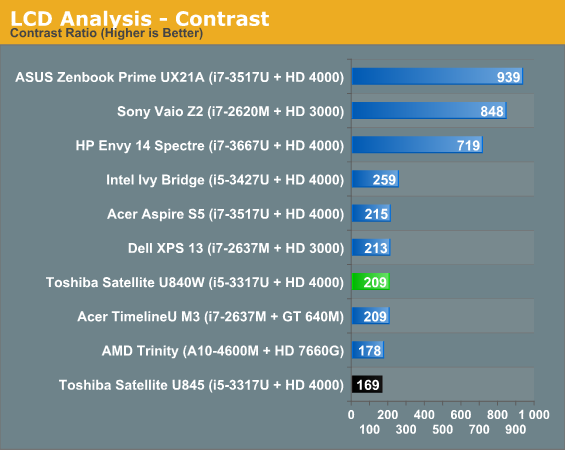
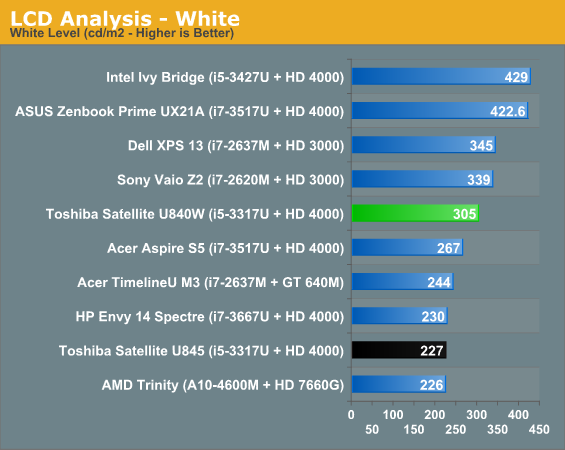
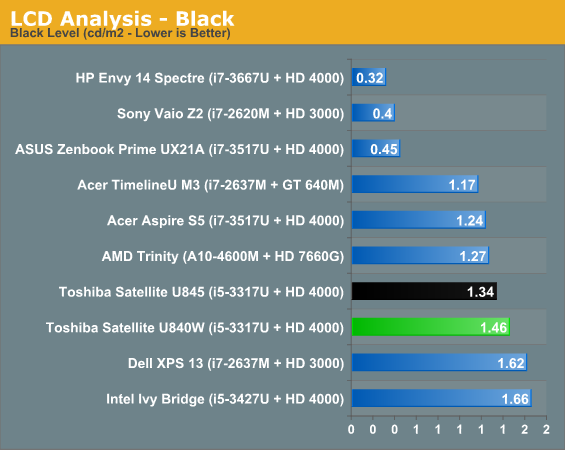
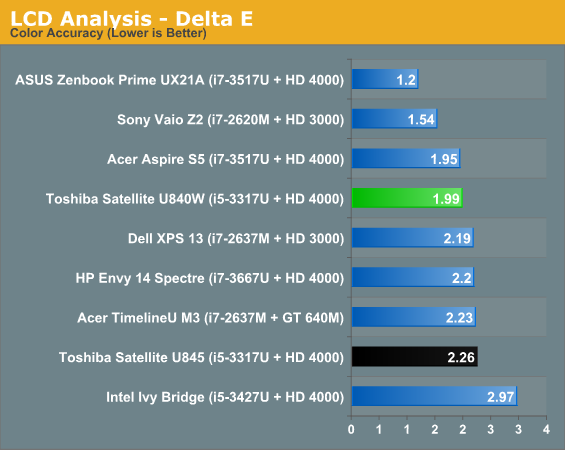
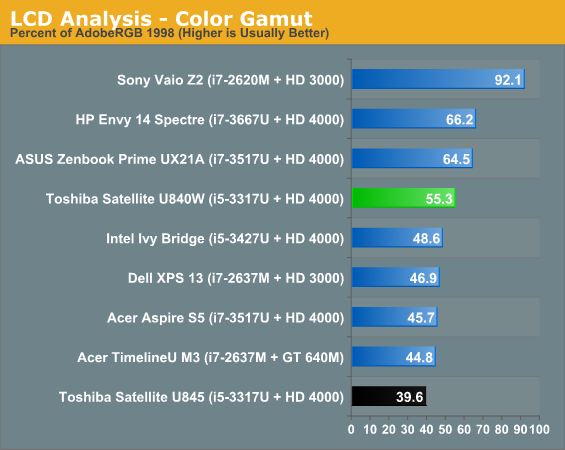
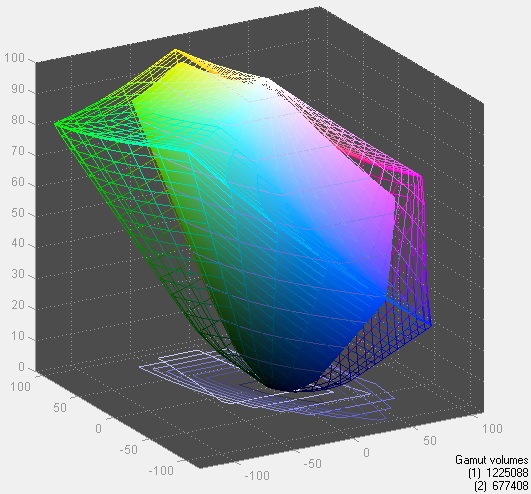
You can see it's not quite as bad as TN panels typically are, and dpi is actually bit improved from a typical 14" 1360x768 display (remember that this one is actually shorter than 14" panels usually are), but it's still not a huge winner. It's very bright, but the high black level takes its cut from the contrast ratio. Viewing angles are average for a TN display, and I feel like this resolution would be better served by an IPS display (then again, every resolution would be better served by an IPS display.)
Battery Life
What I'm particularly curious about is, given that everything else is equal between the Toshiba Satellite U845W and the more traditional Satellite U845, how much running time is sacrificed in the switch to a slightly larger, higher resolution display?
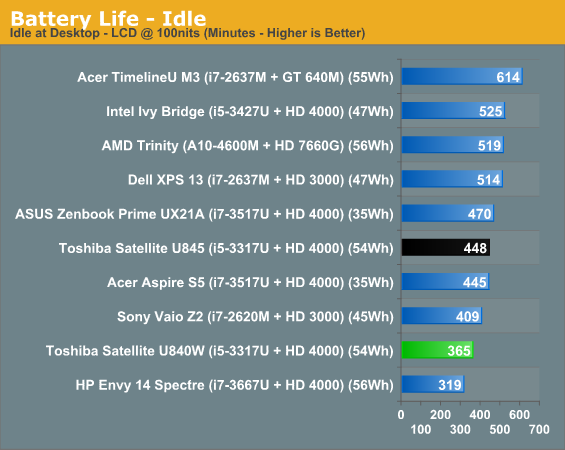
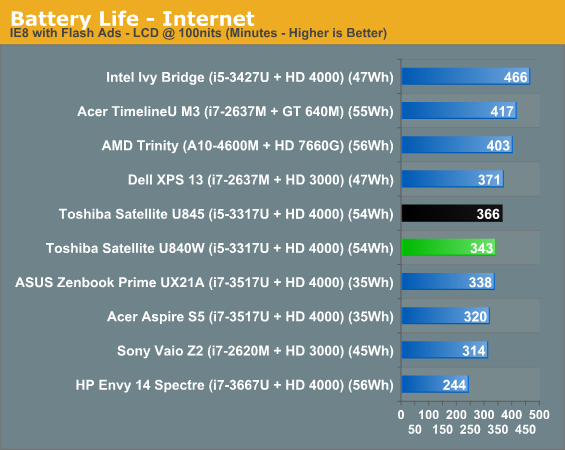
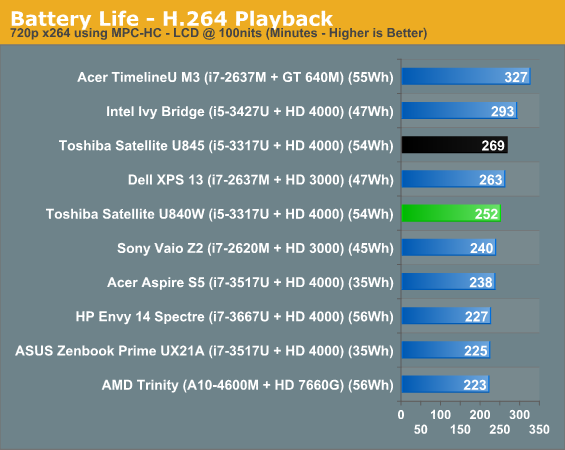
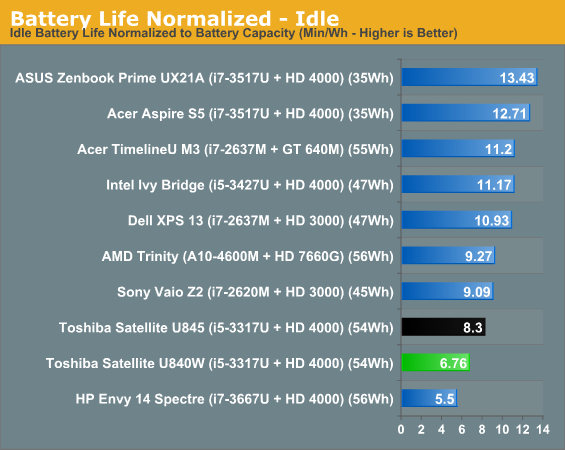
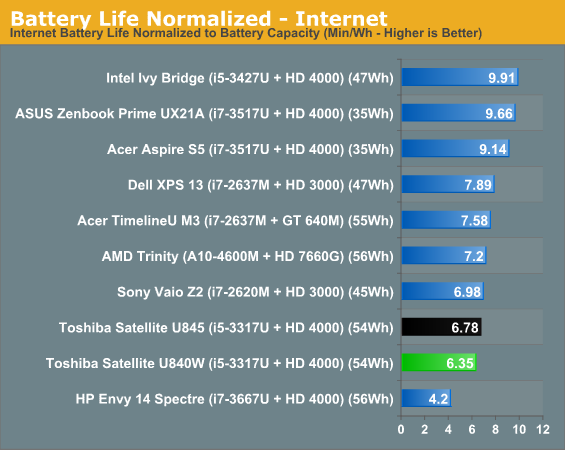
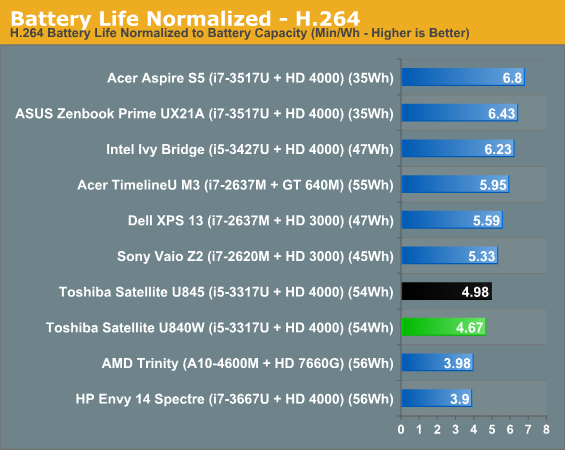
Happily, while the U845W takes a bit of a bath in idle usage, the differences in actual productive use are smaller to the point of mostly being negligible. That's good news since the substantially wider display is much better for productivity than the usual 1366x768 14" panel tends to be.
Heat and Noise
I'm particularly pleased with how Toshiba designed the cooling system of the Satellite U845W. Ultrabooks and even just more portable notebooks seem destined to be used on your lap, yet vendors keep putting fan intakes on the bottom, waiting to get suffocated. The U845W doesn't make that mistake; the entire back of the notebook is ventilated while the bottom is one solid piece of plastic with no ventilation to worry about stuffing up. And because the ultrabook is so wide, that means a substantial amount of surface area is being opened up for airflow.
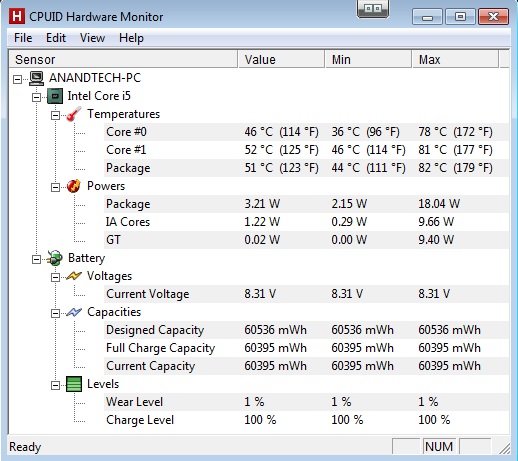
Load temperatures around 80C are basically unheard of in an ultrabook, where thermals are routinely sacrificed for the form factor. This is really quite good, as the surfaces of the U845W barely get warm, and even the fan speed remains relatively low. The U845W runs cooler and quieter than most any other ultrabook I've tested, and Toshiba should be proud of themselves.
Originally published at https://www.anandtech.com/show/6370/toshiba-satellite-u845w-ultrabook-review-going-wide-at-219 (Wayback Machine).