
The Razer Blade Review
Razer decided to go with a dual-core Core i7 instead of a quad, a decision that makes sense given not only the smaller power envelope, but also because of the higher frequencies of the dual-core parts, which should result in better gaming performance. The only configuration of the Blade comes with the fastest dual-core part that Intel ships, the i7-2640M, which has a base clock speed of 2.8GHz and turbo clocks of 3.5GHz and 3.3GHz on one and two cores, respectively.
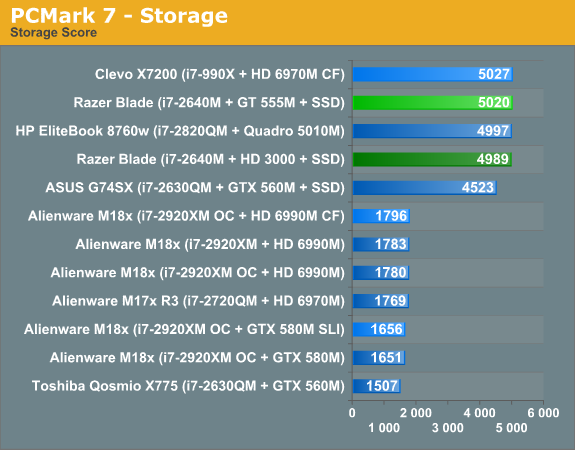
At one point, Razer planned to ship the Blade with a 320GB 7200RPM drive. Thankfully they switched the platter out for the 256GB Lite-On SSD, because a system this expensive without a standard SSD would be a travesty. Razer has taken advantage of the fast SSD and tuned the Windows install for the fastest possible boot. And it’s pretty blazing—this is the only time I’ve ever seen a system finish booting Windows before the animation finishes. The quantitative representation of the word blazing? 15.6 seconds. It’s quick.
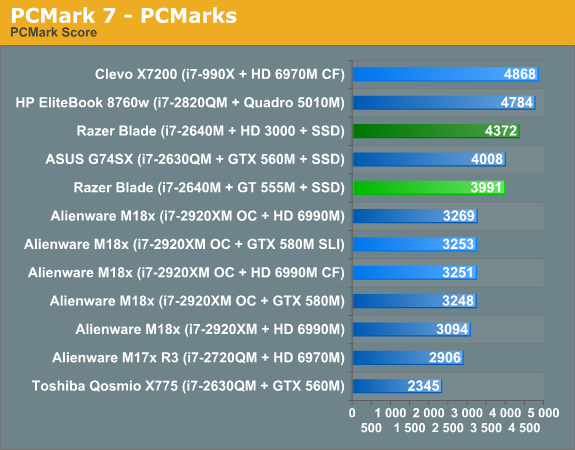
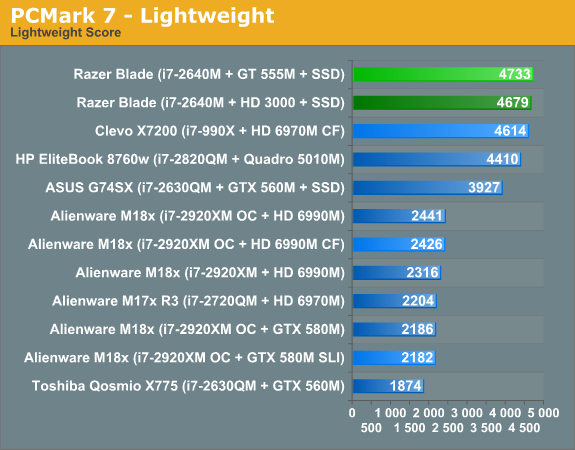
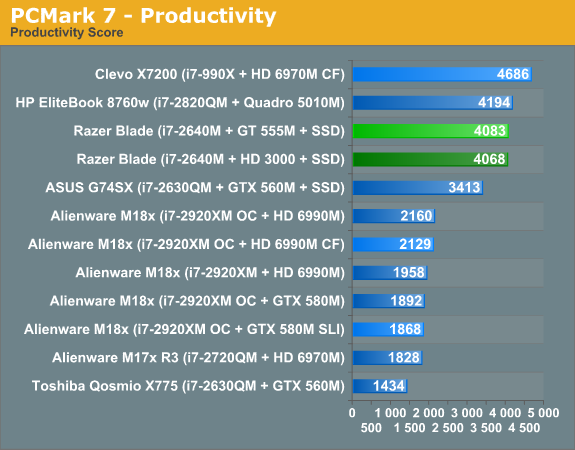
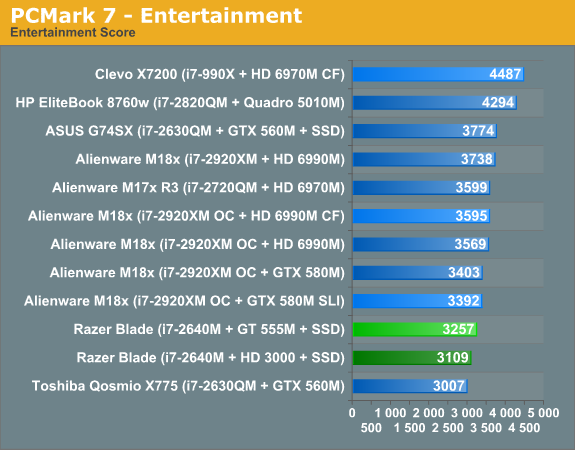
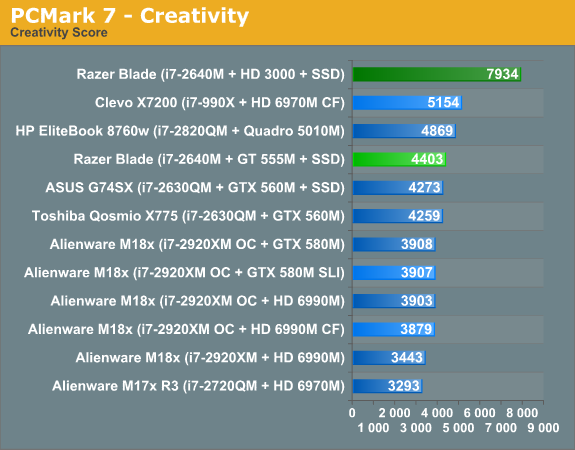
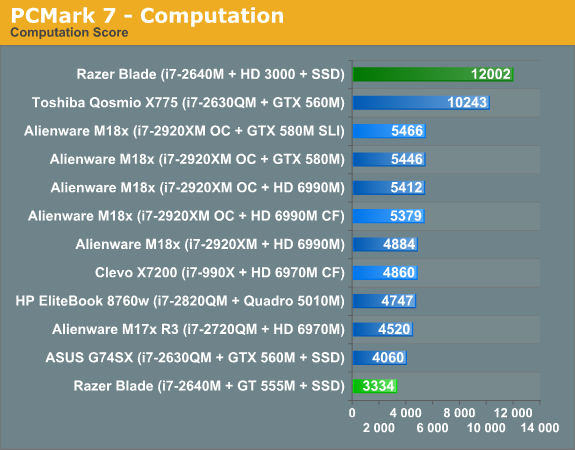
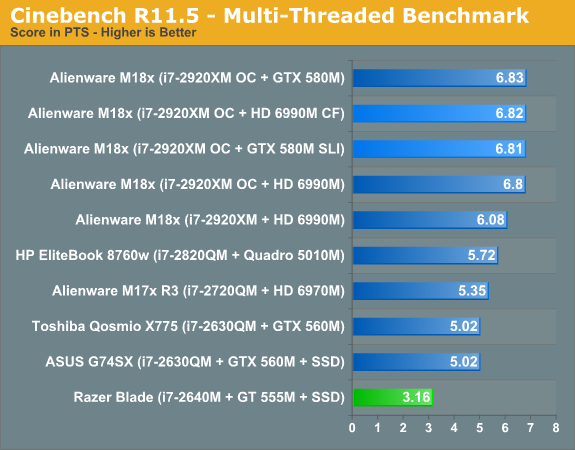
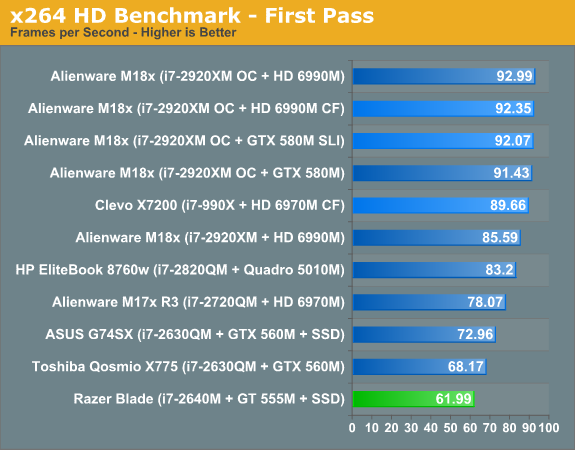
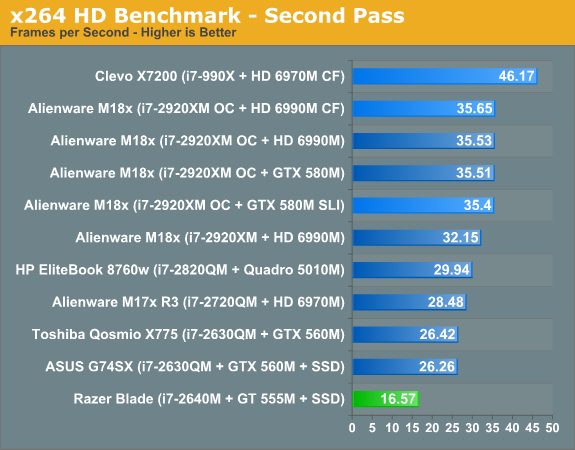
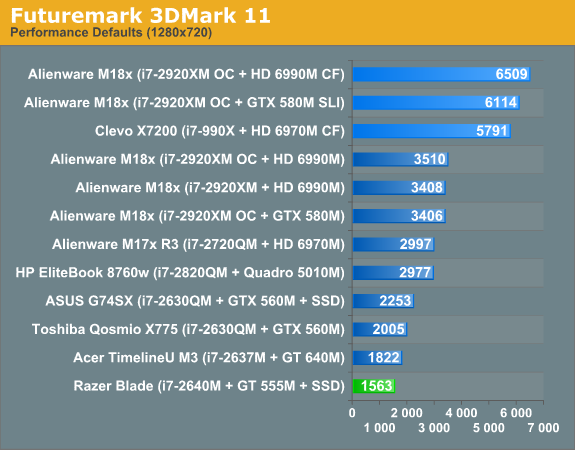
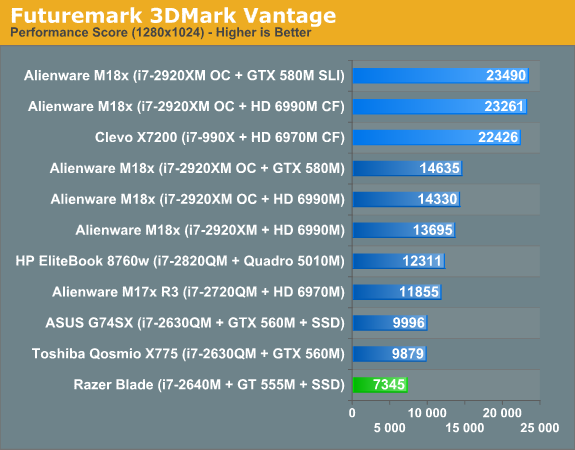
The general application performance is pretty solid and lands about where we expect—it won’t match the quad-core stuff in heavily mulithreaded workloads, but it’s faster than all the other dual-core parts. The SSD gives the Blade a huge boost in PCMark 7, though we’re not huge fans of putting a lot of weight on synthetic benchmarks like Futuremark’s various suites.
Originally published at https://www.anandtech.com/show/5606/razer-blade-review (Wayback Machine).