
Holiday 2011 Midrange System Buyer's Guide
The AMD A8-3850 APU
Since its retail availability in July, AMD's Llano series of APUs (accelerated processing units) has offered vastly improved integrated graphics performance compared to previous chips from both AMD and Intel. The on-die graphics capability of the Llano chips is good enough to play even more demanding titles like Crysis acceptably, at least on medium resolutions and settings. The computing experience is also more than sufficient for generalized, day-to-day desktop computing.
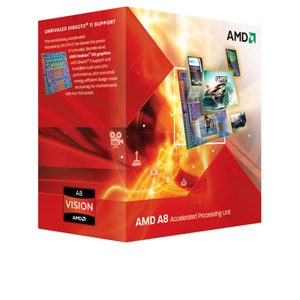
Anand previewed and then fully reviewed the A8-3850 upon its release. You can get a great idea of what to expect, performance-wise, from his articles. The platform has matured since its launch, and prices on the supporting motherboards have fallen a bit over the last few months, making Llano an increasingly attractive choice for lower midrange gamers. As Anand's testing indicates, the A8-3850 is roughly equivalent to the Intel Core i3-2100—in general, the Intel chip takes the lead in single-threaded workloads while the AMD APU wins in multi-threaded scenarios. In order to get the Intel system up to par with the AMD rig in terms of graphics performance, you have to spend at least another $50 on a budget discrete GPU. For more casual gamers, that extra cost simply isn't necessary.
The parts
We've paired the A8-3850 with the fully-featured ASUS F1A75-M PRO/CSM motherboard. This is a well-designed board that features four rear USB 3.0 ports and two USB 2.0 ports, with headers for two more USB 3.0 ports and eight additional USB 2.0 ports. Other ports and interfaces include D-Sub, DVI, and HDMI video outs, an optical port, and GbE ethernet (among many other less important interfaces).

The build also features a Crucial M4 64GB SSD. AnandTech has long stressed how adding an SSD to a modern computer makes for a much improved, faster, and snappier all-around computing experience. Anand reviewed the M4 earlier this year. Since then, it has earned a reputation as a solid (though not stellar) performer, that is perhaps more importantly also very reliable. It has also become quite affordable. Though 64GB is plenty of space for the OS and many applications, it's insufficient for a large game and/or media library. Thus we've paired the speedy SSD with the venerable Samsung F3 1TB HDD. That said, because the anomalously high prices of mechanical hard drives puts this storage combination's total price at over $250, it's also worth considering ditching the mechanical drive altogether and going with only a higher capacity SSD like Intel's 320 Series 160GB SSD--you can always add a hard drive down the road when the prices come back down.
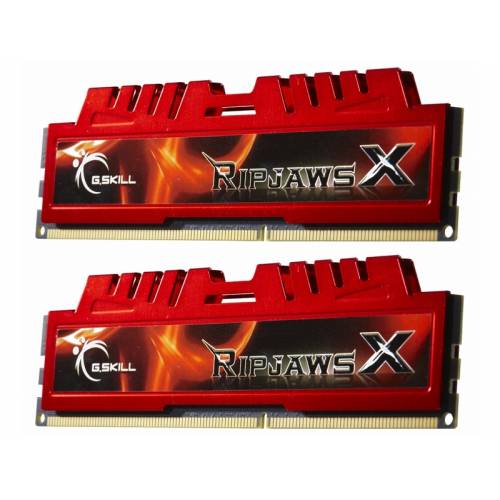
For the memory, we have an 8GB (2 x 4GB) kit of DDR3-1866. Anand's review of the A8-3850 showed that Llano benefits from higher bandwidth RAM, though this difference is not always that remarkable. You can save a few dollars by instead opting to go with a slower kit like this standard Kingston DDR3 1333 pair.
Rounding out the build, we once again turn to Antec's stalwart NEO ECO 400C power supply. I've put this PSU in many builds now and have yet to experience an issue with one. It is quiet, efficient, its cables are sleeved, 400W is more than enough power for any mainstream single GPU (or in this case, GPU-less) system, and it is not expensive at all.
All of the parts are housed in a Fractal Design Arc Midi, which Dustin reviewed recently. I really like this case and the customers for whom I've built systems with it rave about the Arc Midi. It has an integrated, ready-to-go (i.e. no aftermarket parts necessary) front USB 3.0 port, excellent thermals and acoustics, and while looks are subjective, I think it's very stylish.
| Component | Product | Price |
| Processor | AMD A8-3850 APU | $140 |
| Motherboard | ASUS F1A75-M PRO/CSM | $110 |
| RAM | G.SKILL Ripjaws X Series 8GB DDR3 1866 | $60 |
| SSD | Crucial M4 64GB | $110 |
| HDD | Samsung Spinpoint F3 1TB | $150 |
| Power supply | Antec NEO ECO 400C 400W | $35 |
| Case | Fractal Design Arc Midi | $100 |
| Optical drive | LITE-ON iHAS324-98B | $20 |
| Operating system | Windows 7 Home Premium 64-bit (OEM) | $100 |
| Total: | $805 |
Summary
This is a well-rounded system that is capable of casual to moderate gaming without the extra cost (and electricity) of a discrete video card. The quad-core A8-3850 and 8GB DDR3 facilitate great multitasking while maintaining good single-threaded performance. In addition to the reviews linked above, you can get a better picture of this APU's performance on AnandTech's Bench. The motherboard has room for a discrete GPU should you want to upgrade eventually, and has all of today's bells and whistles in terms of connectivity. The combination of the SSD and HDD offers the best of both worlds: SSD speed and HDD capacity. Finally, the case and PSU offer plenty of upgradeability for more storage (when HDD prices inevitably settle down in a few months) and thermals that will easily accomodate additional heat-generating internal components like a discrete GPU.
If you're looking for more computational and graphics power, check the next page for our $1000 Intel-based system.
Originally published at https://www.anandtech.com/show/5184/holiday-midrange-system-buyers-guide (Wayback Machine).