
LG Revolution: LTE for the Masses
The Revolution, like the Thunderbolt and Optimus 2X, is still running Froyo, specifically Android 2.2.2. It’s skinned, and has much the same UI as the Optimus 2X. I’m a huge proponent of manufacturers using the stock Android UI, but unfortunately, nobody seems to use it anymore other than T-Mobile and Google.

Brian covered this in depth in his Optimus 2X review, and almost all of it is true for the Revolution as well. I really didn’t like the fixed dock options at the bottom of the homescreen, as well as the separate category for downloaded apps. The latter makes absolutely no sense to me, and it ends up being annoying every time you want to open an app you downloaded.

The other thing that is pretty annoying to me is that the fonts in the phone and messaging apps are huge, resulting in a lot of wasted space that could be better utilized. It’s not just LG that does this, Samsung has some similar issues as well with TouchWiz, and it makes me wonder why manufacturers feel the need to mess with the standard Android UI. The reason all the manufacturers give is so that they can be unique, but other than HTC's Sense, I haven't really used a UI overlay that actually makes Android a better operating system. Is uniqueness really more important than competence? Apparently so...

At the same time, I’d like to register my astonishment that flagship level Android devices are still releasing with Froyo, 7 months after Gingerbread went public. None of the three currently-for-sale Verizon LTE devices have Gingerbread yet, and given that the Motorola Droid X2 released with Froyo, even the forthcoming Droid Bionic might as well. Come on guys, we’re supposed to get Android 4.0 in a few months, get it in gear.
LG has a bunch of preloaded software on here, including Polaris Office, Kindle, Blockbuster, Bitpop, Let’s Golf 2, Rhapsody, Rockband, Slacker, TuneWiki, special LG versions of Facebook and Twitter, Verizon’s Mobile IM client for AIM, Yahoo, and WLM, a host of Verizon and VCAST services, and a few of LG’s own applications for Weather and Finance. But by far, the headline application here is Netflix.
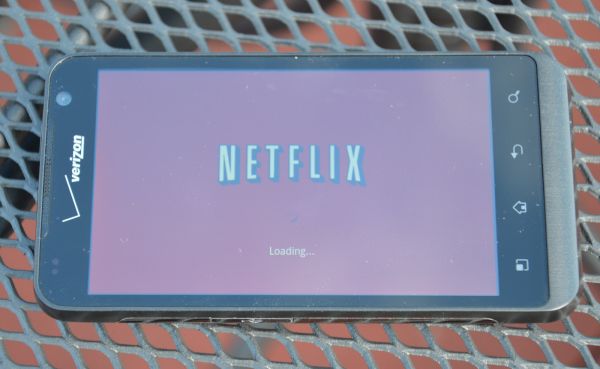
The Revolution is one of seven phones that support Netflix, the others being the Motorola Droid and Droid X, HTC Incredible, Nexus One, Nexus S, G2, and Casio’s G’xOne Commando (a semi-rugged Verizon phone in the vein of the Motorola Defy). Considering that lack of Netflix support is a commonly cited fault with Android, it’s a relatively big deal.
The Netflix app itself is decent, though I do like the user interface of the iOS and Windows Phone 7 apps better. They’re just cleaner and more elegant to use, but the core functionality is the same, and video looks great on the Revolution. LTE is a perfect match for streaming video, the increased bandwidth means you never see slowdowns. Granted, streaming Netflix on the go basically flies in the face of bandwidth caps that carriers are enforcing, but it works rather well if you want to do it.

I noticed a little bit of the instability that Brian saw in the Optimus 2X, but it looks like LG has fixed a vast majority of it. I never had issues with the messaging or phone apps, but I had a couple of browser crashes during battery life runs, and maybe one or two isolated crashes deep in the settings and testing menus. Overall though, it was pretty stable.
Originally published at https://www.anandtech.com/show/4450/lg-revolution (Wayback Machine).