
WarFactory Sentinel: Gaming on a Grand
Build, Noise, Heat, and Power Consumption
Keeping in line with the WarFactory Sentinel's "balanced budget" aspirations, cooling is handled by the custom cooler on the ASUS GeForce GTX 460 768MB TOP (phew), AMD's stock cooler for the Phenom II, and the two 120mm fans the CoolerMaster HAF 912 ships with. Since none of the components are particularly power hungry (as you'll see below), none of the fans have to work too hard, and the result is a reprieve from the noisy gaming systems I've been testing of late.


It's the balance that I really appreciate with WarFactory's component choices in the Sentinel. There's no shame in wanting to build a "sky's the limit" performance machine, but I think there's really an art to building within a budget. When I'm building a machine for friends or family, I live for that, so a system like the Sentinel that really hits the sweet spot and includes a lot of the same component choices I might have made is appreciated. The only questionable decision I feel like they made was the use of G.Skill instead of a more reputable brand like Kingston or Corsair or Crucial, but WarFactory is willing to back it up with a lifetime warranty and RAM is at the commodity item level where differences usually only matter for overclockers.
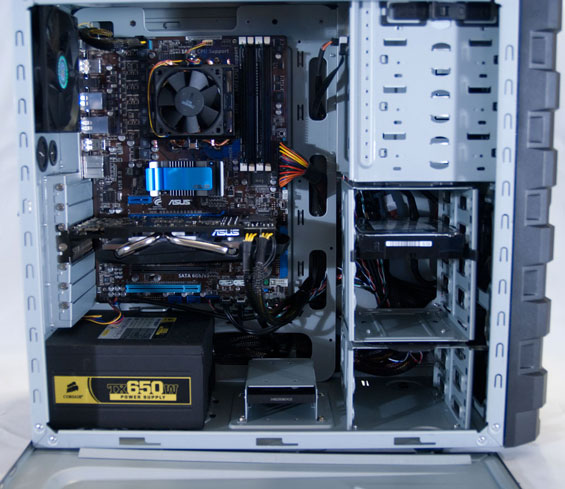
When we're talking about budget, it's important to see just how much it would cost to build the system yourself, and in that situation (assuming no shipping or sales tax) you're basically paying about $200 for WarFactory to build it for you. To me that seems fairly reasonable; the company is still cutting a profit but not an obscene one, and you're basically paying for a lifetime service plan for the computer. Compare that to paying $300 to Best Buy for one of their insane extended warranties and it seems like a much better deal.
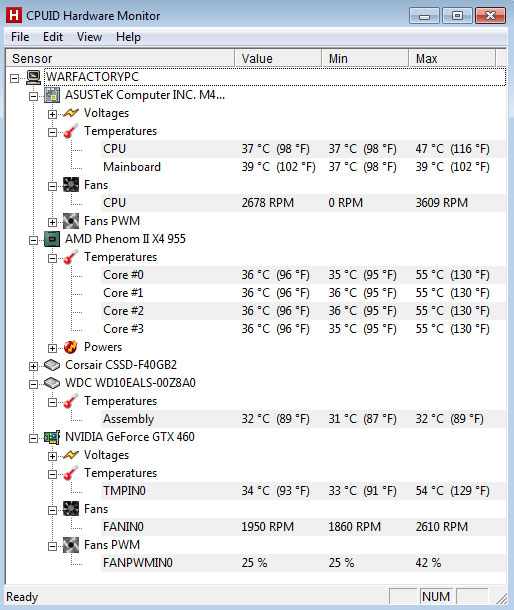
At this point the proof is really in the pudding, so to speak. The thermals for the Sentinel are frankly outstanding; even the graphics card isn't hitting 60C. It's a welcome change of pace, especially when you realize the Sentinel runs very quietly. Outside of the Puget Systems builds and the Dell Precision, this is the quietest desktop I've tested and would be a fine choice for anyone who needs a powerful computer on a budget and doesn't want to have to worry about a jet turbine in their bedroom or office.
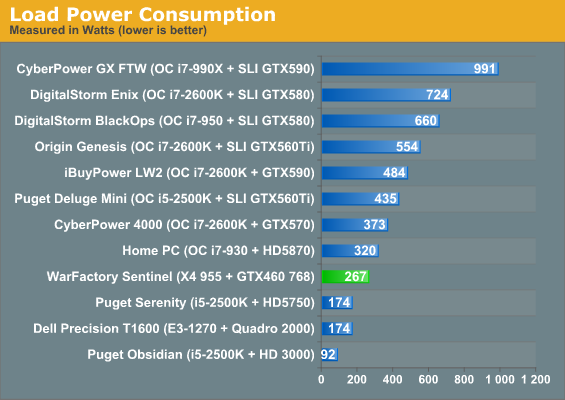
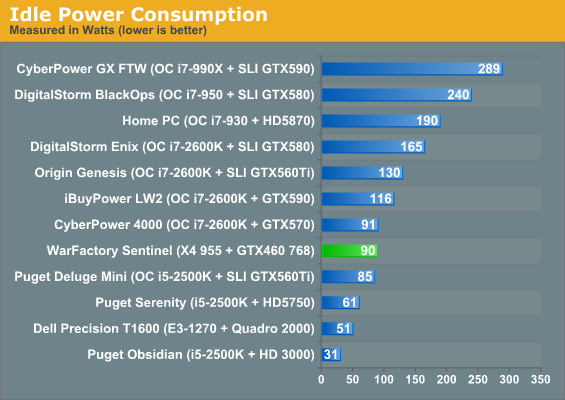
While AMD's chips do tend to be less power efficient than Intel's, it's basically a wash in power consumption. The Sentinel's idle consumption is still perfectly reasonable, while load consumption ranks among the lowest (thanks to the use of a single moderate GPU and lack of overclocking). Once you factor a decent video card into the equation, most of Intel's power savings evaporate.
Originally published at https://www.anandtech.com/show/4360/warfactory-sentinel-gaming-on-a-grand (Wayback Machine).