
CyberPower's X6-9300 and MSI's GT680R: Fighting for Your Mobile Gaming Dollar
A Tale of Two LCDs
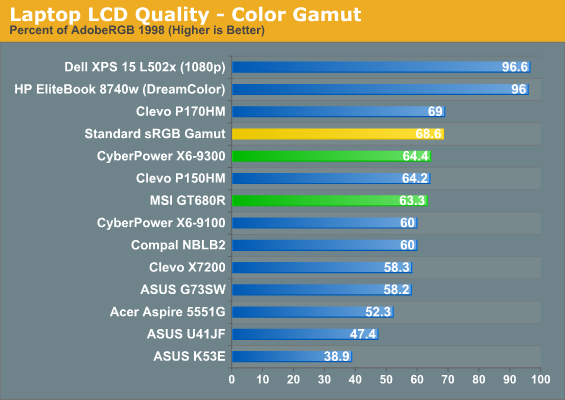
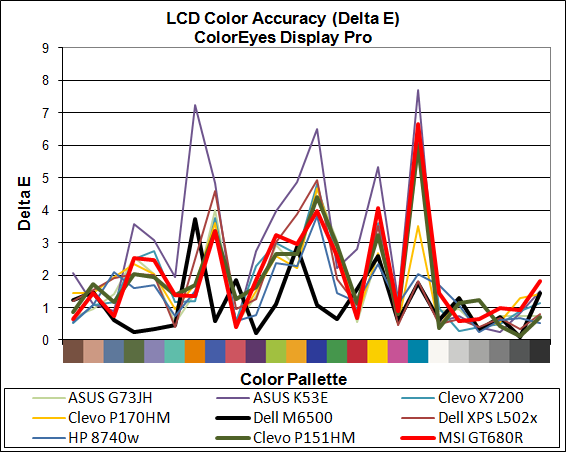
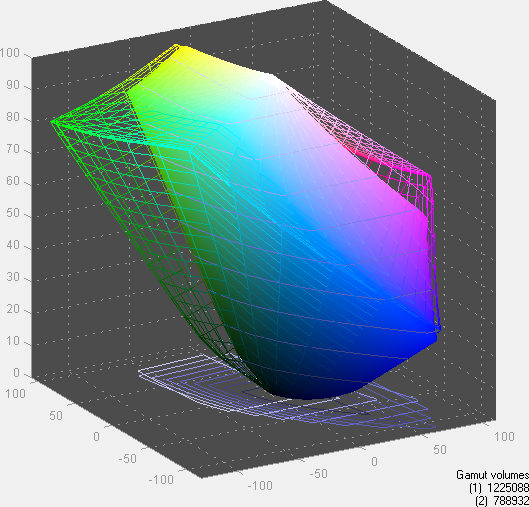
Clevo P151HM / CyberPower X6-9300 Gamut
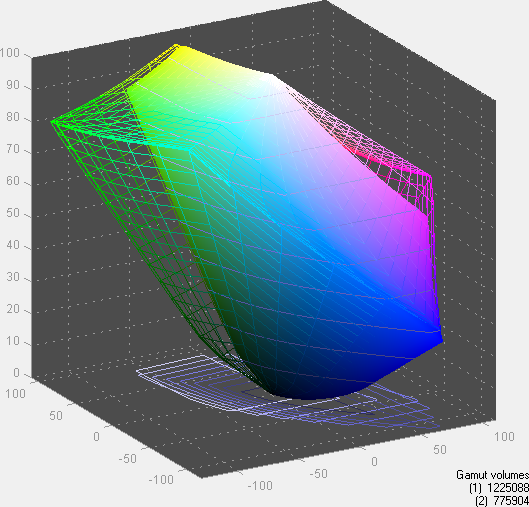
MSI GT680R Gamut
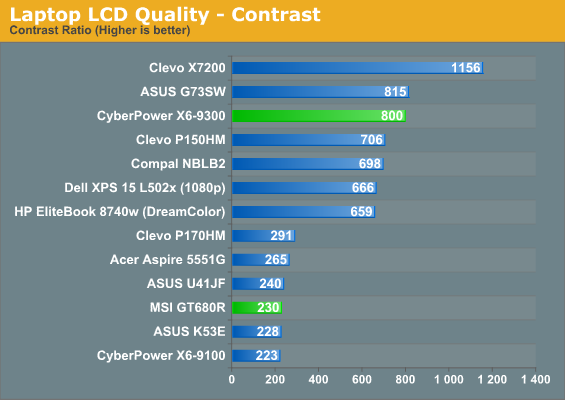
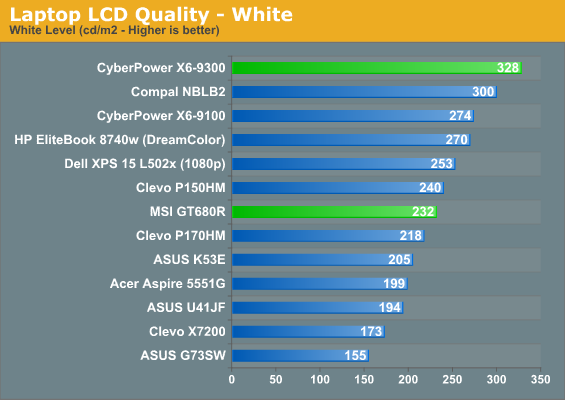
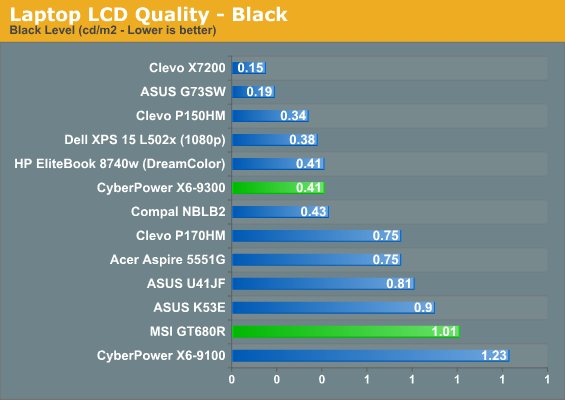
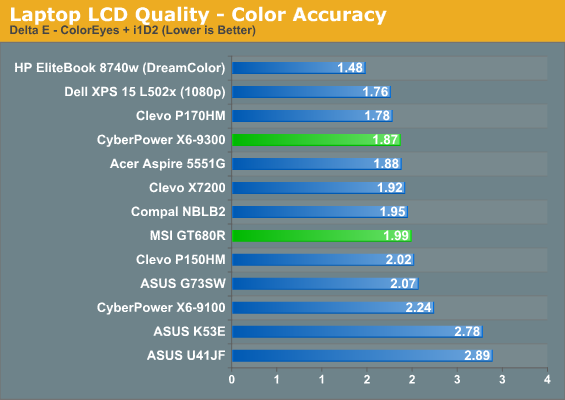
As mentioned earlier, the LCD on the MSI laptop is noticeably inferior. The sad thing is that both the MSI and Clevo use the same AU Optronics B156HW01 LCD panel, but Clevo uses v1 while MSI uses v5. Presumably the v5 panel is a lot cheaper—at least it better be, judging by the results shown above!
On the other hand, the P151HM has what is very likely the best laptop LCD I’ve used in most areas. An 800:1 contrast ratio is great for a matte LCD, color accuracy is reasonable, and color gamut is close to ideal for the sRGB space. If you’re after a high gamut panel, there are better options, but most people feel high gamut panels just end up looking oversaturated. I really wish we could draw a line in the sand and have the P151HM panel set the minimum quality level that laptop displays should reach, but instead we have a race to the lowest priced LCD notebook manufacturers can find, which is why we see so many 1366x768 laptops.


Not only does the Clevo notebook offer superior contrast, but it also offers better viewing angles. We’re still dealing with TN panels either way, which is unfortunate but difficult to avoid, but the P151HM has a much wider sweet spot for viewing.
Noise and Temperatures
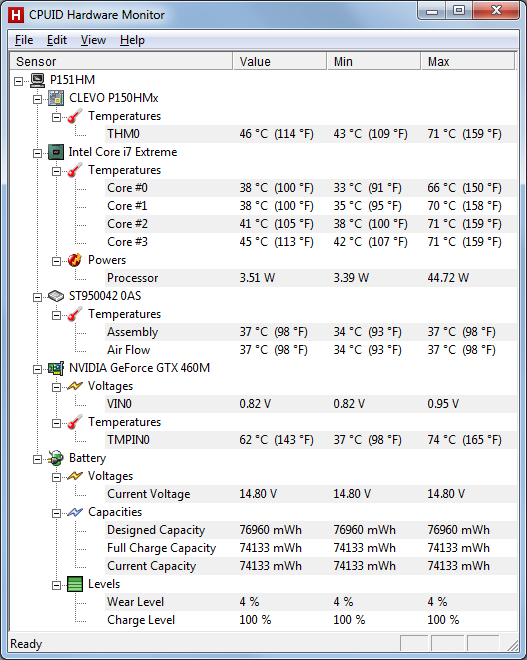
Clevo P151HM / CyberPower X6-9300

MSI GT680R
CPU temperatures are about 5C lower on the Clevo when the system is under a heavy load for a long time, but the GPU runs reasonably cool in both notebooks. The catch is that the Clevo only manages this by ramping up fan speeds much earlier than MSI.
At idle, the MSI GT680R maintains a constant 34.5dB output (for around 12”); in contrast, the Clevo oscillates between 31.9dB and 35.6dB. What’s truly unfortunate is that the Clevo is the more annoying under light workloads because you notice the frequently changing noise level more than you would a steady drone. Under load, the noise situation falls even more heavily in MSI’s favor. After looping 3DMark06 at 1080p for over 30 minutes, the MSI still maintained a reasonable output of 39.1dB, and it would even drop to 36-37dB at times. The P151HM on the other hand quickly ramped up fan speed to what appears to be the maximum RPM, putting out a loud 44.3dB. Under our worst-case load (4-thread Cinebench with 3DMark06 looping), the MSI also had to increase fan speed to 44.0dB and the Clevo maintained the same 44.3dB output, but most users likely won’t be putting a 100% load on all CPU cores while loading the GPU at the same time.
Looking at the cooling arrangement, MSI actually does something quite useful. The chassis at first appears to have a rear and side vent, but it turns out the rear vent is actually an air intake. Instead of trying to pull air through the bottom of the chassis like most notebooks, the fan gets easy access to fresh air at from the back, and vents it out the left side. ASUS’ G73 chassis is still the quietest gaming notebook we’ve encountered (though we’re not sure if that translates well to the smaller G53 chassis), but the MSI cooling arrangement tends to work well. It would be nice if they could reduce idle noise levels a bit more, but a steady 34dB is better than hearing the fan spin up and then slow down ever 10-20 seconds.
Originally published at https://www.anandtech.com/show/4339/cyberpower-x6-9300-msi-gt680r-mobile-gaming (Wayback Machine).