
Z68 SSD Caching with Corsair's F40 SandForce SSD
AnandTech Storage Bench 2011 - Light Workload
Our new light workload actually has more write operations than read operations. The split is as follows: 372,630 reads and 459,709 writes. The relatively close read/write ratio does better mimic a typical light workload (although even lighter workloads would be far more read centric).
The I/O breakdown is similar to the heavy workload at small IOs, however you'll notice that there are far fewer large IO transfers:
| AnandTech Storage Bench 2011 - Light Workload IO Breakdown | ||||
| IO Size | % of Total | |||
| 4KB | 27% | |||
| 16KB | 8% | |||
| 32KB | 6% | |||
| 64KB | 5% | |||
Despite the reduction in large IOs, over 60% of all operations are perfectly sequential. Average queue depth is a lighter 2.2029 IOs.
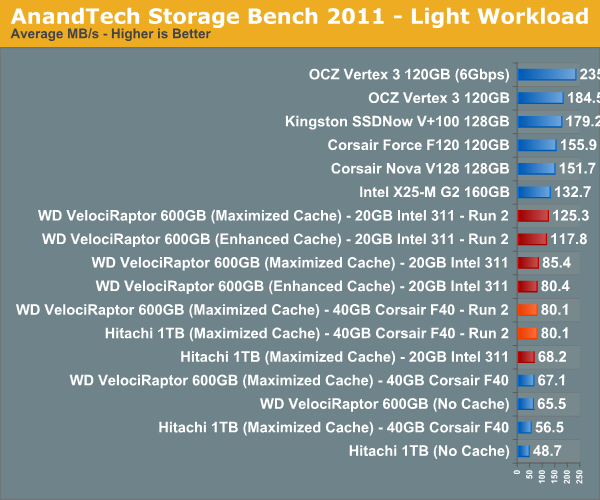
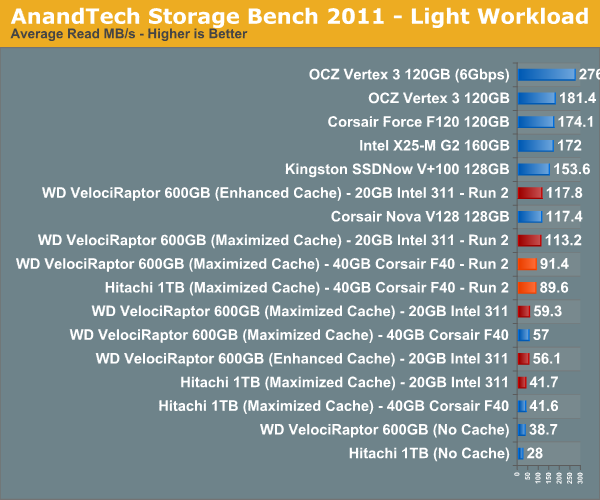
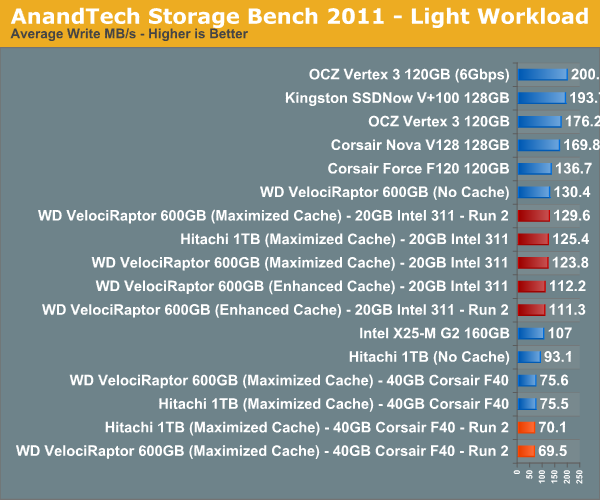
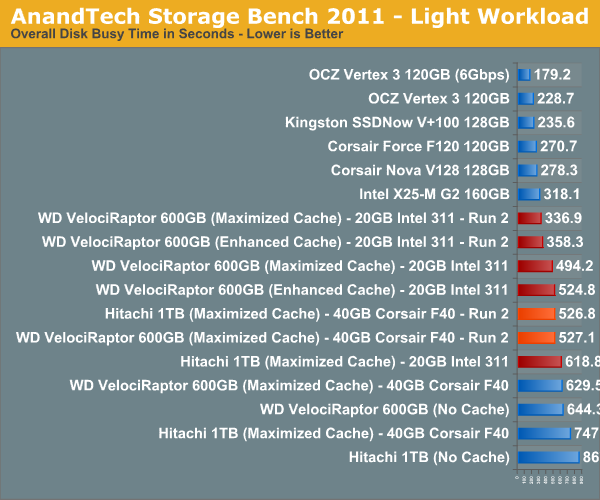
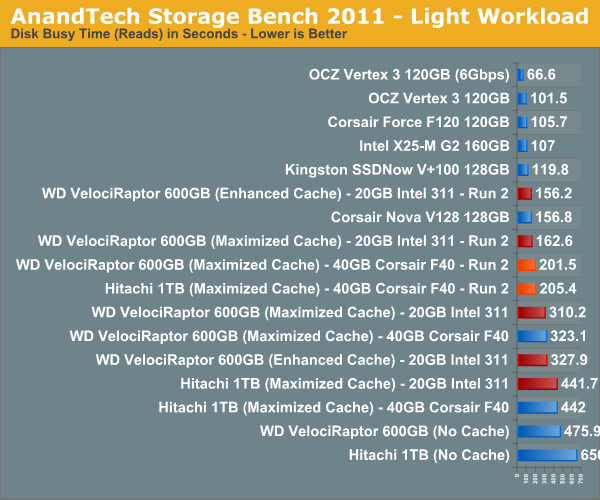
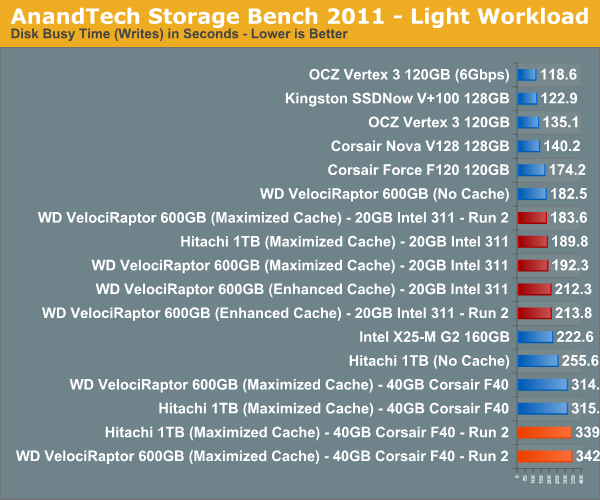
Our light workload doesn't do very well on the F40 at all. As we discovered in our launch review, the heavy workload runs for long enough (~3 hours) that performance doesn't change from run to run. Our light workload however only takes around 30 - 45 minutes to run and thus we see a significant performance difference from one run to the next (after 2 runs the performance gains level off though). While the Intel SSD 311 climbs significantly in both runs, the F40 shows a marginal improvement in the first run and tops out at around 80MB/s regardless of what HDD it's paired with. Clearly we're hitting a bottleneck here, one that doesn't exist on the 311.
An obvious benefit of Intel's SSD 311 is that its firmware was designed with caching in mind, something that isn't true for standard SSDs used as a cache.
Originally published at https://www.anandtech.com/show/4337/z68-ssd-caching-with-corsairs-f40-sandforce-ssd (Wayback Machine).