
Sony EE34: Sony Makes Budget AMD Laptops?
Not Fast, But Fast Enough
Historically we've been pretty underwhelmed with AMD's mobile offerings, barring maybe the Turion II Neo and now Brazos. These aren't bad chips, but if AMD's been struggling to play catch-up on the desktop they've been left miles behind in notebooks where power and heat become ever more important.
With that said, though, the 25W, 2.2GHz Athlon II P340 dual-core processor isn't a particularly bad chip either. Inheriting the K10.5 architecture from its desktop siblings, it at least offers a good bump over older K8-based chips and is capable of handling most of the tasks you're liable to throw at it.
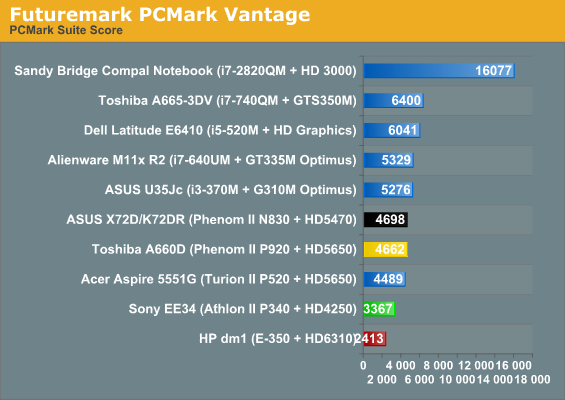
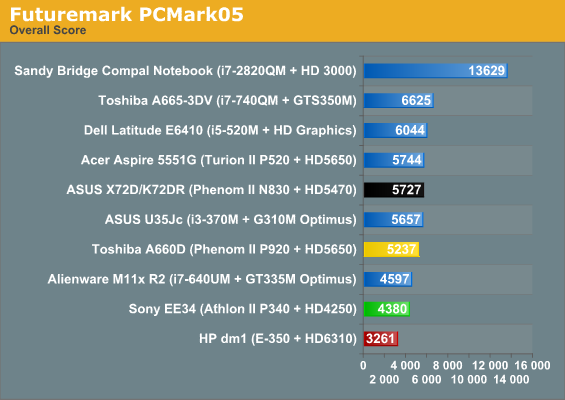
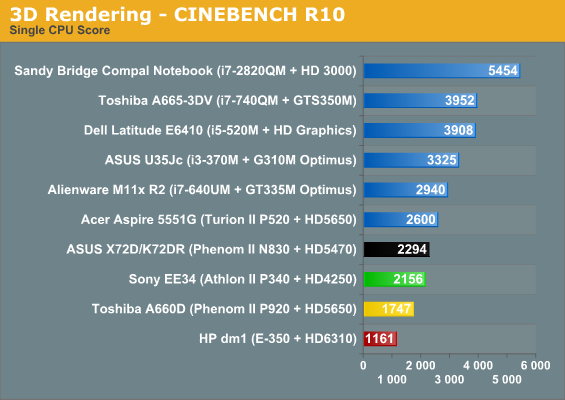
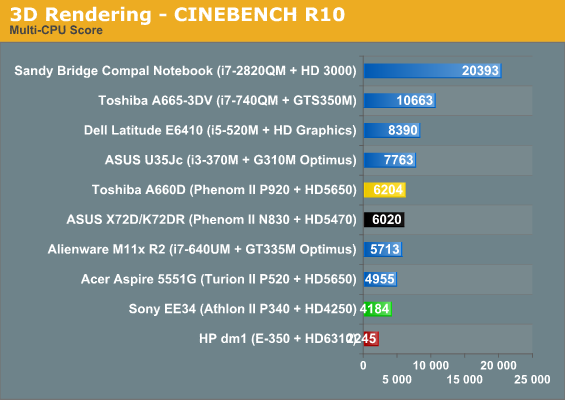
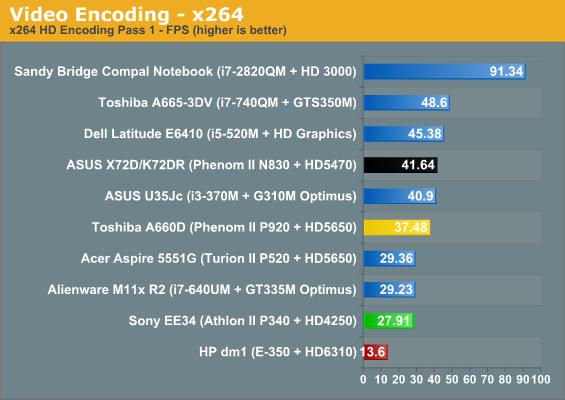
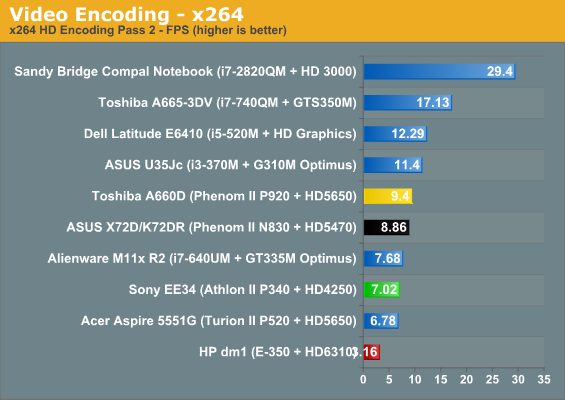
Before we get too far in analyzing these results, it's important to note that our usual x264 benchmark refused to run on the EE34 and would always crash at exactly the same point. This occurred whether on the factory install or on a clean installation of Windows 7, and it's the only time we've ever seen this happen. The EE34 completed all our other tests perfectly fine and was nice and stable in regular use, but it bears mentioning that for the x264 results we did have to simulate the processor using a desktop Athlon II X4 with two cores disabled and the clocks adjusted. I'm confident that these scores are within the ballpark for what you could expect from the Athlon II P340, but they bear mentioning nonetheless.
Comparing against the other AMD processors in the lineup, the P920 is a quad-core chip running at 1.6GHz while the N830 is a tri-core chip running at 2.1GHz. So with that in mind, the tri-core running at 100MHz slower than the P340 in the EE34 seems like it's probably the best compromise, but the P340 doesn't put in an awful showing either. All of the AMD chips are more or less dwarfed by their Intel rivals, but it's not a complete bloodbath. For reference we've included the E-350's scores so you can see what bumping up to even a slower full-sized AMD notebook can get you.
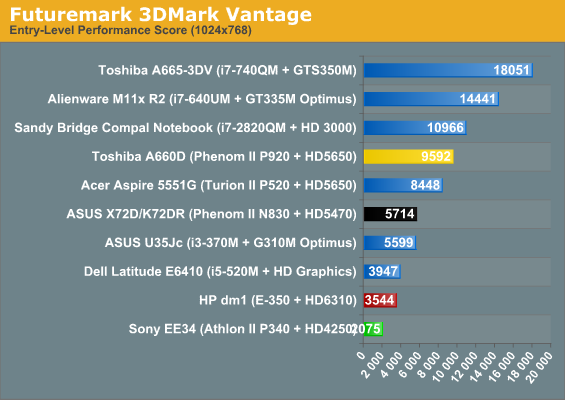
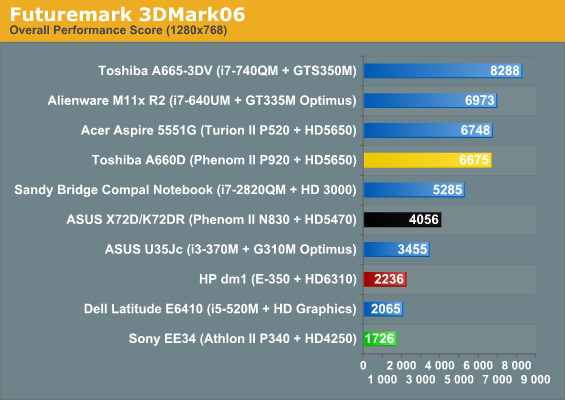
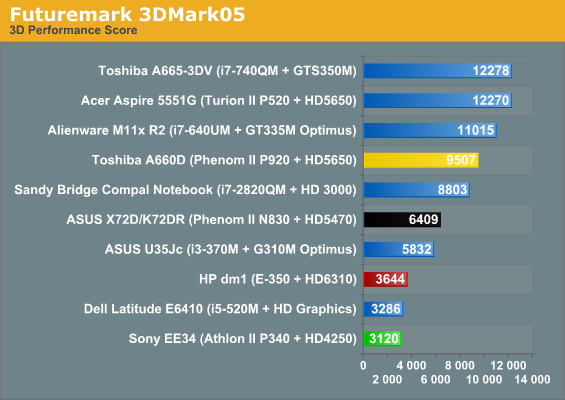
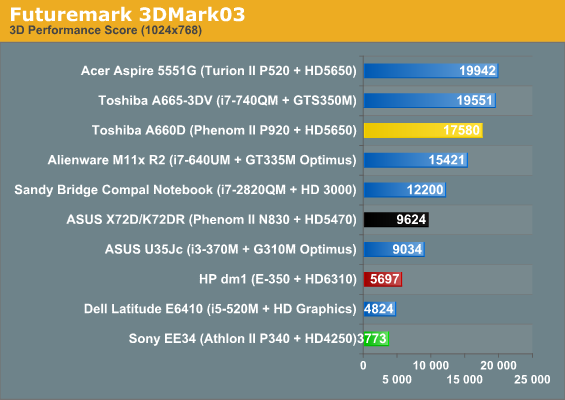
Unfortunately the 3DMark tests bear out just how poorly AMD's 40-shader IGP has aged. The E-350 beats it at every turn and even the utterly anemic GeForce 310M is a substantial improvement. While Llano's CPU performance doesn't promise to be a substantial improvement over what we've seen here (the cores are basically K10.5), the integrated graphics should at least be a big enough boost to make it a very compelling mobile part. Hopefully between Brazos, Llano, and Sandy Bridge, the era of poor integrated graphics can finally come to a close.
Originally published at https://www.anandtech.com/show/4188/sony-ee34-sony-makes-budget-amd-laptops (Wayback Machine).