
NVIDIA's Project Kal-El: Quad-Core A9s Coming to Smartphones/Tablets This Year
Final Words
The first thing everyone at NVIDIA asked me after I saw Kal-El running was an eager and expected: "well, what did you think?"
On the one hand, we have a clear underdog in the SoC space demonstrating a brand new chip just 12 days after getting it back from the fab. It's functional, it can render 3D games, it can decode high bitrate video and it runs Android today. The word impressive is insufficient to convey the magnitude of what I just described, particularly in the SoC space.
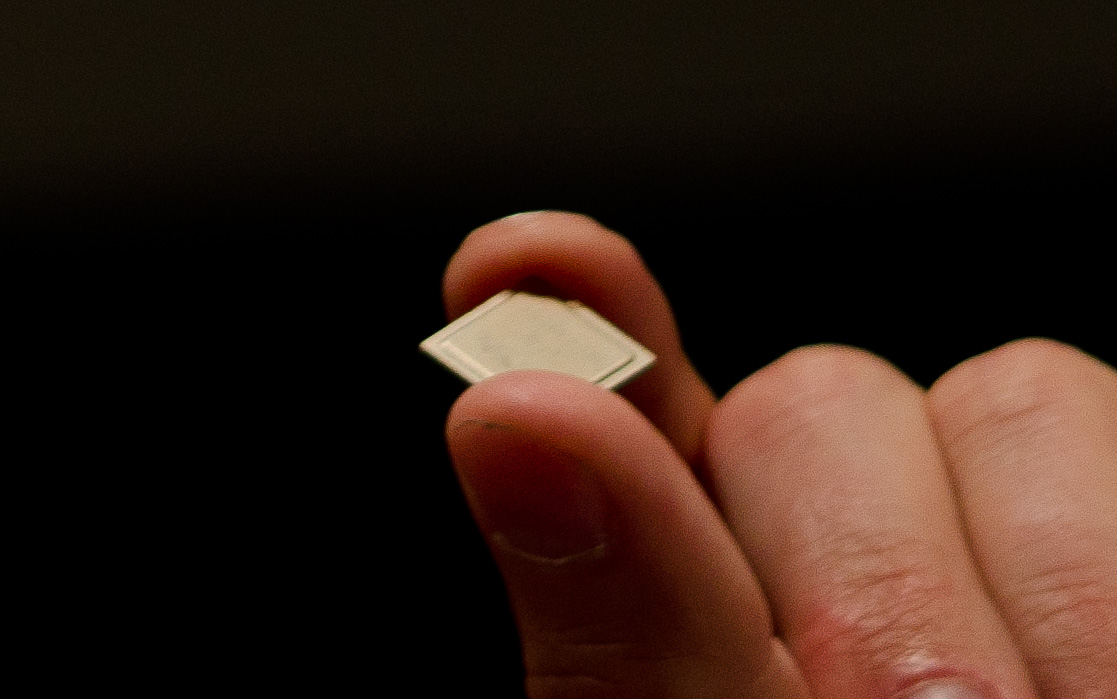
On the other hand, it's still just an announcement. It wasn't too long ago that NVIDIA was struggling to name a single design win. The recent success with LG, Motorola and Samsung is awesome, but it isn't a guarantee of what's to come. That being said, the handset vendors and carriers clearly take NVIDIA seriously today and they would be foolish not to consider Kal-El as it'll be the quickest way to get to quad-core in an Android phone.
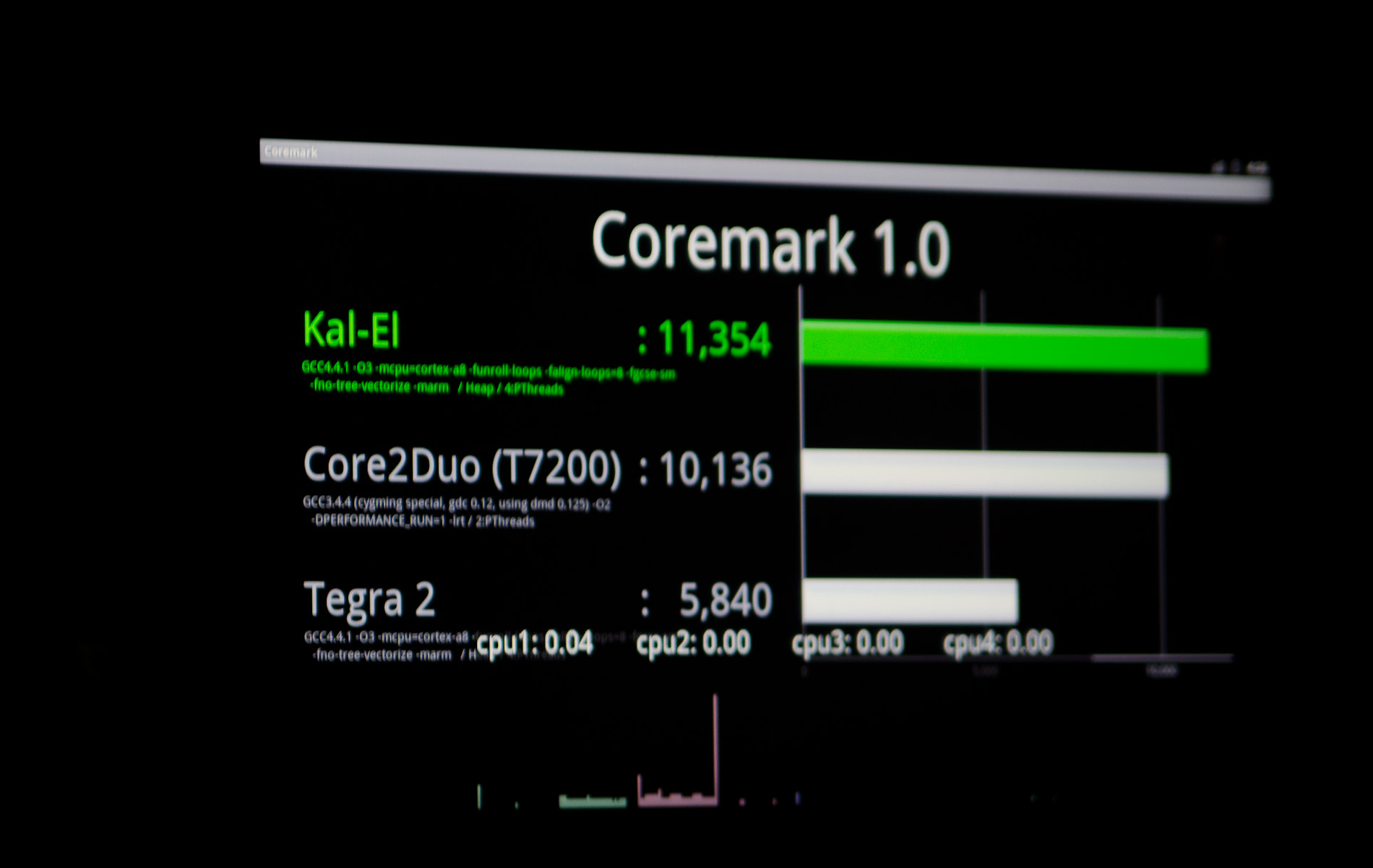
Architecturally, Kal-El isn't a huge departure from what we currently have today with Tegra 2. NVIDIA claims a 5x performance improvement over Tegra 2 however that seems a bit optimistic. The 5x gains appear to be from combining the 2x theoretical gain from 2 to 4 cores plus a 3x gain from the new GPU. NVIDIA claims that this is enough to put Kal-El above a Core 2 Duo clocked at 2GHz (see the test results below), however the NVIDIA generated scores seem suspect not to mention that Coremark isn't representative of the sort of workload you'd see on a smartphone/tablet.
If NVIDIA can increase clock speeds a bit we'll see better performance than Tegra 2 on lightly threaded workloads, but I'm not convinced of the gains to be had in single-tasking workloads from four cores in a smartphone/tablet. The bigger gains over Tegra 2 will likely come from any improvements to the memory controller as well as the faster GPU. This being said, NVIDIA does believe that even web page rendering can benefit significantly from a quad-core CPU so I could be very well proven wrong once devices are out in the wild.
If NVIDIA can secure significant design wins with Kal-El based tablets in August of this year and smartphones in Q4 I will be beyond impressed. NVIDIA gets major points for putting on good demos of working silicon today but in this business you need to have devices. For now we play the waiting game. I suspect if you're not taking NVIDIA seriously at this point, you really should be.
Originally published at https://www.anandtech.com/show/4181/nvidias-project-kalel-quadcore-a9s-coming-to-smartphonestablets-this-year (Wayback Machine).