
Anand's Thoughts on Google's Chrome OS
The Hardware
Google tells us to expect the first Chrome notebooks towards the middle of 2011, however it is releasing a reference platform to select press and users in its pilot program starting now.
The reference platform is manufactured by an unknown OEM (possibly Inventec) and features Intel’s Atom processor. The first Chrome systems will be notebooks although Google indicated that it has plans to expand both into smaller and larger devices. Assuming the Chrome notebook launch is successful, you can take that to mean we’ll see smaller Chrome notebooks, potentially even tablets, as well as Chrome nettops/desktops.

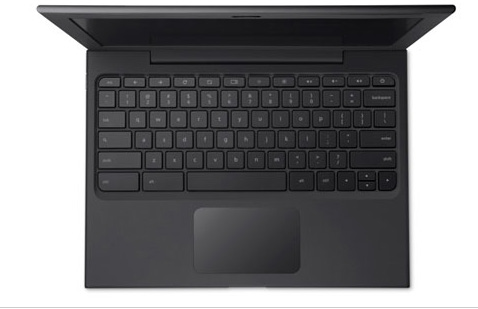
The reference platform is called Cr-48 and it is a 12” notebook running the Chrome OS. Google wanted a full sized keyboard and reasonable screen size, which is exactly what it delivers.
The Cr-48 appears to have a standard chiclet keyboard with a few differences. There are no function keys, there’s an integrated power button (ala the new MacBook Airs) and there’s no caps lock key. In its stead you get a search button similar to what you’ll find on Logitech’s Google TV keyboard. You also get a row of dedicated feature keys for things like increasing/decreasing brightness, volume, etc...
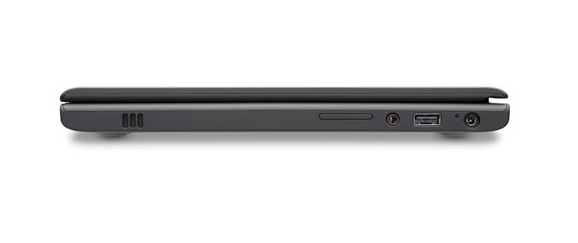
There’s no support for optical media although you do get a single USB port on the Cr-48. Currently there’s no support for USB peripherals beyond keyboards/mice, this includes USB storage. Google says it is currently working on USB storage support however there’s nothing there yet. Even printers can’t be connected directly, Google turns to its Cloud Print service to discover and print to nearby printers.
The Cr-48 only features VGA output as it is Pine Trail based and the platform doesn’t support DVI or HDMI output. Based on Google’s pictures there also appears to be an integrated SD card reader.
Battery size remains unknown at this point but the Cr-48 is expected to last up to 8 hours on battery and a week on standby.
Retail Chrome notebooks will be made by Acer and Samsung. I suspect the limited list of launch partners has to do, in part, with what I mentioned at the beginning of this article. Microsoft can’t be too happy with Windows partners shipping devices that clearly circumvent the Windows ecosystem and thus we don’t see anything from companies like ASUS, Dell and HP. Acer is particularly surprising but we’ll have to wait and see how this one pans out.
Google expects the first retail Chrome notebooks to be priced below $400, similar to Atom based netbooks running Windows 7.
A very attractive part of the Chrome platform is the OS is open source and Google isn’t charging for the OS either. Granted Microsoft’s fee for Windows 7 to netbook vendors isn’t that high, but in markets with razor thin margins, not having to pay for an OS can help OEMs actually make money selling hardware.
I do suspect we’ll have a bit of the netbook syndrome initially with Chrome notebooks. Since they’ll all be based off of Intel Pine Trail platforms, they’ll all have very similar performance characteristics. Also since this is a new and unproven platform, I wouldn’t expect too many SKUs from Acer and Samsung based around Chrome OS initially.
Originally published at https://www.anandtech.com/show/4055/anands-thoughts-on-googles-chrome-os (Wayback Machine).