
10G Ethernet: More Than a Big Pipe
- Posted in
- IT Computing
- Networking
- 10G Ethernet
Consolidating to the Rescue
The solution is “I/O convergence” or "I/O consolidation", the latest buzz words for combining all the I/O streams into one cable, the result being the use of one I/O infrastructure (Ethernet cards, cables and switches) to support all I/O streams. Instead of using many different physical interfaces and cables you consolidate all VMotion, console, VM traffic and storage traffic on a single card (dual card for fail-over). This should significantly lower complexity, power, management, and thus cost. If that sounds like marketing speak making it seem a lot easier than it is, you are right: it is indeed hard to accomplish this.
If all that traffic runs through the same cable, the I/O traffic of VM migration or backup routines kicking in could choke the life out of your storage traffic. And once that happens, the whole virtualized cluster comes to a grinding stop as storage traffic is the beginning and end of every operation in that cluster. So it is critical that you reserve some bandwidth for the storage I/O, and thankfully that is pretty easy to do in modern virtualization platforms. VMware calls this traffic shaping, and it allows you to limit the peak and average bandwidth that a certain group of VMs can get. Simply add the VMs to a portgroup and limit the traffic of that portgroup. The same can be done for VMotion traffic: just “shape” the traffic of the vSwitch that is linked to the VMotion kernel port group.
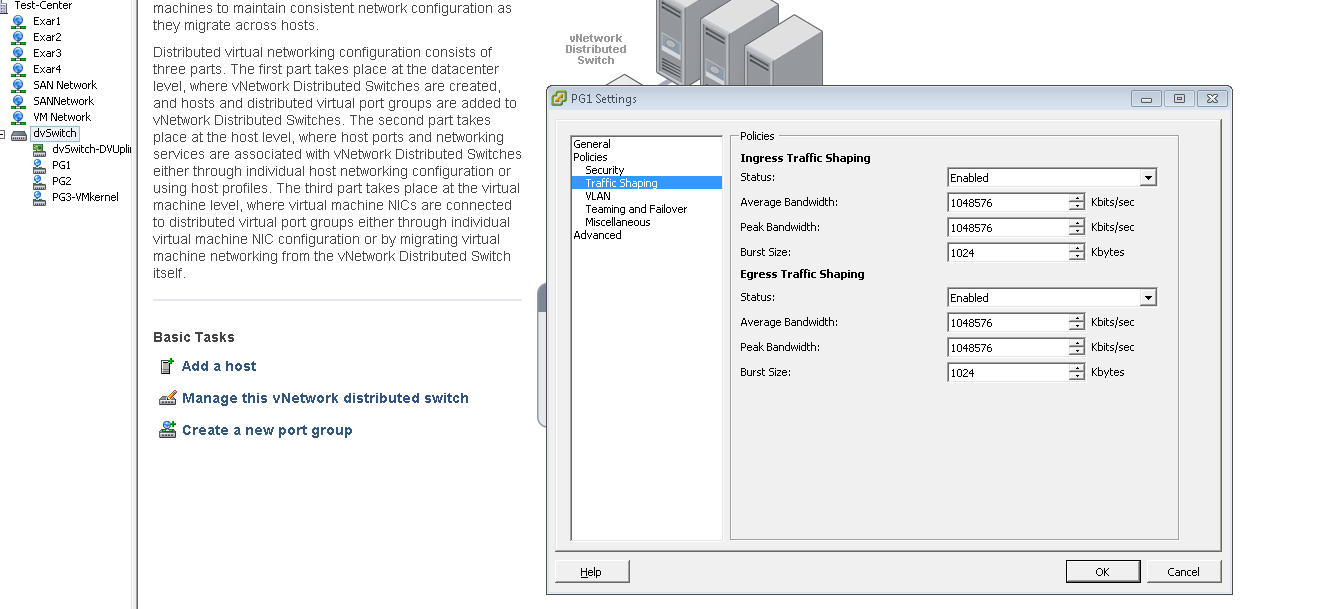
Traffic shaping is very usefull for outbound traffic. Outbound traffic orginates from the memory space that is being managed by and under the control of the hypervisor. It is an entirely different story when it comes to receive/inbound traffic. That kind of traffic is under control of the NIC hardware first. If the NIC drops packets before the hypervisor even sees them, "Ingress Traffic Shaping" won't do any good. There is more.
Outbound traffic shaping is available in all versions of VMware vSphere; it is a feature of the standard vSwitch. Seperate Ingress and Egress traffic shaping is only available on the newly introduced vNetwork Distributed Switch. This advanced virtual switch can only be used if you have the expensive Enterprise Plus license of VMware's vSphere.
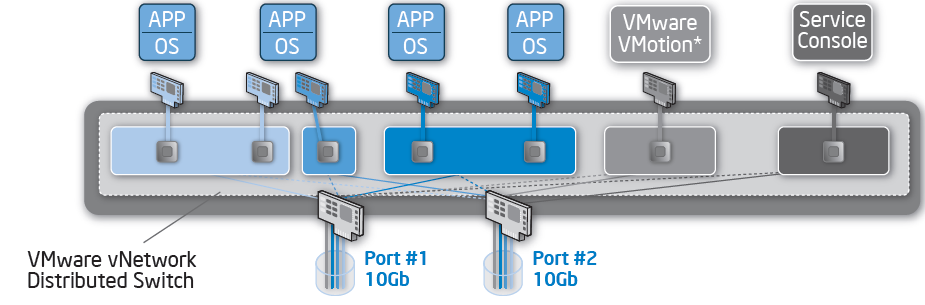
Still, if we combine 10G Ethernet with the right (virtualization) software and configuration, we can consolidate both console, storage (iSCSI, NFS), and “normal” network traffic into two high performance 10GbE NICs. Let us see what other options are available.
Originally published at https://www.anandtech.com/show/4014/10g-more-than-a-big-pipe (Wayback Machine).