
NVIDIA's GeForce GTX 580: The SLI Update
GTX 580 SLI: Setting New Dual-GPU Records
Today’s main event of course is the performance of the GTX 580 in SLI mode. We hope that it doesn’t spoil things for anyone when we say that the GTX 580 in SLI is setting new records for dual-GPU performance in our charts, a natural consequence of pairing up what was already the fastest single GPU card on the market. Since the results are going to be rather self-explanatory, we’ll skip the running commentary here and stick to the charts.
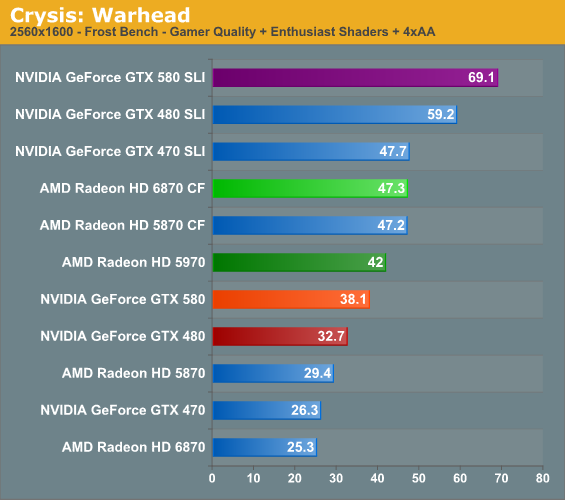
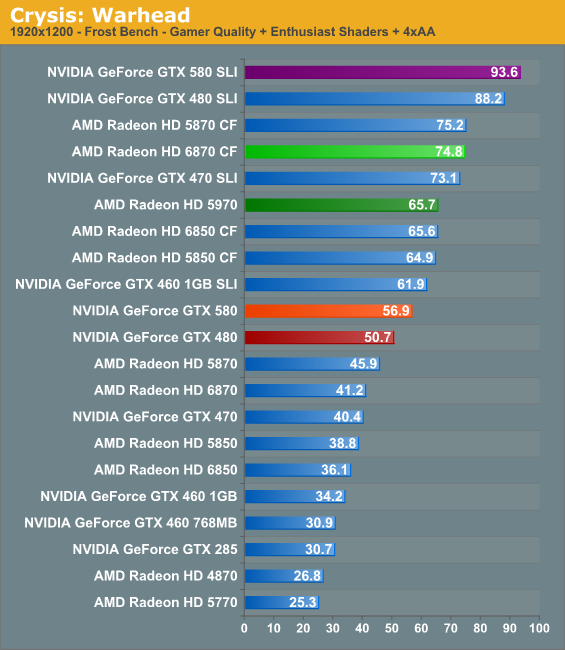
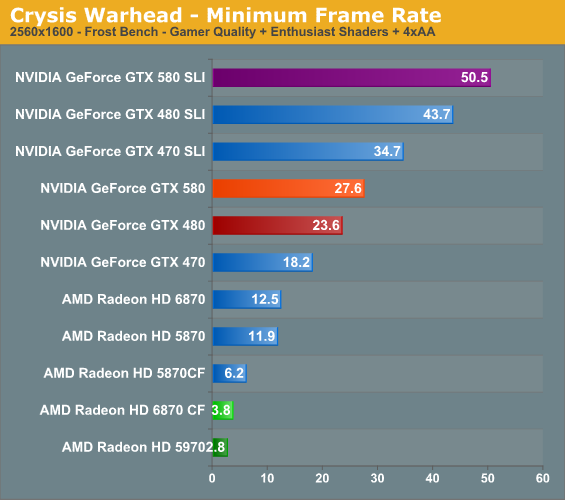
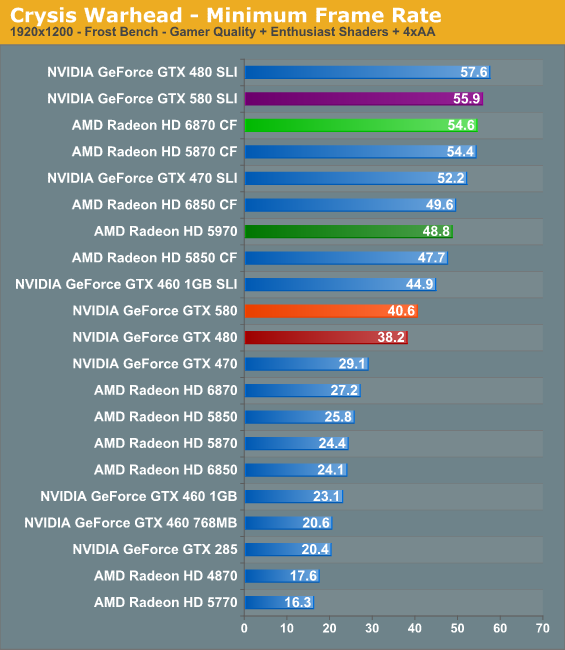
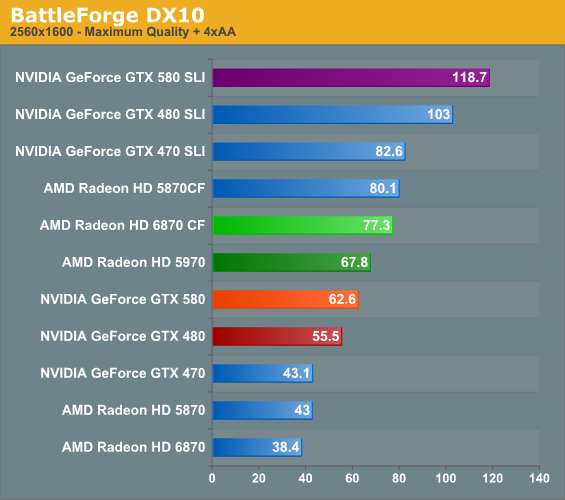
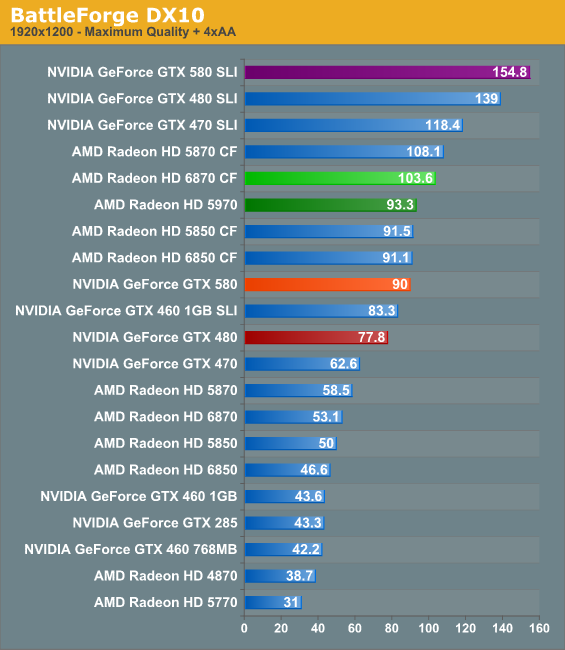
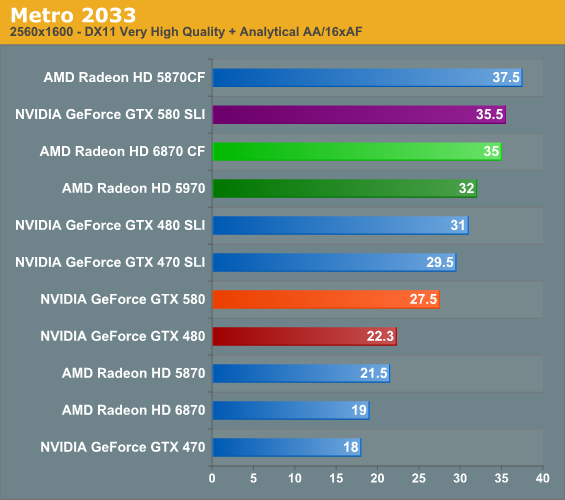
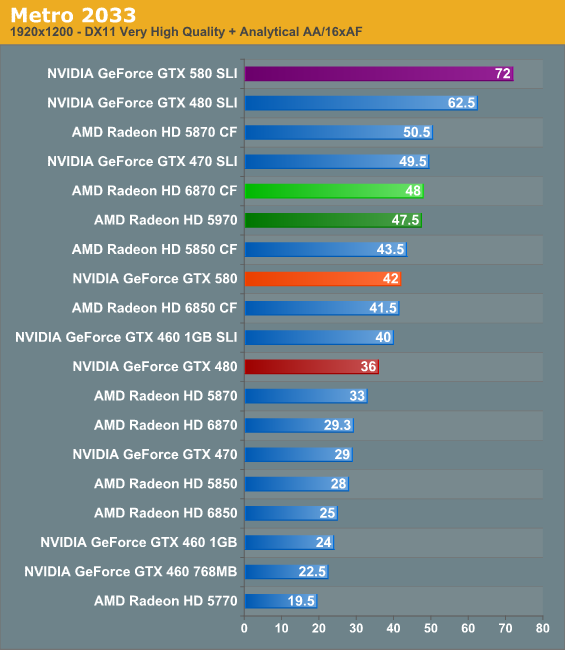
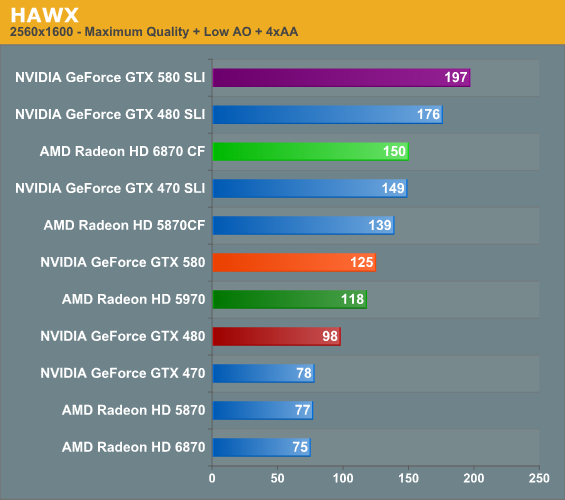
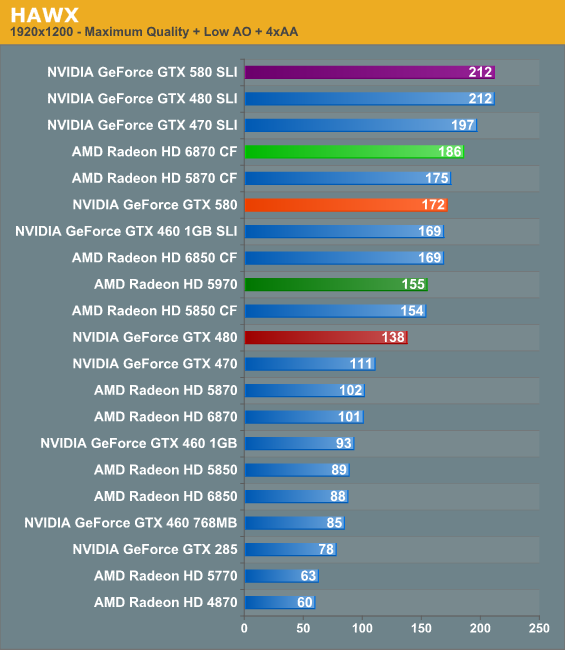
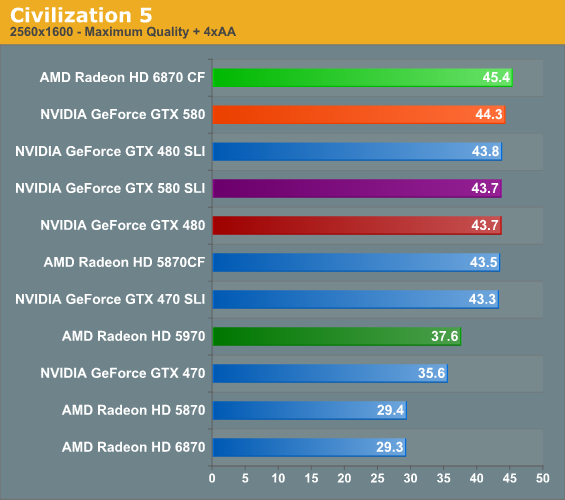
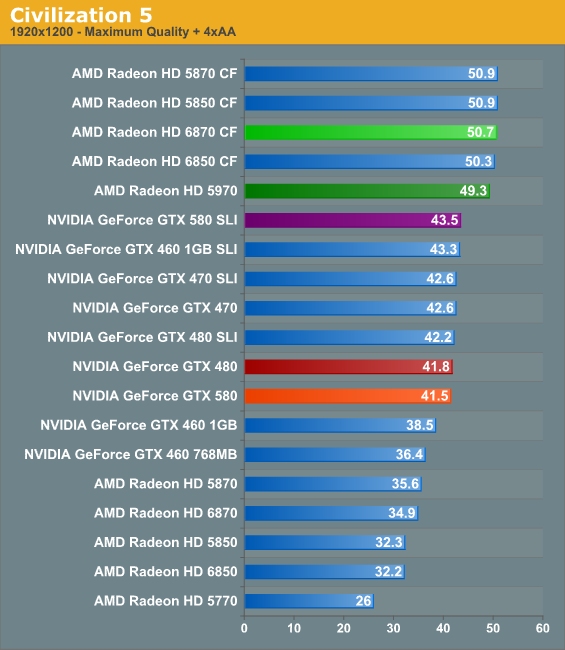
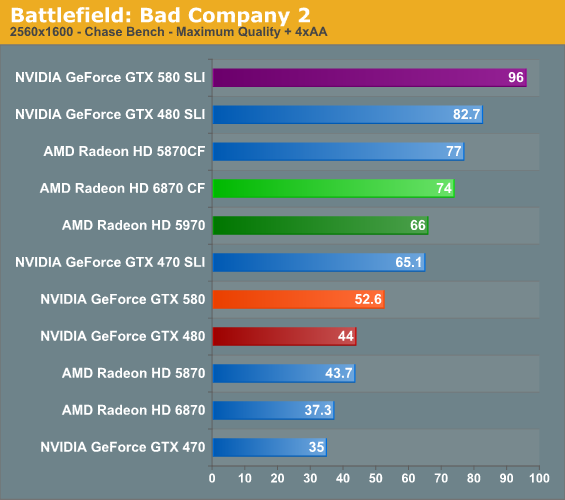
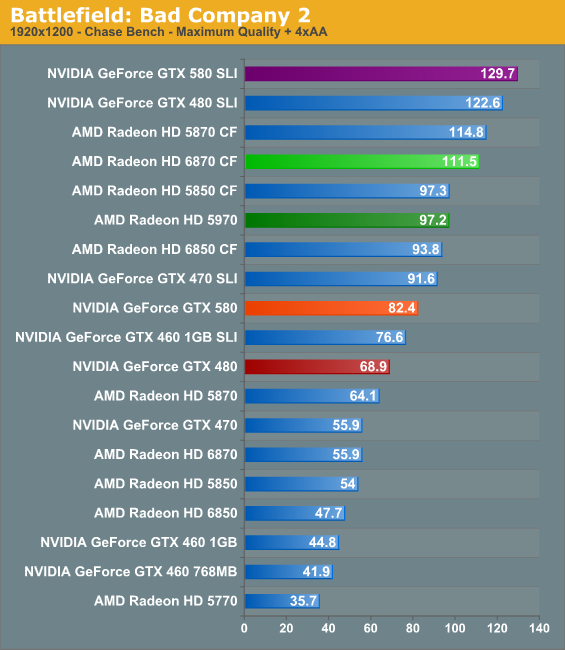
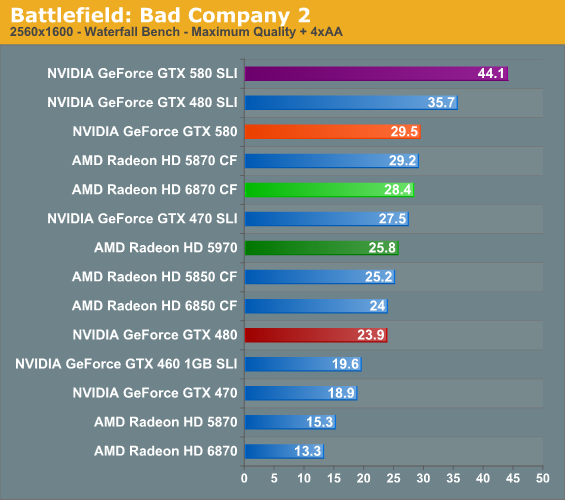
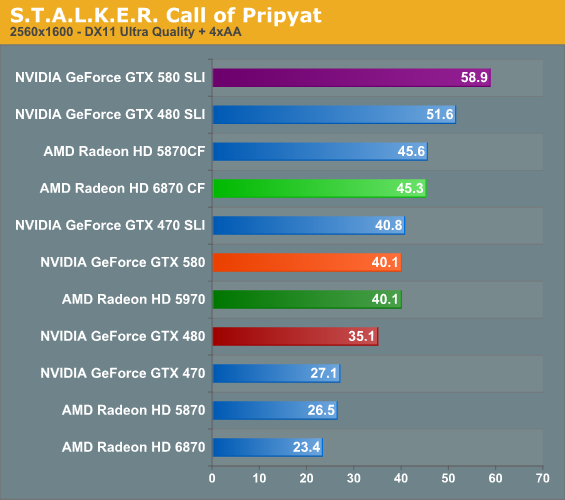
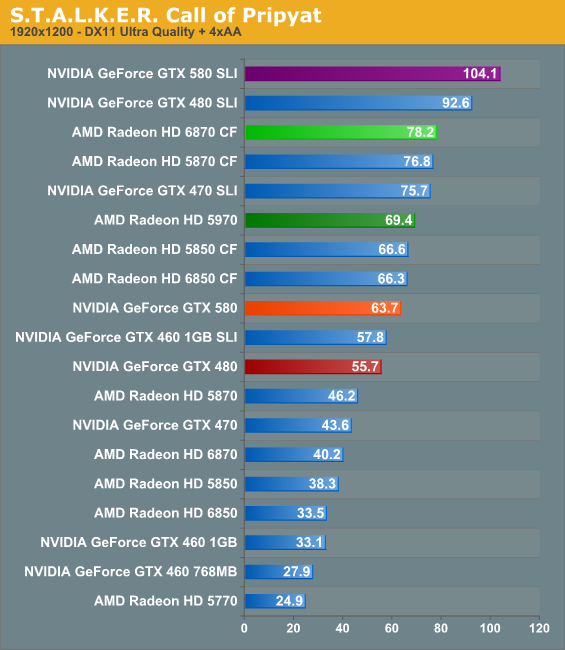
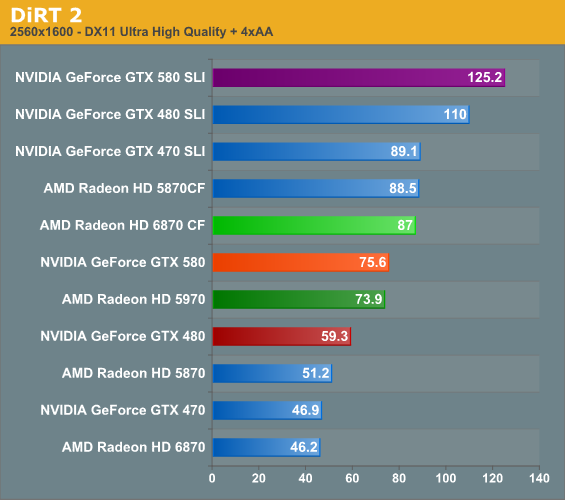
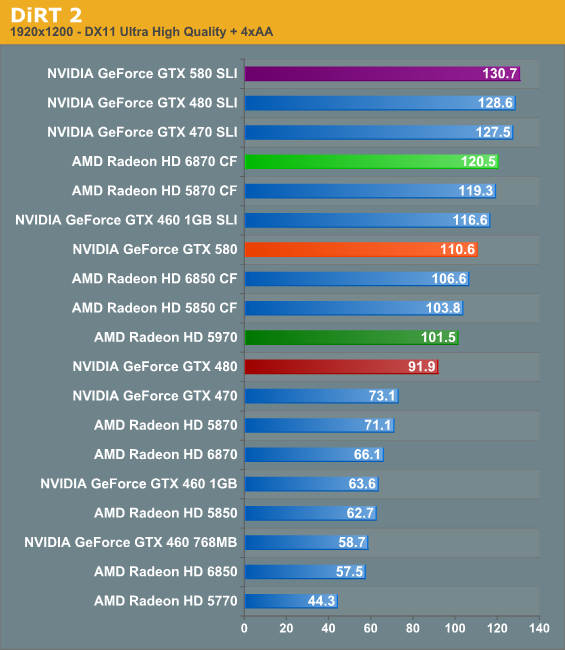
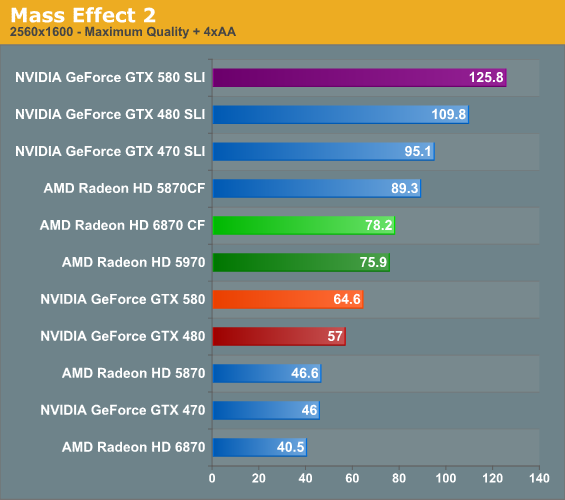
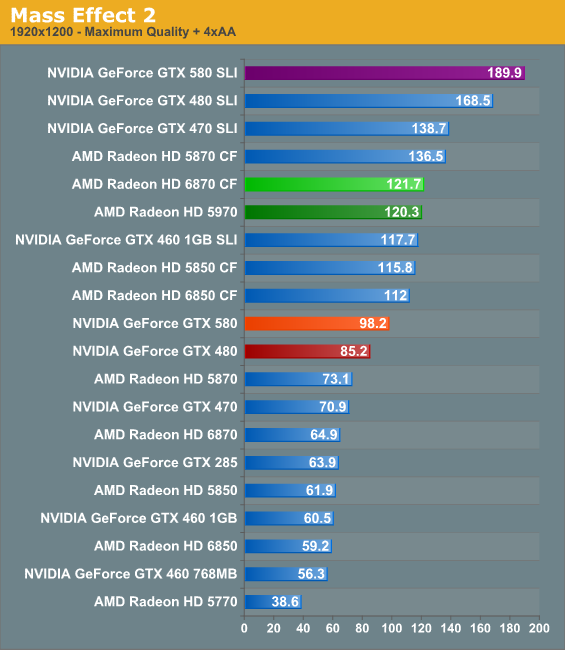
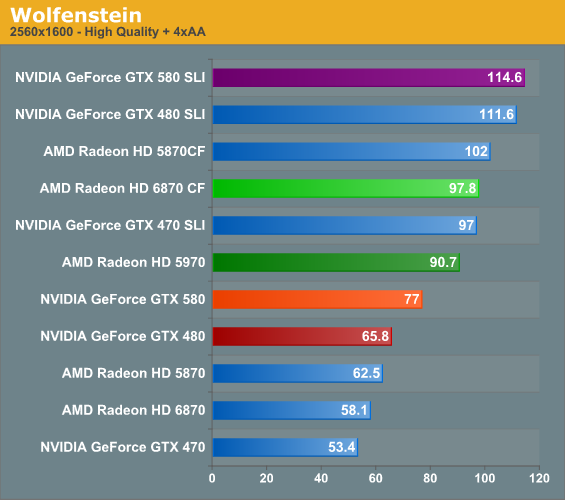
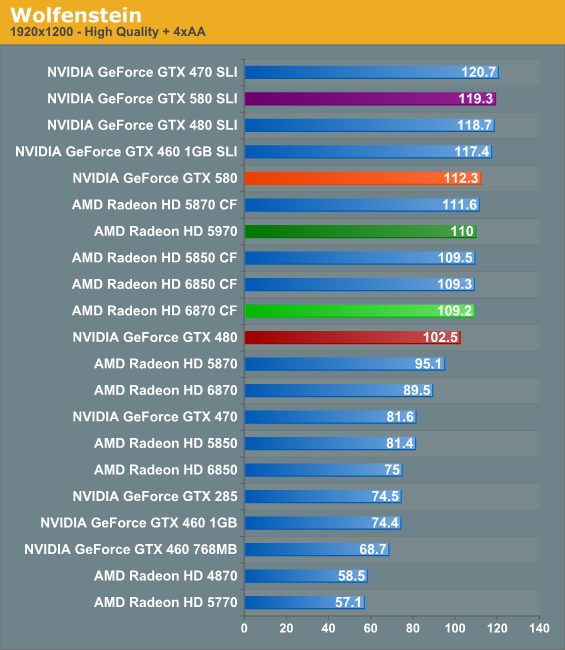
There are two situations where the GTX 580 SLI doesn’t handily beat everything else: Metro 2033, and Civilization V. The latter appears to be yet another incident where NVIDIA’s apparently faulty Civ5 SLI profile is robbing an SLI setup of performance, while Metro 2033 is a more interesting case. At 1920 the 580 SLI is well in the lead, but at 2560 SLI scaling is breaking down, letting the 5870CF take a slight lead.
Meanwhile in other cases we’re clearly running in to CPU limits even at 2560, as both Wolfenstein and HAWX are definitely hitting the wall; though these are already two of our fastest games before including SLI. The good news is that this leaves plenty of performance for eye candy options, as NVIDIA’s fantastic but expensive Transparancy AA and Supersample AA options for DX10 and DX11 are still available. For the IQ nuts out there that won’t settle for anything less than the best, we managed to get the 580 SLI running Crysis with all Enthusiast settings and 4x SSAA at a playable framerate of 42.8fps – albeit at 1680x1050. Perhaps next year’s 28nm die shrink will unlock enough performance that we can seriously start considering SSAA at the very high end?
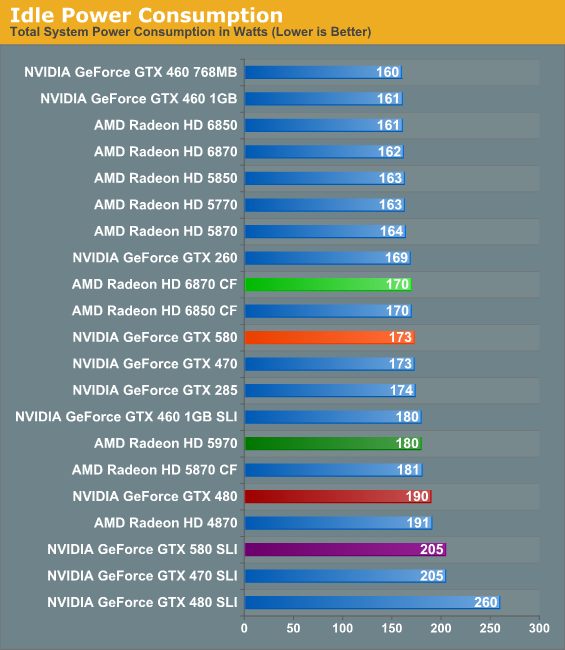
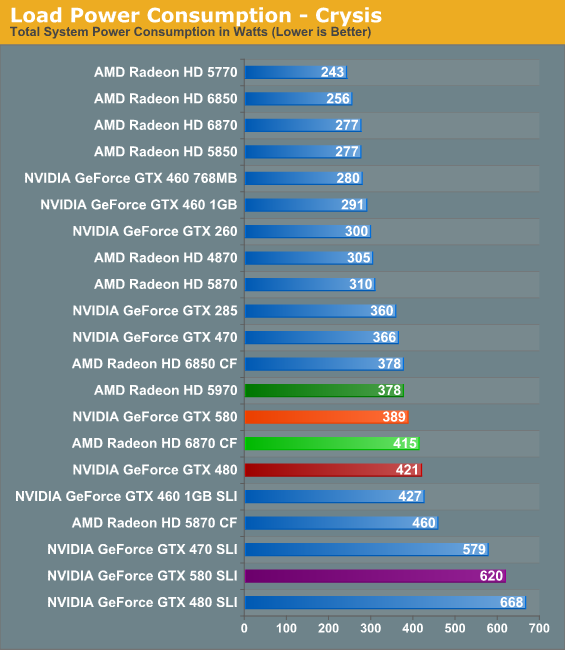
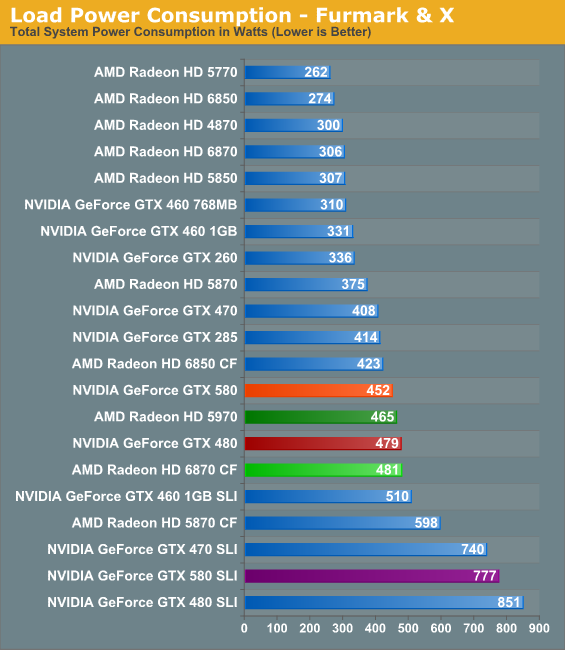
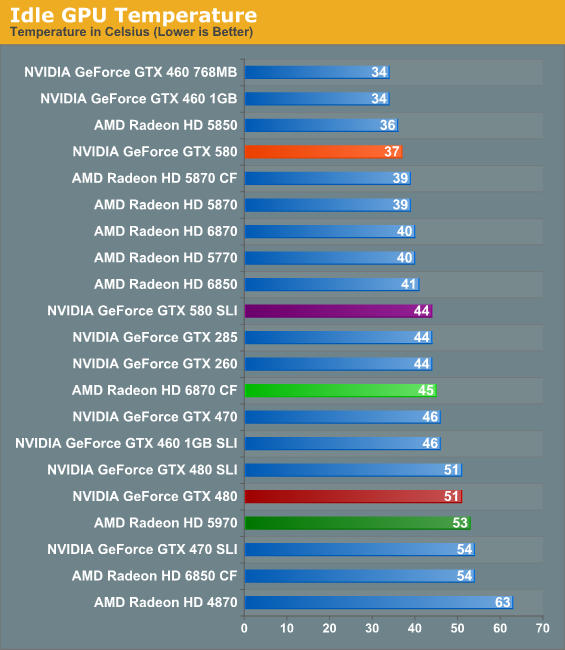
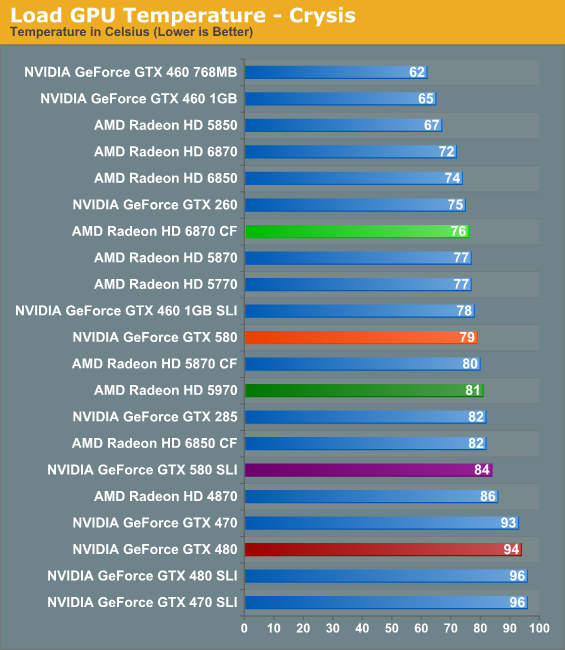
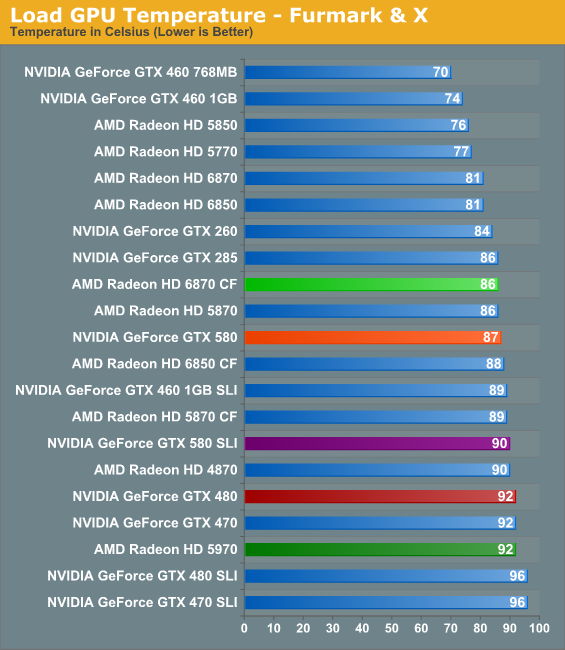
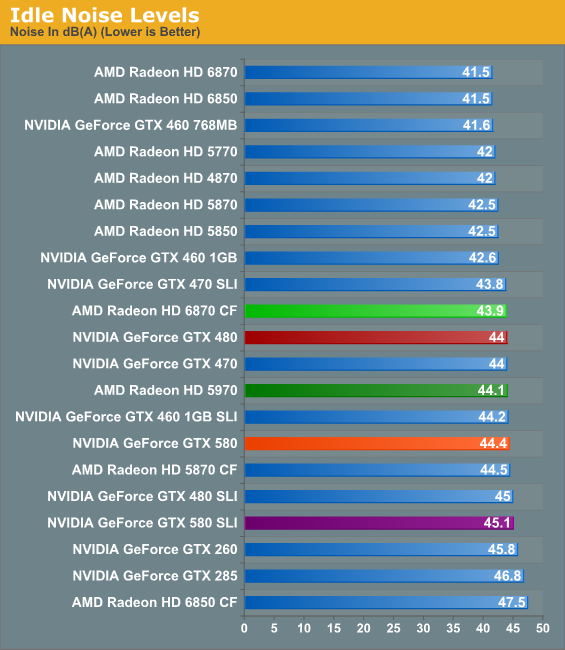
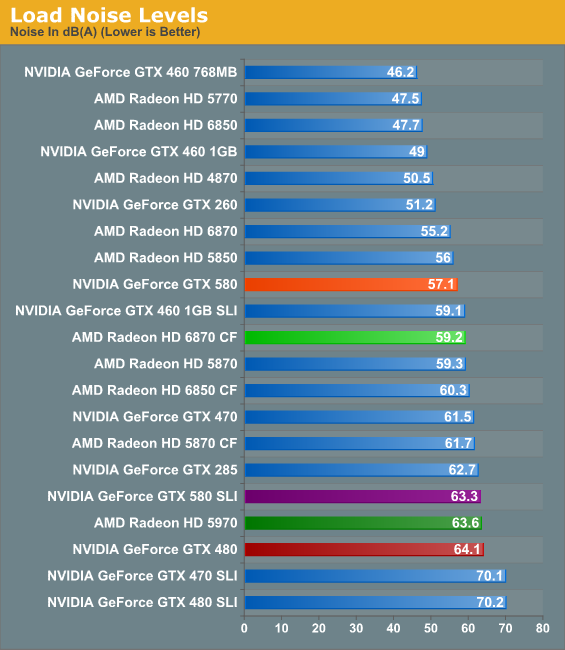
As for power, temperature, and noise, the results are in-line with where we’d expect them to be considering we’re pairing up high-end cards. Compared to the GTX 480 everything is peachy; idle power is down 55W(!), load power is down 40-80W, gaming temperatures are down 10C, and even load noise is way down. Here we see the same 7dB drop as a single GTX 580, bringing the GTX 580 SLI in below the 5970, a single GTX 480, and only slightly above a single GTX 285. Bear in mind that we’re running our cards directly next to each other here to look at the worst case scenario, so given some spacing everything here would be even quieter. Truth be told, we did not really have high hopes here, as we expected the lack of a PCB ventilation hole to take its toll; we’re pleasantly surprised as a result.
On the flipside, we’re still looking at a lot of power consumption – GTX 580 doesn’t change the fact that GF100/110 cards are in their own little universe in SLI compared to the next most power hungry setup, a 5870CF. Meanwhile noise isn’t bad, but if you’re used to a single card then this will probably catch you off guard. So the usual concerns stand with the GTX 580 SLI: make sure you have a solid high wattage power supply, an airy case, and ideally a motherboard with an x16 PCIe slot located farther away from the first one.
Originally published at https://www.anandtech.com/show/4012/nvidias-geforce-gtx-580-the-sli-update (Wayback Machine).