
Smartphone Silicon: The 2010 CTIA Wireless Show Roundup
- Posted in
- Smartphones
- Mobile
HTC introduced the first (and till 2010 CTIA, the only) smartphone with WiMAX support (HTC MAX 4G) in Russia in 2009. So, it came as no surprise that Sprint chose HTC as its partner to bring out the first US WiMAX device in a smartphone form factor. Based on the tried and true Snapdragon platform (which also happens to be the brains behind the Google Nexus One), it is not the application processor which takes the laurels here, but the radio chipset used. Since the application processor also plays an important role in the end user experience, let us take a short detour to analyze the pros and cons of the Snapdragon platform used here before looking into the winner in the radio chipset.
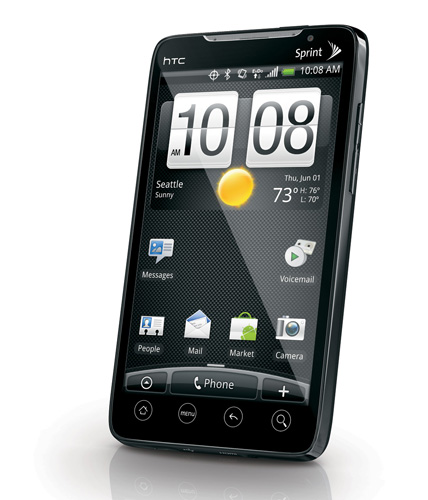

The real winner in the HTC EVO 4G is a relatively unknown semiconductor company, Beceem Communication. A provider of chips for 4G communication, the company exclusively powers the Sprint WiMAX network. It is believed in industry circles that the HTC EVO 4G's WiMAX support is powered by the Beceem BCSM250 (which is already a part of some of the other 4G equipment supplied for utilizing Sprint's network). Beceem, along with Motorola, also announced plans to support both WiMAX and LTE standards in the BCS500 introduced at the 2010 Mobile World Congress. All in all, Beceem looks set to be a dominant force in the US radio chipset market for 4G devices in the near future.
Update: It looks like the WiMAX baseband chip in the HTC EVO 4G isn't made by Beceem but rather Sequans Communication.
Originally published at https://www.anandtech.com/show/3624/smartphone-silicon-the-2010-ctia-wireless-show-roundup (Wayback Machine).