
Intel 810 Chipset
- Posted in
- CPUs
Firmware Hub
| The final piece to Intel's three hub puzzle is the i82802AB/AC Firmware Hub (FWH). As you can tell by the name, the FWH is essentially the BIOS of the motherboard. The FWH is a 4Mbit EEPROM device with a bit of "intelligence" to it in that it does more than just store/retrieve predefined and modified settings, the FWH also contains Intel's own Random Number Generator (RNG). Intel's documentation claims that the RNG is used for "greater security," go figure, regardless, the RNG is there. | 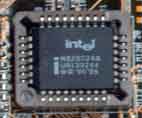 |
The BIOS setup on the first 810 boards AnandTech took a look at was manufactured by Award, and the particular setup programs were Award's latest revision, v4.00PG. The new BIOS setup program from Award should be quite popular, and it seems like more motherboard manufacturers are journeying towards jumperless setups. The ability to manually tweak and set the core voltage of the CPU is still not as widespread as the market would like it to be, however there are still more choices than just ABIT when you're looking for such options. Microstar's MS-6182, mentioned above, even features the ability to adjust the voltage of the processor's L2 cache. It's bold moves like this that have ABIT very worried, possibly the same worries that have inspired them to pursue a few new products such as Dual Socket-370 motherboards in order to remain competitive.
There is a downside to the FWH, it happens to operate synchronously with the 33MHz PCI bus. This translates into another factor you must consider when you are overclocking the PCI bus to any degree. Although your PCI peripherals may work fine at a PCI bus frequency greater than 33%, if the FWH does not agree then you'll be in a bit of trouble. AnandTech's tests revealed that the FWH on most 810 boards is fairly reasonable when it comes to out-of-spec operation, however we issue no guarantees (it's overclocking, c'mon).
Originally published at https://www.anandtech.com/show/299 (Wayback Machine).