
10Gbit Ethernet: Killing Another Bottleneck?
- Posted in
- IT Computing
The Hardware
As always, we worked with the hardware we have available in the labs.
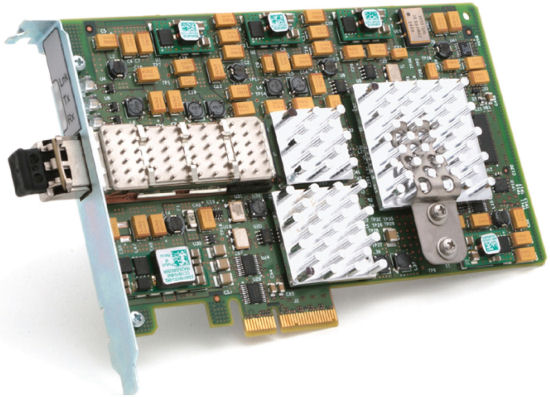
The Neterion Xframe-E is neither Neterion’s latest nor greatest. It came out in 2008 and was one of the first PCI Express NICs that supported VMware’s NetQueue feature in ESX 3.5, so we felt this pioneer in network virtualization should be included. The latest Neterion NICs are the X3100 series, but those cards were not available to us. The Xframe-E has eight transmit and eight receives queues available, TCP checksum offload, and TCP segment send/receive offload. The card uses a PCIe 1.1 x8 connector. Typical power consumption is around 12W. More info here. Our Neterion Xframe-E used optical SR multi-mode fiber, but a CX4 version is also available.
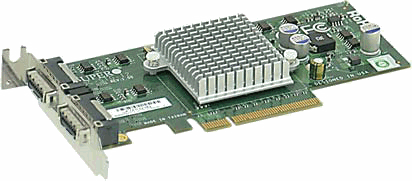
The Supermicro AOC-STG-I2 was also first made available in 2008, but we got the version that was sold in 2009. It is based on the Intel 82598EB chip. It supports checksum offloading and even iSCSI booting. 16 virtual queues are available. Power consumption should not be higher than 6.5W. More info here.
Native performance
We first tested on the Linux distribution CentOS 5.4, based on the 2.6.18 kernel. The first goal was to understand whether 10Gbit cards make sense for non-virtualized platforms.
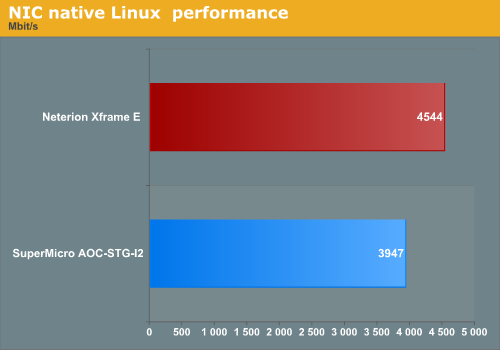
The Neterion needed 6% of our 8 2.9GHz Opteron cores, the Intel chip on our Supermicro card only 2.5%. Despite these low percentages, both cards cannot reach half their potential. These rather expensive cards do not seem to be very attractive next to a simple quad-port 1Gbit/s Ethernet card.
Originally published at https://www.anandtech.com/show/2956/10gbit-ethernet-killing-another-bottleneck- (Wayback Machine).