
Mobile Buyers' Guide, December 2009
- Posted in
- Guides
AMD Laptops
Outside of sales - and there are many sales going on right now - laptops with AMD processors will mostly fall into this price bracket. The performance offered is good, though certainly there are faster laptops. One of the big selling points for AMD laptops is that they have good integrated graphics (ATI HD 3200) that can run many games, though usually only at low resolutions and detail settings. AMD-based laptops are really a question of priorities, and if you value performance and cost over battery life they are a very compelling option.
The latest AMD CPUs are now being built on a 45nm process and have architectures based off of K10 instead of the aging K8 design. All of these CPUs bear the Roman numeral "II" in their name, so look for the Turion II M500, Turion II Ultra M600, and Athlon II M300 CPUs. These CPUs should improve battery life and performance relative to older mobile Athlon/Turion designs, though it's unlikely they will be able to match Core 2 CPUs. Unfortunately, we're still trying to get a laptop for testing, so we can't provide a definitive answer at this time. We tried to find more information, but the best we could do is a note of "5 hours 15 minutes" with an HP dv7 at BestBuy - that's a 17.3" notebook with an 8-cell battery.
Ultimately, AMD-based laptops will typically cost around $100 less than Intel-based laptops with similar features, but they generally offer less battery life and performance. Given the features and performance available in the ASUS UL80Vt, we would recommend staying closer to the lower end of the price spectrum if you're looking at AMD laptops. The overclocked SU7300 CPU should offer close to the same performance as a ~2.0GHz AMD "II" CPU (i.e. the Athlon II M300/M320, slightly slower than the Turion II M500), and the G210M should offer about the same level of performance as the HD 3650/4570. You'd want a laptop with an HD 4650 or a GeForce G120M/G220M (9600M GT) and a Turion II Ultra (Pentium T4300) to surpass the UL80Vt performance, but there's still the topic of battery life.
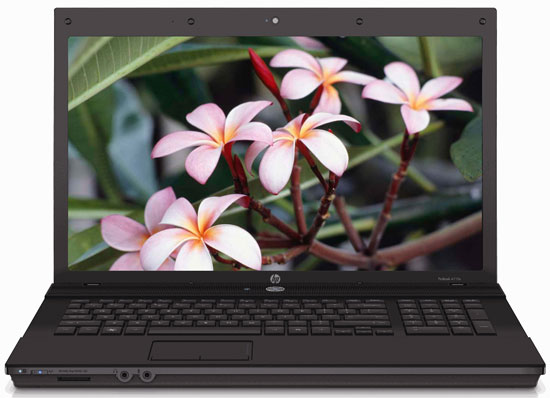
The HP dv6z and dv7 are two of the few laptops that currently offer the latest AMD 45nm processors. With prices starting at $550 with the current $150 rebate - $630 with 4GB and a high capacity 6-cell battery - it's an interesting laptop but not our top recommendation. Depending on how much weight you place on battery life, graphics performance, and laptop size, you may disagree. In that case, have a look at the HP Pavilion dv6z (we're not sold on 17" laptops, so we'll pass on the dv7).
Intel Laptops
On the CPU side, Intel has had a clear lead over AMD since the launch of Core 2 several years back. In fact, on mobile solutions it would be difficult to suggest that AMD has ever enjoyed a lead over Intel. Ever since Banias in 2002, Pentium M and Centrino delivered what was arguably a better mobile solution for most users than anything AMD offered; Athlon 64 laptops in the Pentium 4 era were mostly of interest to the high performance crowd.
The CULV processors are great for battery life, but even the ASUS UL80Vt with its overclocked CPU doesn't offer nearly the performance available in other Core 2 mobile offerings. The Pentium T4300 (2.10GHz, 1MB cache) is very inexpensive and it should match most mobile AMD CPUs. Laptops start at around $500, but the GMA 4500MHD IGP is clearly inferior to ATI's HD 3200/4200. The P8400 and P8600 take clock speeds up to 2.26GHz and 2.40GHz, though you'll be hard-pressed to keep costs under $850 with such CPUs. If you want better gaming performance, look for a lower end Core 2 CPU with a discrete GPU or a better IGP like NVIDIA's 9400M.
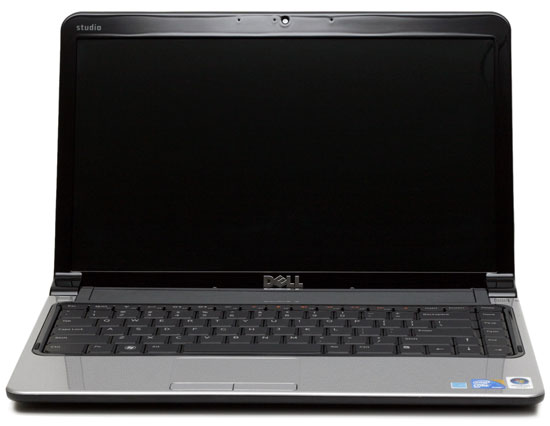
Our favorite pick right now for Intel Core 2 laptops in this price bracket is the Dell Studio 14z. Maximum battery life is around six hours with the 8-cell battery, and the combination of Core 2 with the 9400M results in a good blend of performance. In gaming tests, the GeForce 9400M is around 50% faster than the ATI HD 3200, making it the current king of IGP solutions as far as performance is concerned. The base model Studio 14z comes with a Core 2 T6600 (2.2GHz, 2MB, 800FSB), 3GB DDR3, 250GB HDD, 1366x768 LCD, 56Wh battery, and Win7 Home Premium. $800 will get you the larger battery, and $850 will allow you to upgrade to the 1440x900 LCD - both upgrades are highly recommended.
Atom Laptops?
While there are plenty of Atom-based offerings in this price range, we feel Atom is a much better fit at the lower end of the price spectrum, and we would recommend against spending more than $400 (perhaps $450) for such a laptop. Regular Core 2 laptops are more than three times as fast (even for the low end CPUs), and CULV laptops are still twice as fast while offering similar battery life. Atom is really about keeping costs as low as possible at the expense of performance, and we can't recommend such laptops in the high price segments. As mentioned already, we also place the VIA Nano laptop (Samsung NC20) in this same category; priced at over $500, there are just too many other compelling options.
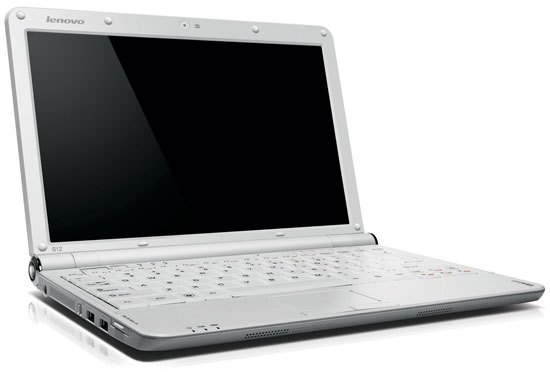
If you want a viable Atom netbook for around $500, we'd recommend the Lenovo S12 with 2GB. It's around $520, but we didn't like the HP Mini touchpad or keyboard enough that we'd spend the extra on the IdeaPad S12. About the only thing it can do without difficulty that CULV systems struggle with is 1080p Flash video, but that's at least something.
Originally published at https://www.anandtech.com/show/2883 (Wayback Machine).