
The SSD Improv: Intel & Indilinx get TRIM, Kingston Brings Intel Down to $115
- Posted in
- Storage
The Test
| CPU | Intel Core i7 965 running at 3.2GHz (Turbo & EIST Disabled) |
| Motherboard: | Intel DX58SO (Intel X58) |
| Chipset: | Intel X58 |
| Chipset Drivers: | Intel 9.1.1.1015 + Intel IMSM 8.9 |
| Memory: | Qimonda DDR3-1066 4 x 1GB (7-7-7-20) |
| Video Card: | eVGA GeForce GTX 285 |
| Video Drivers: | NVIDIA ForceWare 190.38 64-bit |
| Desktop Resolution: | 1920 x 1200 |
| OS: | Windows 7 x64 |
Sequential Read/Write Speed
Using the latest build of Iometer I ran a 3 minute long 2MB sequential write test over the entire span of the drive. The results reported are in average MB/s over the entire test length:
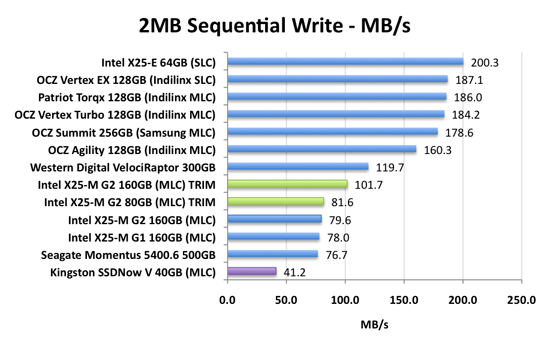
I ruined the surprise earlier, but the X25-M G2 160GB can now write at speeds of up to 100MB/s. The 80GB version doesn't get the benefit. The rest of the SSDs are approaching 2x that performance however. The poor Kingston drive is limited by its 5-channel implementation and barely manages more than 40MB/s. This will keep the Kingston SSDNow V series from cannibalizing X25-M sales, while at the same time offering a taste of what good SSDs have to offer at lower price points.
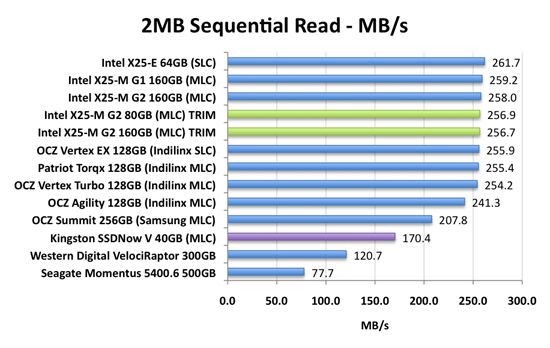
We're nearly tapped out on sequential read speed. The new TRIM firmware appears to drop performance a bit but not much. SATA 6Gbps will be necessary before we can see higher sequential read speeds from a single SSD.
True to Kingston's claims, the SSDNow V 40GB pulls around 170MB/s thanks to its narrower configuration. Not within arm's reach of the more expensive SSDs but still much faster than a mechanical drive.
Originally published at https://www.anandtech.com/show/2865 (Wayback Machine).