
Integrated Graphics - G45 at IDF
- Posted in
- Trade Shows
Scott Janus lead the technical session today. He is the Media Architect for Intel, an accomplised author, and has been around since the i740 graphics product about a decade ago.
Performance-

The conference started out with an overview of why the personal computer is becoming an important tool for watching video. A theme that carried over from the keynote speeches this morning. In fact, the latest studies show the average user watches 228 minutes of video over the internet each month. Also, just in the US, we viewed over 12 billion videos online in May of this year alone. Besides watching videos online, viewing high definition content is becoming increasingly important.
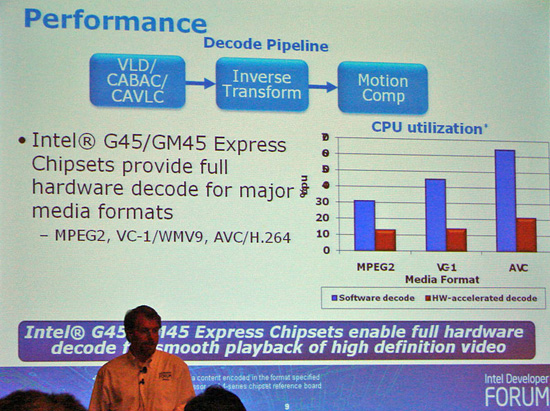
The session started to get interesting as Scott delved into some of the unique performance features of the G45 family. Unlike previous Intel chipsets, the G45 series offers full hardware decode capabilities for MPEG2, VC-1/WMV9, and now AVC/H.264. CPU utilization rates are down significantly now with H.264 dropping down around 20% compared to 75% in our testing, results similar to Intel.
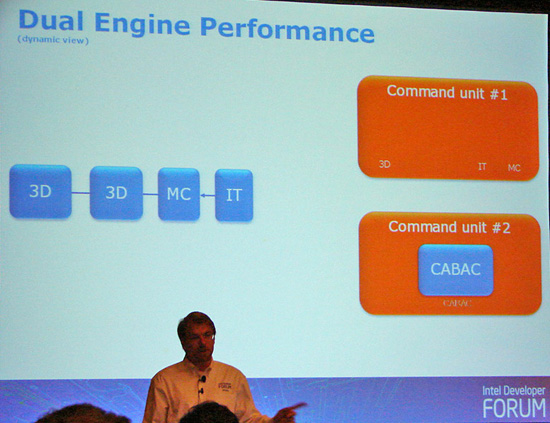
One of the performance enhancements that Intel designed into the G45 is the Dual Engine layout (balanced parallel decode engines). This design is different from previous Intel chipsets as it features two Command units. The first command unit will complete 3D layer, motion compensation, and inverse transform tasks while the second command unit will work exclusively on CABAC (context-adaptive binary arithmetic coding) routines.
CABAC is one of the more popular video encoding algorithms due to superior compression techniques in AVC/H.264 encoding. CABAC routines require an extensive amount of processing power during the decode process compared to similar algorithms. As such, Intel determined one of the best ways to improve performance and reduce power is to send CABAC routines to a second command unit.
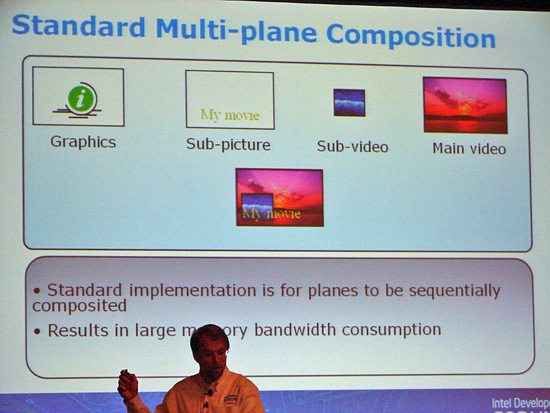
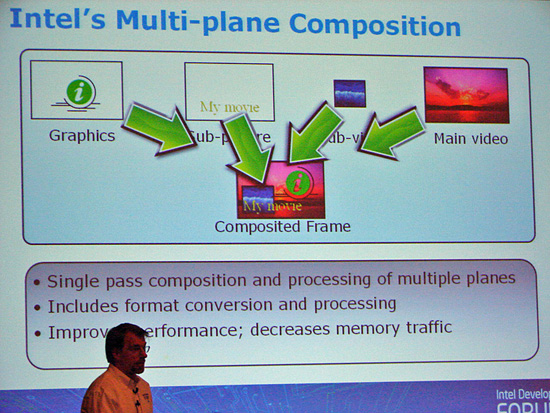
Another performance enhancing technique that Intel implemented is a Multi-plane composition routine that features single pass composition and processing of multiple planes along with format conversion and processing. Compared to the standard Multi-plane composition technique that requires the various planes to be sequentially composited, the new routine decreases memory bandwidth requirements significantly.
Power Efficiency-
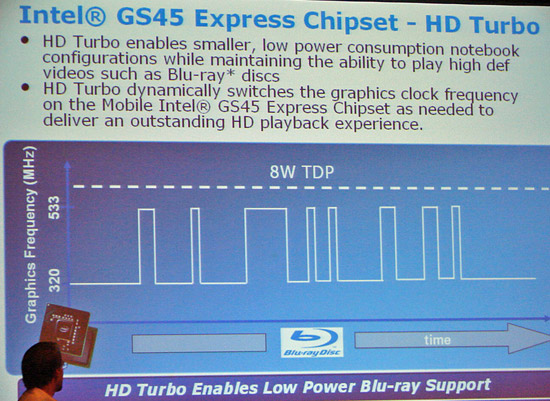
For the notebook crowd, Intel looked at various ways to reduce power during high-definition content playback. One of the features added to the GS45 mobile chipset is a function called HD Turbo. This feature dynamically switches the graphics core clock frequency as needed to ensure proper HD playback. The range allowed is anywhere from 320 MHz to 533 MHz. Also featured is version 4 of DPST (Display Power Saving Technology) that dynamically controls picture brightness by influencing backpanel lighting. All together, these new features allow the GS45 chipset to reach a 150 minute range when playing back a typical H.264 title compared to 104 minutes with the previos GM965 chipset utilizing a 58W per hour battery setup.
Did we get our questions answered?
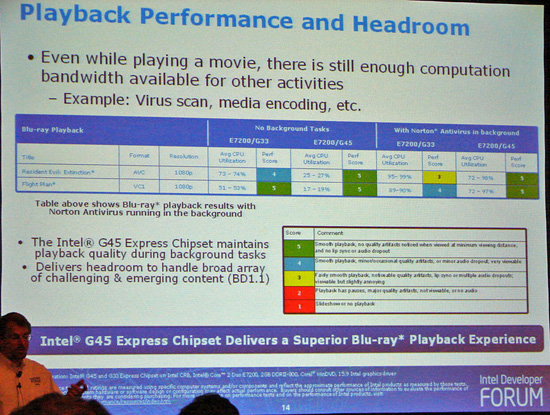
Intel made a point that the G45 is capable of playing back high-definition content while performing other tasks. To prove their point, they presented an interesting demo that featured the Blu-ray and SD versions of Batman Begins each playing at the same time along with Blu-ray picture-in-picture playback. Of course, we have had this capability from AMD and NVIDIA for several months but the G965/G35 could not handle this task. What really made the demo interesting was the video/audio output being sent to the Onkyo TX-SR605 and then out to the display and speakers via HDMI.
That's right, repeater mode is finally working. After a closer inspection of the display output, de-interlacing and post processing is now active. However, 1080P/24Hz playback support is still not working properly. Before getting too excited, this demo was presented with the new 15.11 drivers (newer than the 7/26 release) and a beta version of Corel WinDVD 9.0 Plus. The upgraded 15.11 driver set will be released this week, but we still do not have a firm release schedule from Corel, Cyberlink, or ArcSoft on patches to their BD capable products that feature full repeater and Intel Clear Video support.
Even though repeater mode is working correctly in the press demos, we are still not sure about full repeater support for the most popular receivers from Denon, Pioneer, Sony, or Yamaha as Intel has only tested this feature on models from Onkyo and Astro. Until we have proper software support, this platform will continue to be crippled for the serious HTPC user. That's a shame really as this chipset has tremendous potential for the HTPC market. Look for our G45 review shortly and hopefully we will have some good news regarding software updates by then.
Originally published at https://www.anandtech.com/show/2592 (Wayback Machine).