
Foxconn Black Ops - Raw, Unadulterated Power
- Posted in
- Motherboards
Testbed Setup
| Foxconn Black Ops Overclocking / Benchmark Testbed | |
| Processor | Intel Core 2 Extreme QX9650 (Quad-core, 3.0GHz, 9x Multiplier, 2x6MB Cache) Intel Core 2 Due E8500 (Dual-core, 3.16GHz, 9.5x Multiplier, 6MB cache) |
| CPU Voltage | Various |
| Cooling | Dtek Fuzion CPU cooler 2 x PA120.2 Radiators 3X Noctua NF-P12 120MM fans DDC Ultra with Petra top Dual cascade cooling 2x1.5HP rotary compressors |
| Power Supply | PCP1200W |
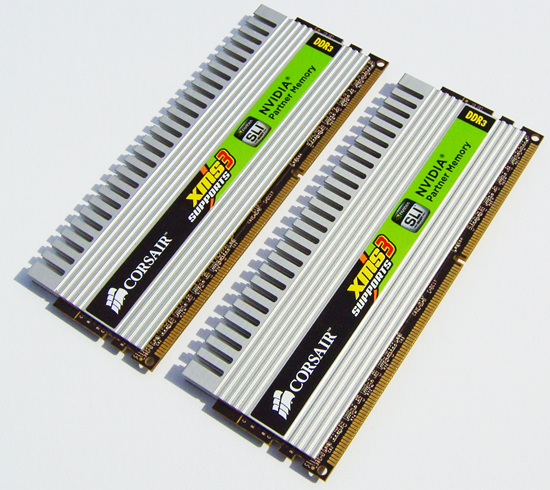
| Memory | Corsair XMS3-2133 2x1GB (ver 4.1) Corsair XMS3-1600 2x2GB (ver 4.1) Cellshock 1866 2x1GB OCZ Platinum 1800 2X1GB |
| Memory Settings | Various |
| Video Cards | ASUS 8800 GTS 512MB Foxconn GTX 280 for Extreme Benchmarking |
| Video Drivers | Nvidia 169.25 (Beta) & 177.41 For Benchmarking |
| Hard Drive | Western Digital 7200RPM 250GB SATA 3/Gbps 16MB Buffer |
| Optical Drives | Plextor PX-B900A, Toshiba SD-H802A |
| Case | Open Test Bed - Dimastech Benching Station Lian-Li V2110 |
| BIOS | G28 |
| Operating System | Windows XP SP2 Vista Home Premium 64-Bit |
| . | |
We decided to stick with Vista 64-bit with SP1 installed for basic benchmarking and testing and to use XP with SP3 for the cascade cooled testing. E8500 and QX9650 processors were used as the sacrificial lambs for all benchmarking purposes.
A number of memory kits were utilized for overclocking, with a 2x1GB configuration being preferred for the benchmarking runs. For 24/7 use on the Vista 64-bit platform, the Corsair 2x2GB kit is our choice as it proved to scale very well whilst remaining easy to overclock, even with our QX9650.
Both high-resolution 1920x1200 and 1280x1024 resolution game benchmarks were run to find performance benefits for gamers, should such advancements through BIOS tweaking exist. We utilize new drive images on each board in order to minimize any potential driver conflicts. Our 3DMark results are generated utilizing the standard benchmark resolution for each program. We run each benchmark five times, throw out the two low and high scores, and report the remaining score.
Recent reviews of 790i, P45, and X48 boards have allowed us to compile benchmark results for comparative purposes. This gives us the chance to look at single card results from two different chipsets running either DDR3 or DDR2 memory. It's no surprise that things will be close, as most of us already know that memory bandwidth and speed typically only makes a 1-3% difference between DDR2 and DDR3 boards.
Originally published at https://www.anandtech.com/show/2579 (Wayback Machine).