
iBUYPOWER: 4.0GHz QX9650 and 3-way SLI 8800 Ultras
- Posted in
- Systems
Problems
Every system has a few issues, right? Optimally, the out-of-box experience should be as exciting and worry-free as possible for the consumer - unpack, plug it in, and you are good to go. Unfortunately, that is often not the case, and this system had its fair share of problems.
First, due to the size and weight of this configuration, the video cards shifted in transit and required reseating before the system would boot. This is understandable, but is not an experience a first time buyer would enjoy or could easily troubleshoot. A foam insert to support heavier components, as Überclok did with the Tuniq tower, might make sense.
Next, once booted up the system was bloated with processes (50), had auto-updates enabled and automatically downloading, and was entirely lacking an antivirus solution. While not strictly a "problem", this is certainly something we expect OEMs to address, particularly for high-end gaming rigs.
Within minutes of using the system, small glitches began to rear their head.

This one cropped up while initiating a file download. A few minutes later while rebooting, the system failed to recognize the drive array on startup. It succeeded on the next attempt, but failed an additional time during the review period. The striped drives would audibly thrash from time to time (remember, antivirus is not installed and Windows Defender was not scanning during these periods). NVIDIA System Monitor crashed several times. Crysis would crash periodically, requiring the use of Ctrl-Alt-Del to kill it. World in Conflict crashed due to a driver problem.

This happened again two other times. Even when the games did run, they experienced an odd "pausing" or "hitching" at certain points, where the action would completely stop for a period as long as 2 seconds. This happened in both Crysis and World of Conflict but is not reflected in the frame rate numbers, which may indicate it is a problem with the video cards rendering to the monitor. (We have seen this behavior on other test systems at times, possibly related to NVIDIA drivers and SLI rendering.) The crowning glory was a blue screen of death from an "uncorrectable hardware error" that upon reboot Windows indicated was related to the CPU.
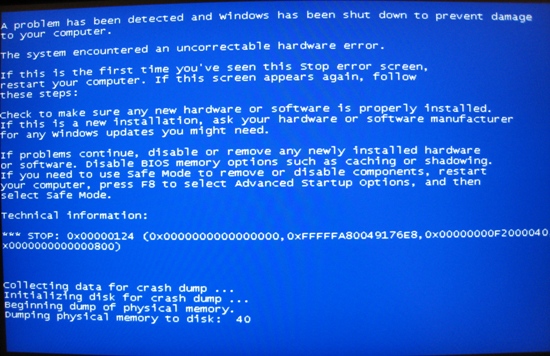
Note that most of the video problems above happened while in Tri-SLI mode. We ran the system for some time with a single 8800 Ultra, including a run through the entire Witcher demo, without the crashing or "hitching" issues. The overclock likely also contributed to periodic instability. Bottom line: This is complex system, and despite some special attention from the OEM it did have more than its fair share of problems.
Pricing
To get a broad picture of iBUYPOWER, let's examine both the entry-level Paladin 515-SLI and a system analogous to the high-end review configuration.
With a 3-year warranty and after shipping, the 515-SLI base configuration total came to $994. The exact same configuration at Newegg was $878 shipped, without Vista Home Premium (but before $70 in mail-in rebates). This is a very small premium to pay for a pre-assembled system with a warranty.
Does the same premium hold true for the higher-end systems? Well, the 8800 Ultras are not offered on most websites now, so we got as close to our review configuration as we could. Our hardware configuration lists for $4,587 with 8800 GTXs, before shipping, at iBUYPOWER's website. (The Corsair Dominator RAM upgrade stood out as being at odds with current pricing; it's a $150 premium over 2GB of DDR2-800.) Note that "professional wiring" is $19 extra. The same configuration at Newegg, again without Vista, tallies up to $4,035.85. This is almost exactly the same price premium as the entry-level systems, around that 13% mark. The question for the buyer is whether that's still a good value at this price point ($550 vs. $115).
Originally published at https://www.anandtech.com/show/2498 (Wayback Machine).