
AVADirect M570RU: SLI, Drivers, and 8800M GTX Performance
- Posted in
- Laptops
1920x1200 FPS Gaming Performance
Given that this is the native resolution of the display and that we're testing very high-end gaming notebooks, we will start by focusing on performance at 1920x1200. As discussed in our XPS M1730 review, NVIDIA provided us with an updated driver (v174.20) that improved SLI performance quite significantly in a few titles. We will make a note in the charts below when we used the updated driver; otherwise we tested with the officially shipping driver. We test in the same manner on all notebooks, but we don't have results at 1920x1200 on many of the previously tested systems.
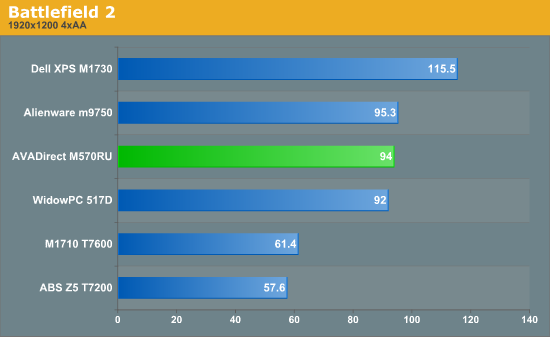
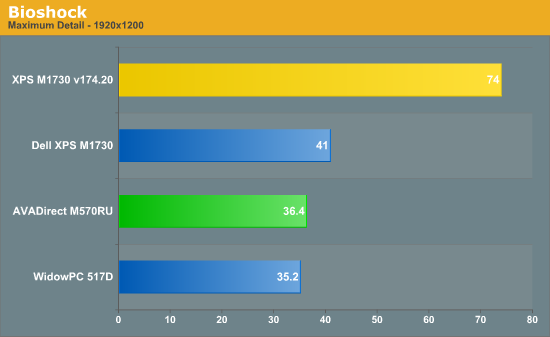
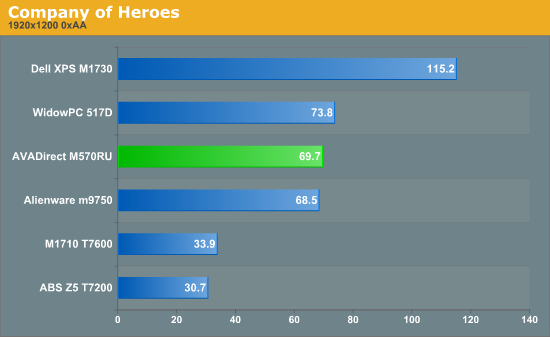
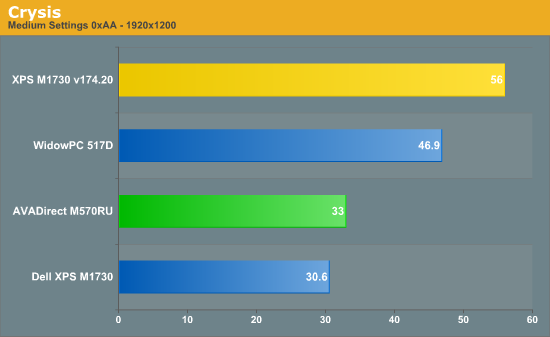
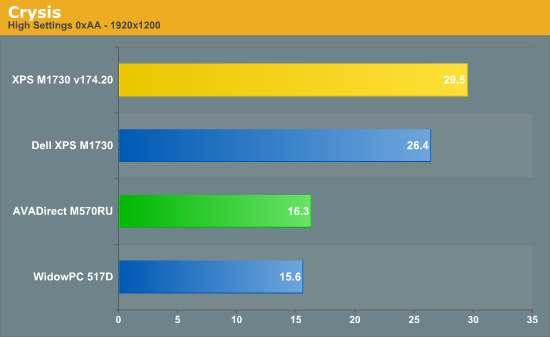
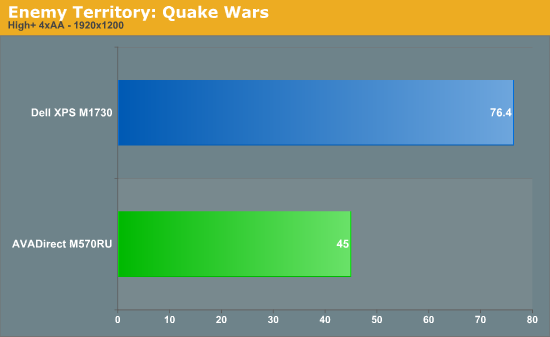
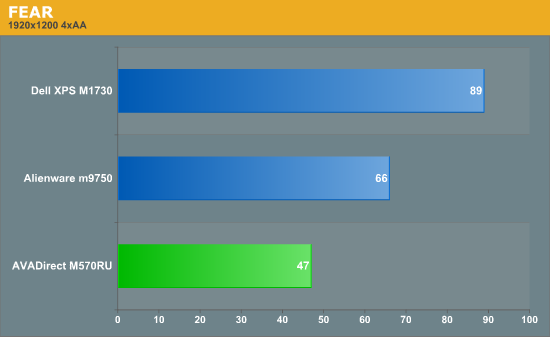
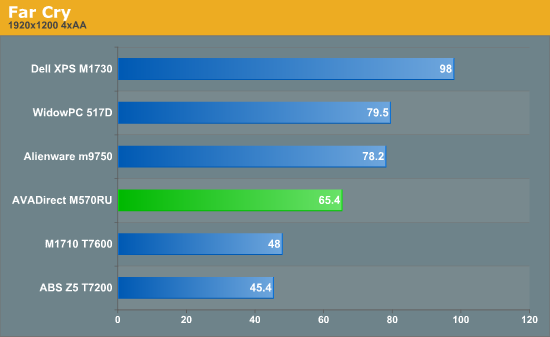
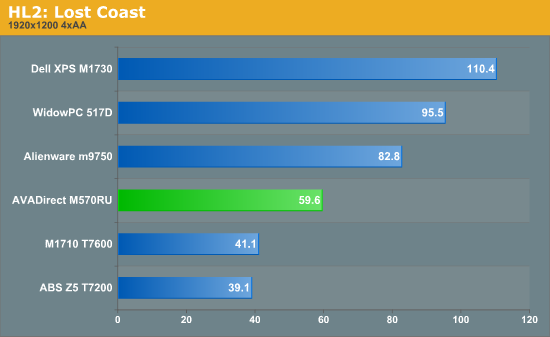
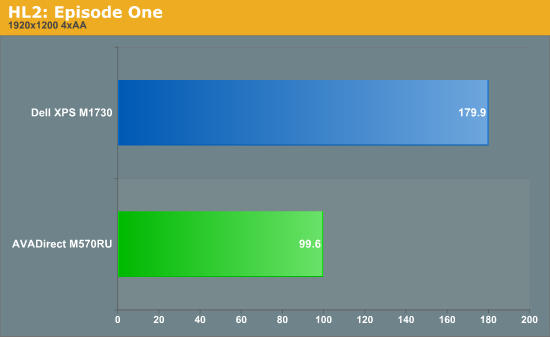
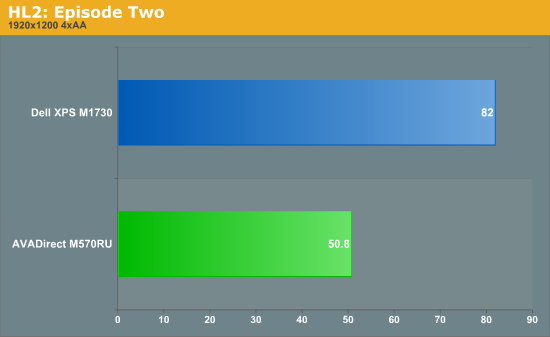
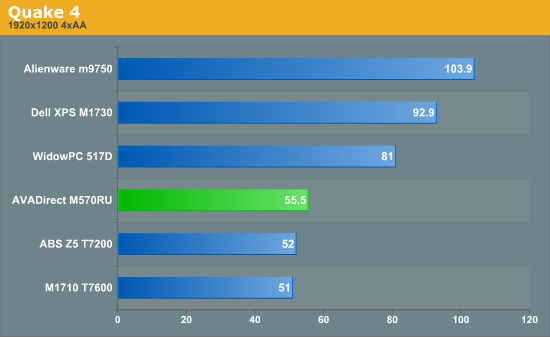
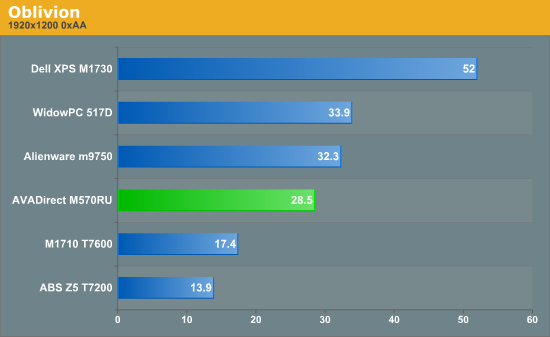
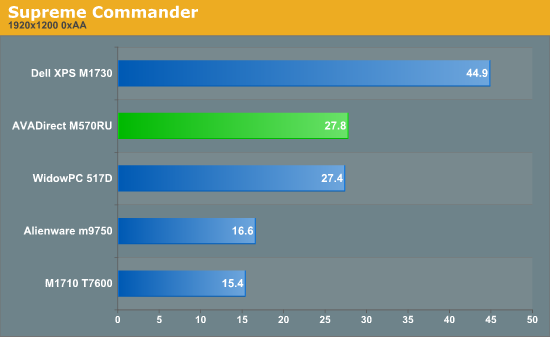
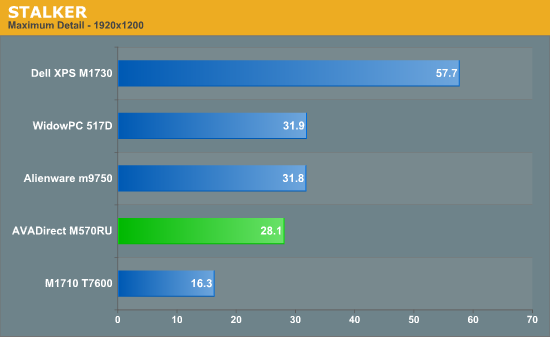
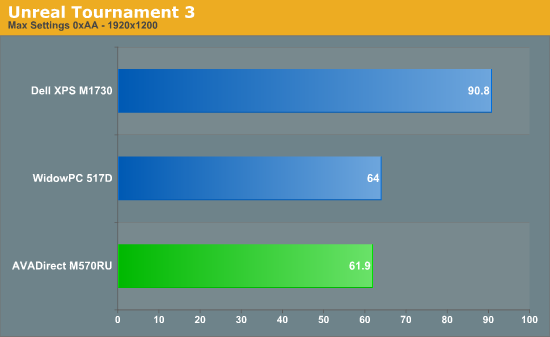
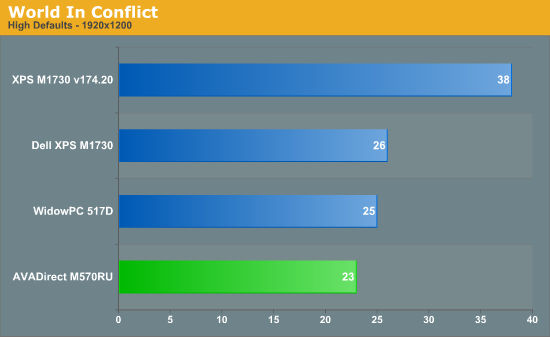
Okay, that was a ton of charts, but for the most part we see performance fall right where we would expect. The 8800M GTX is the most powerful single mobile GPU currently available, so outside of SLI configurations it places near the top of most charts. There are a few exceptions, however.
We would not be surprised by slight variations in performance between the WidowPC and the AVADirect computers, particularly in light of the fact that AVADirect has a faster and newer CPU. In many of the games, the differences are small enough that we can chalk them up to the faster processor or the use of a 64-bit OS. Crysis (medium detail), Far Cry, Half-Life 2: Lost Coast, Quake 4, and Oblivion also relatively significant performance differences, with the WidowPC system coming out had in the majority of the games.
If we still had that system, we would be able to go through and rerun all of the benchmarks as a sanity check. As it stands, all we can say for sure is there some odd results. It could simply be a case of the motherboard BIOS not being properly tuned for Penryn; it could also be that the 64-bit platform and drivers have managed to catch up and surpass the 32-bit environment. Or perhaps there some other explanation that we're missing. We have no reason to expect the two systems to be this different, so we are left guessing.
For what it's worth, as we'll see in a moment, performance on the Dell XPS M1730 with SLI disabled is nearly identical to the AVADirect M570RU. Both systems come equipped with a Penryn X9000 and a 32-bit operating system; the Dell system has two hard drives running in RAID 0, it has a different motherboard, and it's running 2 GB of memory. The most likely explanation for the performance anomalies above thus remains with the 64-bit OS and Penryn… or perhaps we just messed up when we ran some of the benchmarks on the WidowPC system. (Ed: Hey, it happens on occasion; we'd love to retest if we still had the notebook in our possession.)
Originally published at https://www.anandtech.com/show/2479 (Wayback Machine).