
ASUS Maximus Extreme - the Extreme Benchmarker's Choice?
- Posted in
- Motherboards
Extreme cooling results
| ASUS Maximus
Extreme Dual-Core Overclocking / Benchmark Testbed |
|
| Processor | Intel Core 2 Duo Q6850 Dual-Core, 3.00GHz, 4MB Shared Cache, 9x Multiplier, 1333FSB |
| CPU Voltage | 1.300V |
| Cooling | Various - Dual Rotary Cascades made by LittleDevil and Johann |
| Power Supply | OCZ Pro Xstream 1000w, PCP&C 1200w |
| Memory | OCZ DDR3 PC3-14400 (DDR-1800) Platinum Edition (2G/4GB) |
| Memory Settings | 4-4-4-12 1N (DDR3-1066 Base) |
| Video Cards | MSI 8800 GTX |
| Video Drivers | NVIDIA 169.09 |
| Hard Drive | Western Digital 7200RPM 250GB - WD2500KS |
| Optical Drives | Plextor PX-755A |
| Case | Dimastech benching table |
| BIOS | 0803 |
| Operating System | Windows XP Professional SP2 |
| . | |
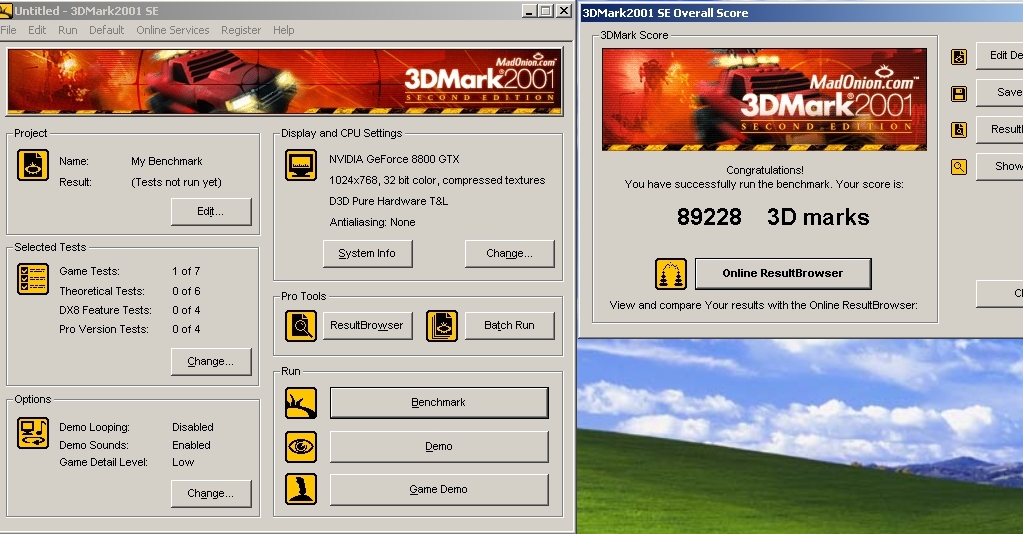
3D Mark 2001SE CPU @ 4.88GHz GPU @ 861/1000
 |
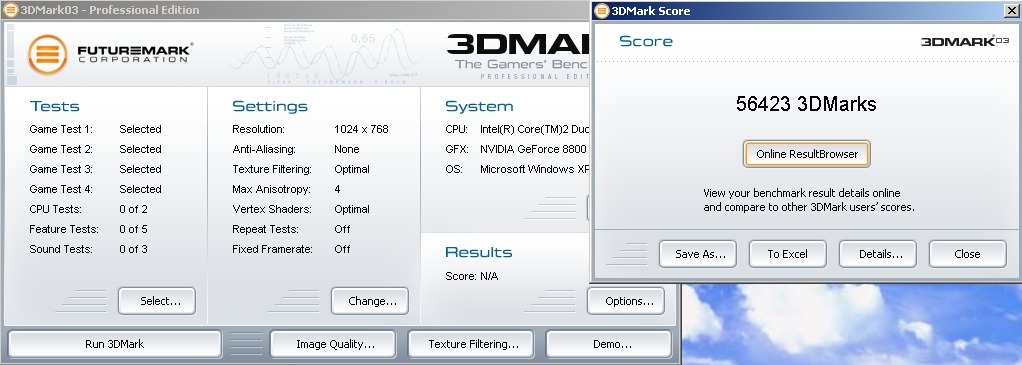
3D Mark 2003 CPU @ 4.88GHz GPU @ 861/1000
 |
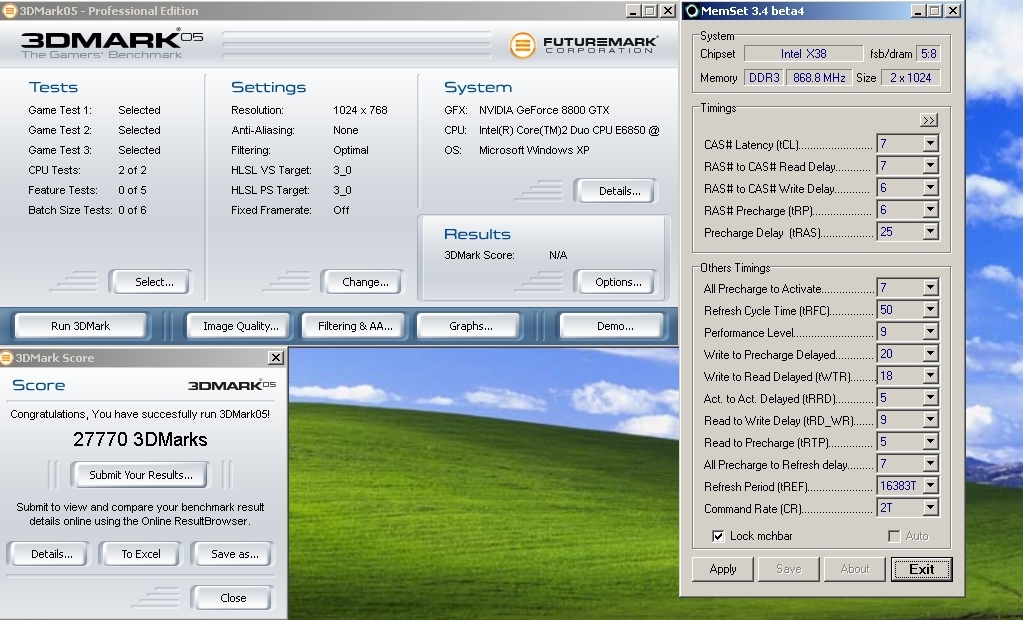
3D Mark 2005 CPU @ 4.88GHz GPU @ 861/1000
 |
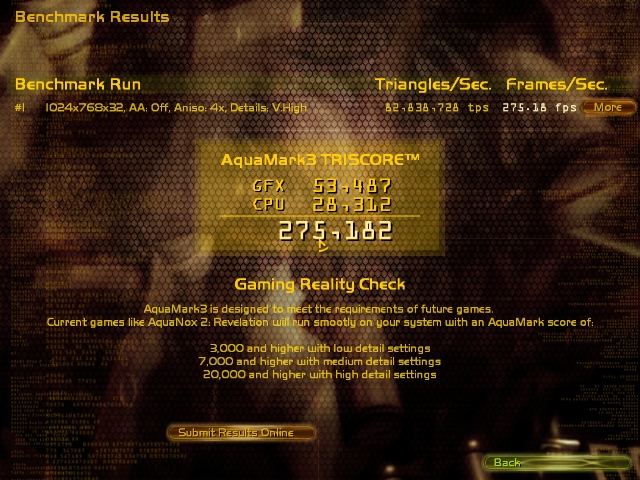
Aquamark 3 - CPU @ 5.084GHz GPU @ 840/1000
 |
Super Pi 1M - CPU @ 5.084GHz
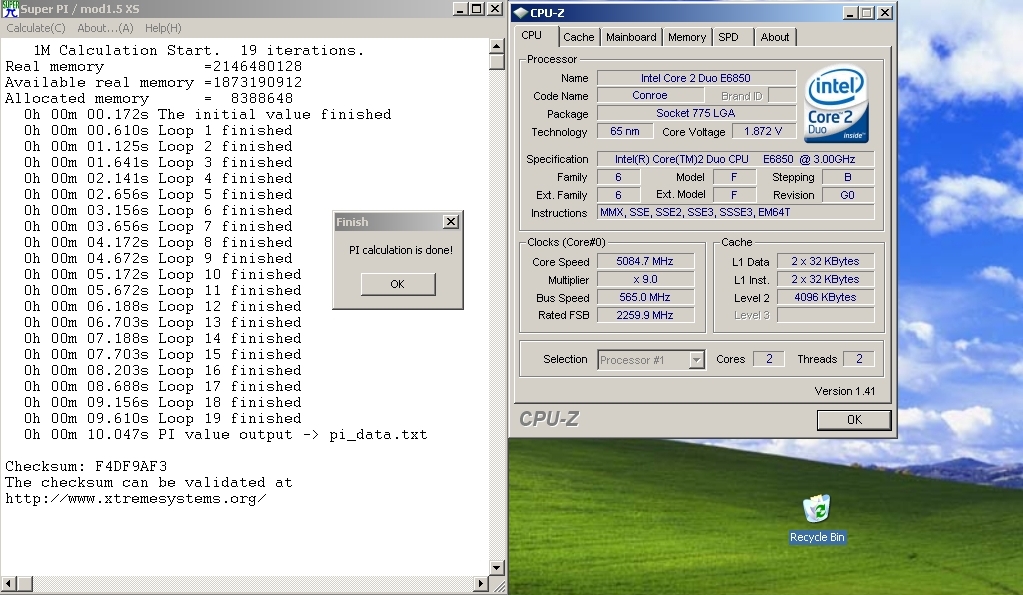 |
The 266 Northbridge strap worked up to 550FSB for us; at higher FSB speeds, we used the 333 strap and the 5:8 memory divider. The lowest Performance Level (tRD) we managed to hold stable over 560FSB on both the 333 and 400 straps was 9. VNB on our test board needed to be at least 1.71V and up for runs over 540FSB. RAM was another area we did not stress too far. The board overvolts VDIMM by around 0.05V, so we try to stay under 2.2V even for short sprint benchmarks.
The extreme cooled benchmarking was the one area we thought this board would really excel, and initial testing was very promising. We had no problems booting up at 9x570FSB within the first 10 minutes of each benching session. As time progressed, we found that we had to drop the FSB levels in order for the board to remain stable. Initially, our E6850 CPU was showing no signs of error during 3D benchmark testing at 565FSB (5.085GHz). Ten minutes later, any attempts to repeat or improve our scores proved futile. We checked cascade evaporator temps and contact, to ensure that inadequate cooling under heavy load didn't cause the decrease in stability.
Ambient temperatures in our test area were 8C, providing both the CPU and GPU cascades with plenty of support under heavy load. We checked our findings with a few extreme benchmarkers, to see if this "cold-bug" issue only occurred on our sample motherboard. Unfortunately, the answers we received in reply all suggested similar issues. The first boot into XP over 5GHz CPU speed is no problem, but subsequent re-boot attempts are limited to CPU speeds under 4.95GHz. The issue itself does not appear to be limited to particular CPUs either; we have heard examples of 45nm QX9650's succumbing to the same problem. It is probable that this issue involves PWM overvoltage and/or over-current protection. Benchmarks like Super Pi 1M still are fine at higher FSB speeds, while a slightly heavier load like Aquamark 3 fails after the initial attempt.
In this case using less Vcore than the absolute threshold for the circuit to trip may actually help achieve better stability. In our case, the only workaround for this situation was to bench for 10 minutes at a time, shut the board down, let everything return to ambient temperatures and then start again. If this issue is common, users with LN2 will be again hunting for modifications/BIOS fixes and perhaps even board revisions to enable true extreme benchmarking. Due to this constant on/off procedure and the attendant time constraints, we were not able to fine-tune the board to its full capabilities. Still, we are satisfied with our results.
Originally published at https://www.anandtech.com/show/2394 (Wayback Machine).