
Intel X48 - Much Ado about Nothing....
- Posted in
- CPUs
ASUS P5E3 Premium: Features and BIOS Changes
The P5E3 Premium board is designed for the general enthusiast with an emphasis on features designed for the home user, whether it is for gaming or home theater usage. ASUS provides two eSATA ports via the JMicron JMB363 chipset, IEEE 1394 support from Agere, excellent on-board audio support from the ADI 1988B, an 802.11n Wireless port, and dual Gigabit LAN capability.
The board offers a very good mix of expansion slots although utilizing a CrossFire setup will create the physical loss of a PCI Express x1 and PCI slot. The third PCI Express x16 slot operates at x4 electrically and can be utilized for various PCI Express cards including AGEIA PhysX, RAID controllers, or a third video card at this time.
We will go into the BIOS settings in additional detail once we receive the retail kit and official launch BIOS. However, the following screenshots represent features that we know will be in the retail BIOS.
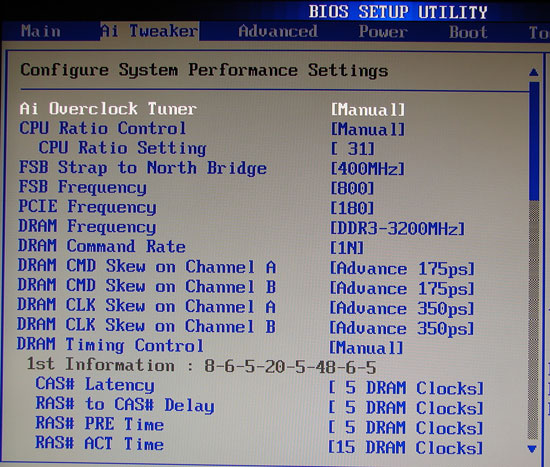
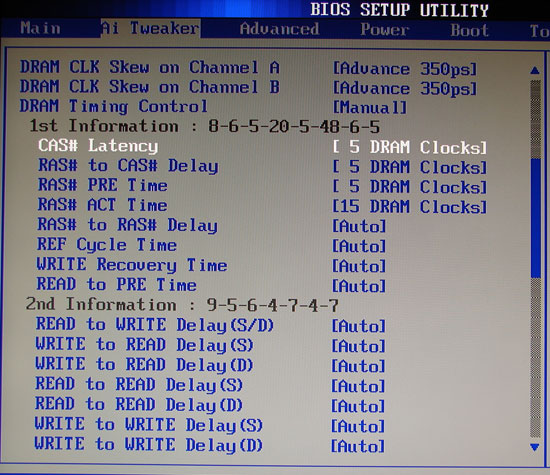
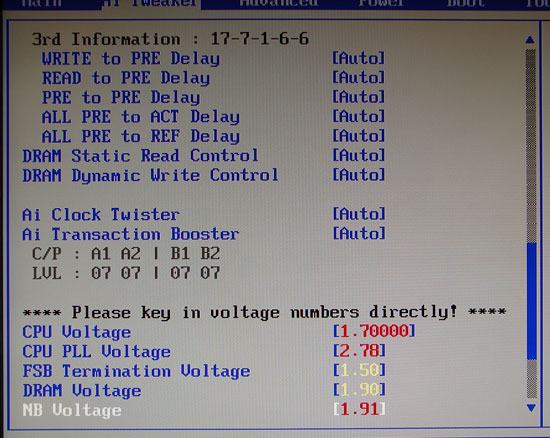
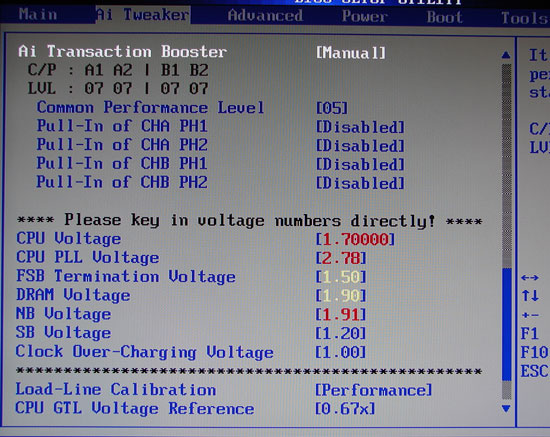
The P5E3 Premium BIOS has undergone a makeover of sorts. The AI Tweaker section is still in place with a wide variety of options for tuning the board. Although not as extensive as the latest DFI enthusiast boards, the options available have been expanded. The notable addition being the revamped the Transaction Booster setting. The Transaction Booster option is actually another name for tRD (Performance Level) and can be adjusted from 31 down to 1. ASUS joins DFI now in offering this setting that greatly affects latencies and overall system performance. The DRAM timing control sections now offers 23 different memory settings.
Our screenshots show the maximum value for each option. ASUS has listened to the power users and now offers CPU voltages to 2.10V and MCH voltages to 2.21V provided the OC jumper on the motherboard is enabled. ASUS has also included the ability to save BIOS profiles, although it is currently limited to two profiles.
| ASUS P5E3 Premium | |
| Market Segment | High Performance Enthusiast - $299.99 (estimated) |
| CPU Interface | Socket T (Socket 775) |
| CPU Support | LGA775-based Core 2 Duo, Core 2 Extreme, or Core 2 Quad Recommended |
| Chipset | Intel X48 (MCH) Northbridge and ICH9R Southbridge |
| FSB Speeds | Auto, 200 ~ 800 in 1MHz increments |
| Memory Speed (DDR3) | Auto, Eight Ratios dependent upon Strap Setting |
| FSB Strap | Auto, 200, 266, 333, 400 |
| PCIe Speeds | Auto, 100MHz - 180MHz |
| PCI Speeds | Locked at 33.33MHz |
| Core Voltage | Auto, 1.10000 to 1.70000 in .00625 increments, plus settings to 2.10V with OC jumper enabled. |
| CPU Clock Multiplier | 6x ~ 12x, downward adjustable for Core 2, upward to 31 for Extreme |
| DRAM Voltage (DDR3) | Auto, 1.50V ~ 2.78V in .02V increments, 1.50V standard |
| DRAM Timing Control | Auto, Manual - 23 DRAM Timing Options (tCL, tRCD, tRP, tRAS, tRFC + 18 sub-timings) |
| DRAM Command Rate | Auto, 1N, 2N |
| NB Voltage | Auto, 1.25V ~ 1.91V in .02V increments, plus settings to 2.21V with OC jumper enabled. |
| SB Voltage | Auto, 1.05V, 1.20V, 1.05V standard |
| FSB Termination Voltage | Auto, 1.20V to 1.50V in .02V increments, 1.20V standard |
| Clock Over Charging | Auto, .70V to 1.00V in .10V increments, .80V standard |
| CPU Voltage Damper | Auto, Enabled, Disabled |
| CPU Voltage Reference | Auto, .67, .65, .63, .62 |
| NB Voltage Reference | Auto, .67, .61 |
| AI Clock Twister | Auto, Light, Medium, Strong |
| DRAM CLK Skew CA/CB | Auto, Normal, 50ps to 350ps either advance or decrease |
| DRAM CMD Skew CA/CB | Auto, Normal, 25ps to 175ps either advance or decrease |
| AI Transaction Booster (tRD) | Auto, Manual, settings from 31 to 1 |
| Memory Slots | Four 240-pin DDR3 DIMM Slots Dual-Channel Configuration Regular Unbuffered DDR3 Memory to 8GB Total |
| Expansion Slots | 3 - PCIe x16 (2 - x16, 1 - x4 electrical) 2 - PCIe x1 2 - PCI Slot 2.2 |
| Onboard SATA/RAID | 6 SATA 3Gbps Ports - ICH9R (RAID 0,1, 10, 5) 2 eSATA 3Gbps Port - JMicron JMB363 |
| Onboard IDE | 1 ATA133/100/66 Port (2 drives) - JMicron JMB363 |
| Onboard USB 2.0/IEEE-1394 | 10 USB 2.0 Ports - 6 I/O Panel - 4 via Headers 2 FireWire 400 Ports by Agere FW3227 - 1 I/O Panel, 1 via Header |
| Onboard LAN | Realtek RTL8110SC - PCI Gigabit Ethernet controller Marvell 88E8056 PCI Express Gigabit Ethernet controller ASUS 802.11n Wireless Port |
| Onboard Audio | ADI 1988B - 8-channel HD audio codec |
| Power Connectors | ATX 24-pin, 8-pin ATX 12V |
| I/O Panel | 1 x PS/2 Keyboard 2 x eSATA 2 x SPDIF - Optical Out, Coaxial Out 1 x IEEE 1394 1 x Audio Panel 2 x RJ45 6 x USB 2.0/1.1 |
| Fan Headers | 6 - CPU, (5) Chassis |
| Fan Control | CPU and Chassis Fan Control via BIOS/AI Suite, PC Probe II monitoring |
| BIOS Revision | v110 |
| Board Revision | v1.00 |
The P5E3 Premium board is designed for the general enthusiast with an emphasis on features designed for the home user, whether it is for gaming or home theater usage. ASUS provides two eSATA ports via the JMicron JMB363 chipset, IEEE 1394 support from Agere, excellent on-board audio support from the ADI 1988B, an 802.11n Wireless port, and dual Gigabit LAN capability.
The board offers a very good mix of expansion slots although utilizing a CrossFire setup will create the physical loss of a PCI Express x1 and PCI slot. The third PCI Express x16 slot operates at x4 electrically and can be utilized for various PCI Express cards including AGEIA PhysX, RAID controllers, or a third video card at this time.
We will go into the BIOS settings in additional detail once we receive the retail kit and official launch BIOS. However, the following screenshots represent features that we know will be in the retail BIOS.
The P5E3 Premium BIOS has undergone a makeover of sorts. The AI Tweaker section is still in place with a wide variety of options for tuning the board. Although not as extensive as the latest DFI enthusiast boards, the options available have been expanded. The notable addition being the revamped the Transaction Booster setting. The Transaction Booster option is actually another name for tRD (Performance Level) and can be adjusted from 31 down to 1. ASUS joins DFI now in offering this setting that greatly affects latencies and overall system performance. The DRAM timing control sections now offers 23 different memory settings.
Our screenshots show the maximum value for each option. ASUS has listened to the power users and now offers CPU voltages to 2.10V and MCH voltages to 2.21V provided the OC jumper on the motherboard is enabled. ASUS has also included the ability to save BIOS profiles, although it is currently limited to two profiles.
Originally published at https://www.anandtech.com/show/2375 (Wayback Machine).