
Galaxy Metal Gear Box 3500SASP - SATA/USB 2.0 Enclosure on a Budget
- Posted in
- Storage
PCMark05 Performance:
We are utilizing the HDD test suite within PCMark05 for further comparative hard disk scores as it provides a mixture of actual application results and specific read/write percentages utilized within these programs. The HDD test suite contains 53% read and 47% write operations with each IPEAK trace section utilizing varied amounts of read or write operations. Additional information about the test suite can be found in PDF format here PCMark05 whitepaper.
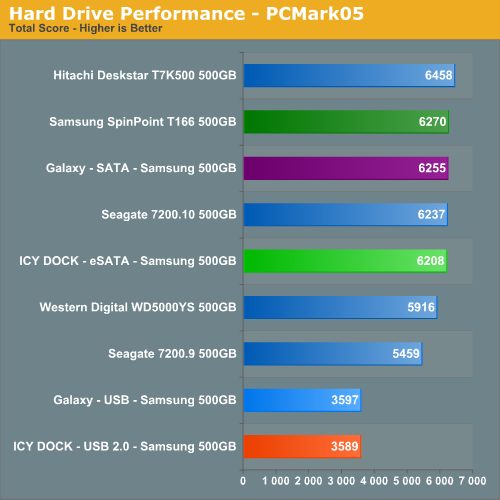
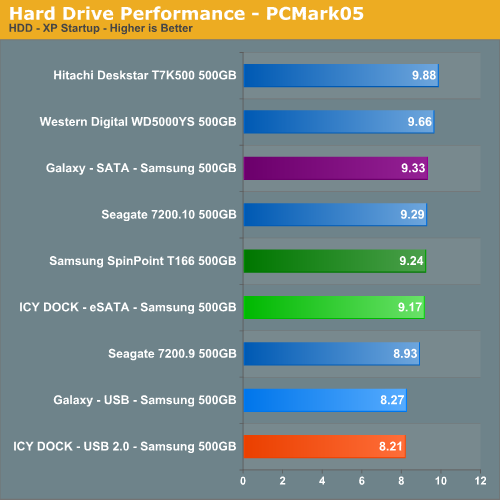
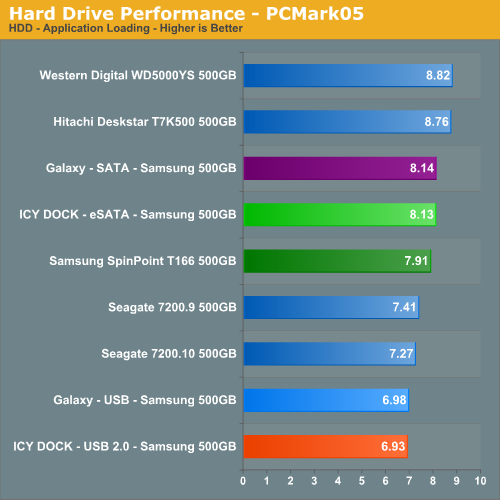
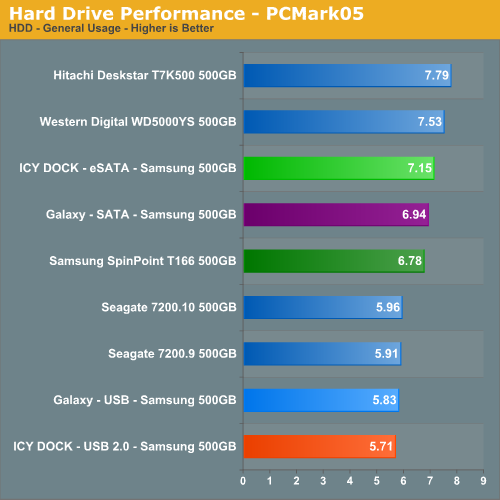
Our overall PCMark05 score indicates the motherboard SATA connection is less than a percent faster than the Galaxy SATA or ICY DOCK eSATA setup while being 74% faster than the USB 2.0 connections. In the application and general hard disk usage tests that mimic a variety of desktop applications, the motherboard SATA connection trails the Galaxy and ICY DOCK configurations ever so slighty.
Although not shown, our Galaxy SATA and ICY DOCK eSATA connections had lower scores in the anti-virus and write sections of the test that caused the difference in overall scores. We attribute the differences with our Galaxy unit to normal benchmark variances while the ICY DOCK scores slightly lower as the eSATA connection has proven to have slightly lower performance. Our Galaxy USB 2.0 setup scored 25.7 in the write test compared to 83.2 for the internal SATA connection. This along with a score of 29.6 compared to 137.2 in the anti-virus tests contributed greatly to the differences in the overall PCMark05 score.
Quick Take:
The Galaxy Metal Gear Box offers similar performance to our motherboard SATA connection as it should since it is using the same connection and protocol for operation. The unit performed well in day to day operations over the past six weeks and even survived a couple of accidental drops in the lab. The quality of the case is very good. Its design is sturdy as our floor can attest to after getting dinged twice. Our only concern with the case besides the blinding blue LEDs is the flimsy mesh inserts that can easily be bent. The quality of the documentation and enclosed components are not up to the standards of the ICY DOCK unit but considering this unit sells for about $30 less then we fully understand Galaxy's decision to use value based components to keep the cost down.
Our noise measurements singled out our primary problem with the external enclosures we have tested to date. Unless they have drive mounting isolation or acoustical padding then several sounds that were not immediately noticeable with a bare drive will become noticeable once the drive is in the enclosure. The Galaxy did not vibrate as much with the Samsung drive installed as the ICY DOCK unit, which resulted in better noise management but all other sounds emanating from the drive were amplified by the enclosure. We suggest using this enclosure in the vertical position if you have a drive that likes to vibrate such as our Samsung T166 review unit.
Overall, we are not wild about the graphics design although we have seen worse, the lack of quick drive interchangeability between units, and the fact this external enclosure is not a true eSATA design which can limit its SATA performance portability appeal. However, the price is right, quality is good, and the unit performs as advertised. Anyone looking to add an external SATA hard drive to their system with the option of USB 2.0 portability could do a lot worse than the Galaxy Metal Gear Box.
We are utilizing the HDD test suite within PCMark05 for further comparative hard disk scores as it provides a mixture of actual application results and specific read/write percentages utilized within these programs. The HDD test suite contains 53% read and 47% write operations with each IPEAK trace section utilizing varied amounts of read or write operations. Additional information about the test suite can be found in PDF format here PCMark05 whitepaper.
Our overall PCMark05 score indicates the motherboard SATA connection is less than a percent faster than the Galaxy SATA or ICY DOCK eSATA setup while being 74% faster than the USB 2.0 connections. In the application and general hard disk usage tests that mimic a variety of desktop applications, the motherboard SATA connection trails the Galaxy and ICY DOCK configurations ever so slighty.
Although not shown, our Galaxy SATA and ICY DOCK eSATA connections had lower scores in the anti-virus and write sections of the test that caused the difference in overall scores. We attribute the differences with our Galaxy unit to normal benchmark variances while the ICY DOCK scores slightly lower as the eSATA connection has proven to have slightly lower performance. Our Galaxy USB 2.0 setup scored 25.7 in the write test compared to 83.2 for the internal SATA connection. This along with a score of 29.6 compared to 137.2 in the anti-virus tests contributed greatly to the differences in the overall PCMark05 score.
Quick Take:
The Galaxy Metal Gear Box offers similar performance to our motherboard SATA connection as it should since it is using the same connection and protocol for operation. The unit performed well in day to day operations over the past six weeks and even survived a couple of accidental drops in the lab. The quality of the case is very good. Its design is sturdy as our floor can attest to after getting dinged twice. Our only concern with the case besides the blinding blue LEDs is the flimsy mesh inserts that can easily be bent. The quality of the documentation and enclosed components are not up to the standards of the ICY DOCK unit but considering this unit sells for about $30 less then we fully understand Galaxy's decision to use value based components to keep the cost down.
Our noise measurements singled out our primary problem with the external enclosures we have tested to date. Unless they have drive mounting isolation or acoustical padding then several sounds that were not immediately noticeable with a bare drive will become noticeable once the drive is in the enclosure. The Galaxy did not vibrate as much with the Samsung drive installed as the ICY DOCK unit, which resulted in better noise management but all other sounds emanating from the drive were amplified by the enclosure. We suggest using this enclosure in the vertical position if you have a drive that likes to vibrate such as our Samsung T166 review unit.
Overall, we are not wild about the graphics design although we have seen worse, the lack of quick drive interchangeability between units, and the fact this external enclosure is not a true eSATA design which can limit its SATA performance portability appeal. However, the price is right, quality is good, and the unit performs as advertised. Anyone looking to add an external SATA hard drive to their system with the option of USB 2.0 portability could do a lot worse than the Galaxy Metal Gear Box.
Originally published at https://www.anandtech.com/show/2273 (Wayback Machine).