
AnandTech Power Supply Test Methodology
- Posted in
- Cases/Cooling/PSUs
Why It is so Difficult to Test Power Supplies
Over the past couple of years few markets in the IT industry have grown as rapidly as the power supply sector. Faster and more powerful CPUs, GPUs, and other components have led to a need for better and more powerful PSUs. A few years ago, most would have laughed at the thought of a desktop PC with a 700W or greater PSU, and yet such designs are becoming increasingly common. Companies are sprouting out of the ground like mushrooms and everybody wants a share of this fast evolving market.
With growing interest in power supplies it is natural that websites will take an interest in reviewing and testing them. However, power supplies are not as easy to test as many other components. For example, unlike a graphics card, CPU, or motherboard it is not enough to simply plug it in and run several of the latest 3D shooters.
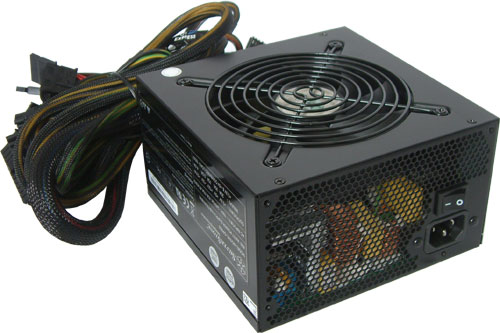
Unfortunately, most published reviews on the internet are done in this manner. The DC outputs are quickly measured separately with a multimeter - or even worse the motherboard's BIOS. The rails seem to be stable, it runs the test system without difficulty, and it is relatively quiet; good enough for a Gold Award! These kinds of reviews do more harm than good to the actual users.
Because of the simple test rigs that are employed, the power supplies are not even close to being fully loaded and thus the DC outputs are generally without problem. It is also difficult or impossible to find flaws in this manner which would otherwise prevent people from buying a dangerous product. A certain PSU might run in system A just fine only to break down from an overload in system B and cause damage to the whole system. In addition to this type of problem, cheaper power supplies lack security features which should have been there for a reason.
The bottom line is, a normal PC is just not enough to fully load a high-end power supply, and therefore it cannot be properly tested and surely not approved by such a configuration.
Over the past couple of years few markets in the IT industry have grown as rapidly as the power supply sector. Faster and more powerful CPUs, GPUs, and other components have led to a need for better and more powerful PSUs. A few years ago, most would have laughed at the thought of a desktop PC with a 700W or greater PSU, and yet such designs are becoming increasingly common. Companies are sprouting out of the ground like mushrooms and everybody wants a share of this fast evolving market.
With growing interest in power supplies it is natural that websites will take an interest in reviewing and testing them. However, power supplies are not as easy to test as many other components. For example, unlike a graphics card, CPU, or motherboard it is not enough to simply plug it in and run several of the latest 3D shooters.
Unfortunately, most published reviews on the internet are done in this manner. The DC outputs are quickly measured separately with a multimeter - or even worse the motherboard's BIOS. The rails seem to be stable, it runs the test system without difficulty, and it is relatively quiet; good enough for a Gold Award! These kinds of reviews do more harm than good to the actual users.
Because of the simple test rigs that are employed, the power supplies are not even close to being fully loaded and thus the DC outputs are generally without problem. It is also difficult or impossible to find flaws in this manner which would otherwise prevent people from buying a dangerous product. A certain PSU might run in system A just fine only to break down from an overload in system B and cause damage to the whole system. In addition to this type of problem, cheaper power supplies lack security features which should have been there for a reason.
The bottom line is, a normal PC is just not enough to fully load a high-end power supply, and therefore it cannot be properly tested and surely not approved by such a configuration.
Originally published at https://www.anandtech.com/show/2259 (Wayback Machine).