
ASUS P5K3-Deluxe: Beta BIOS Update
- Posted in
- Motherboards
SuperPi 1.5 8M Performance-
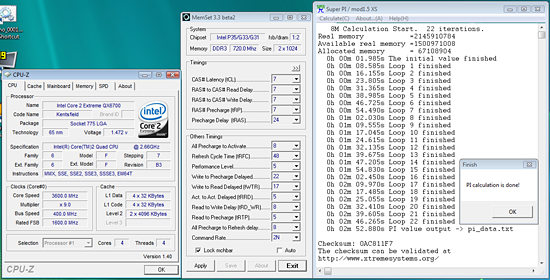
9x400FSB 3600MHz 7-7-7-24 1T 1066 Strap DDR3-1600
8x450FSB 3600MHz 8-8-8-24 2T 1066 Strap DDR3-1800
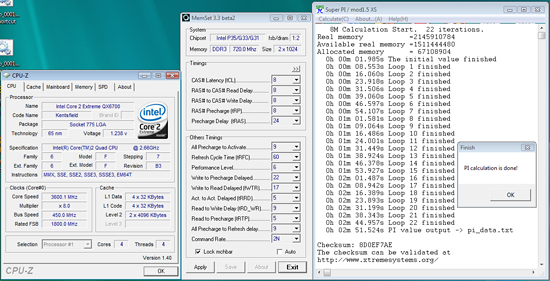
We decided to throw in a couple of SuperPi 8M results at 9x400 and 8x450 for those of you who utilize this program for performance tuning. We will have full 32M results shortly.
Ouick Thoughts
ASUS has provided us an early peek at some of their planned improvements for the P5K series of motherboards that include the ability to manipulate the memory straps and greatly increase the range of 1T performance with the proper memory choice on the DDR3 product. However, we are hesitant at this time to provide full application results with this beta BIOS. Since this is a beta BIOS we found a few quirks during testing such as the BIOS setting the PCIe link speed to x2 or x4 speeds at certain FSB and memory strap settings.
The main reason is that chipset latencies have not been tuned properly yet when changing the memory straps. The type of performance advantages we have seen on boards such as the Intel BadAxe 2 975X and DFI Infinity P965-S when pushing the memory straps at high FSB speeds is not present in this BIOS release yet. This does not mean there are not any performance advantages but at this time we only noticed a difference of around 2% between each strap setting when reaching the maximum FSB point when a strap change is required. As it stands now, setting the Transaction Booster option to enabled and 1 generally provides the biggest performance advantage on this board along with maximizing memory timings.
The most impressive aspect we have noticed is the ability to run 1T timings up to DDR3-1860 in dual channel mode with the Micron IC based modules. In internal testing we have noticed improvements of up to 4% in memory sensitive applications at this time. The average range being around 2% but every little bit helps when trying to maximize the performance on a $300 motherboard. Overall, we believe ASUS is taking a step in the right direction and we look forward to bringing you full test results on the DDR2 and DDR3 motherboards once the BIOS is ready for release.
9x400FSB 3600MHz 7-7-7-24 1T 1066 Strap DDR3-1600
8x450FSB 3600MHz 8-8-8-24 2T 1066 Strap DDR3-1800
We decided to throw in a couple of SuperPi 8M results at 9x400 and 8x450 for those of you who utilize this program for performance tuning. We will have full 32M results shortly.
Ouick Thoughts
ASUS has provided us an early peek at some of their planned improvements for the P5K series of motherboards that include the ability to manipulate the memory straps and greatly increase the range of 1T performance with the proper memory choice on the DDR3 product. However, we are hesitant at this time to provide full application results with this beta BIOS. Since this is a beta BIOS we found a few quirks during testing such as the BIOS setting the PCIe link speed to x2 or x4 speeds at certain FSB and memory strap settings.
The main reason is that chipset latencies have not been tuned properly yet when changing the memory straps. The type of performance advantages we have seen on boards such as the Intel BadAxe 2 975X and DFI Infinity P965-S when pushing the memory straps at high FSB speeds is not present in this BIOS release yet. This does not mean there are not any performance advantages but at this time we only noticed a difference of around 2% between each strap setting when reaching the maximum FSB point when a strap change is required. As it stands now, setting the Transaction Booster option to enabled and 1 generally provides the biggest performance advantage on this board along with maximizing memory timings.
The most impressive aspect we have noticed is the ability to run 1T timings up to DDR3-1860 in dual channel mode with the Micron IC based modules. In internal testing we have noticed improvements of up to 4% in memory sensitive applications at this time. The average range being around 2% but every little bit helps when trying to maximize the performance on a $300 motherboard. Overall, we believe ASUS is taking a step in the right direction and we look forward to bringing you full test results on the DDR2 and DDR3 motherboards once the BIOS is ready for release.
Originally published at https://www.anandtech.com/show/2251 (Wayback Machine).