
AMD Athlon X2 BE-2350: Mainstream X2s with 45W TDP
- Posted in
- CPUs
Eeech, Model Numbers
Although all current AMD processors retain their original names, the two being introduced today are the first to use AMD's new model numbers. As announced during its Phenom introduction, AMD is dropping the 64 from its product names - the new chips are simply Athlon X2s. The 64-bit race is over now that both AMD and Intel have 64-bit support on a majority of their processors, and now it's time to move on. All previous X2s will still be called Athlon 64 X2s and AMD isn't changing the logo just yet, but eventually it will phase out the old names/model numbers in favor of the new system.
What exactly is the new system? It's a slightly more complicated version of Intel's model number system. Here's the explanation of the new system straight from AMD:
The introduction of the AMD AthlonTM X2 dual core processor BE-2350 and BE-2300 brings the first opportunity to learn about AMD's new model methodology. The goal with the new system was to better inform processor choice and utilize a methodology that be long lasting. Existing products will retain their current model numbers. Our customers are familiar with the current models and we will continue to utilize that system until it is phased out over a period of time by new product introductions.
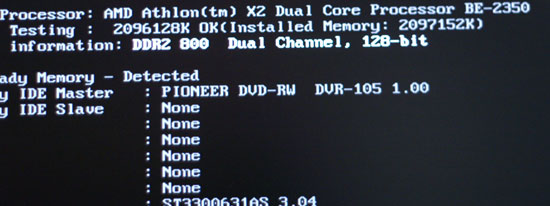
Let's look at a sample model number: BE-2350 (This is the AMD Athlon X2 dual-core 45-watt desktop CPU you have for review)
Format:
The new AMD desktop processor models have an alpha numeric format of A A - # # # #.
First two characters: BE-2350
The first and second alpha indicate the processor class. The second alpha character indicates the TDP of the processor. The "BE" class is comprised of sub-65W processors. This chip's TDP is 45 watts. As additional products are introduced, new classes will also be introduced and these new classes will distinguish between key attributes of the processors.
First numeric digit: BE-2350
The first numeric digit after the dash is the processor series and indicates reflects major increments in processor attributes. The "2XXX" series is currently contained within the AMD Athlon X2 family of processors.
Note that we have dropped the "64" from the Athlon X2 name. AMD pioneered simultaneous 64/32-bit x86 processing. Now that 64-bit processing is ubiquitous and AMD is recognized for its leadership, maintaining a "64" in our desktop product naming methodology is not necessary, and the shortened name simplifies product references.
Last three numeric digits: BE-2350
The last three numeric digits after the dash indicate the relative position of the CPU within its class series. Increasing numbers within a class series indicates increments in processor attributes.
In summary:
Please note that the actual assignment of letters and numbers are intentionally arbitrary, but these digits are combined in such a way as to avoid confusion between models while indicating major and minor processor increments. Just by reading the "BE-2350" model number, you know that it is a mainstream desktop CPU. You know its power consumption level is below 65 watts. You know that it is in the Athlon X2 family. And you know its position relative to other CPUs. As new processors are introduced, the combination of class and models should be of increasing value in identifying and distinguishing AMD processors. Previously, our model numbers indicated relative performance but were unable to capture the step function performance multi-core processors in many usage scenarios and were unable to capture additional processor features or attributes.
Normally we don't quote manufacturer emails to us verbatim, but this one just seemed so appropriate. To break it down for you, we'll compare AMD's new naming scheme to Intel's.
The first letter in Intel's naming system indicates processor class, for example the E6600 vs. X6800. With AMD's new system, we have two letters that describe the class, with the second one being used to indicate TDP. The following four digits in Intel's system simply indicate performance of the processor relative to others in its class; e.g. an E6600 is faster than an E6320, the first digit indicating major performance differences between chips (e.g. E6600 has 4MB L2 cache 1066MHz FSB, while the E4300 has a 2MB L2 cache and 800MHz FSB). AMD's system is similar, the first digit is reserved for major differences in performance, while the latter three digits are used for minor differences (think speed bins).
All in all, AMD's system is a response to Intel's system, neither of which is perfect. We liked Intel's naming system on the Core 2 lineup back when it was simple and each model was separated by increments of 100. The introduction of the E6420 and E6320 made the system a bit more messy and the upcoming 1333MHz FSB CPUs will only further complicate the lineup. AMD appears to be starting in a period of disarray and if recent articles on the forthcoming lineup are correct, we'll absolutely hate talking about CPUs from both manufacturers.
Originally published at https://www.anandtech.com/show/2246 (Wayback Machine).