
High-End Buyers' Guide: May 2007
- Posted in
- Guides
Ultra High-End Intel System
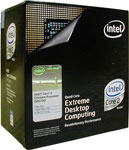
One of the most difficult decisions in this guide was choosing between the QX6700 processor and the Core 2 Extreme X6800. The X6800 is the absolute top-end gaming performer due to its slightly higher stock speed, but the additional two cores of the QX6700 will have a more substantial impact in encoding and other content creation applications. The prices between the two processors are virtually identical. Of course, if you're willing to spend even more money the QX6800 is now available (if you can find it in stock) with prices starting at around $1300 and a stock clock speed that matches the X6800 (2.93 GHz). In the end, the QX6700 gets the nod on the grounds that game and application developers are promising that multi-threading will get more attention in the future. We don't expect performance to double in anything but the most extreme cases; however, it will likely have a greater impact than the extra couple hundred megahertz in the X6800.
It's also important to remember that all of Intel's Core 2 Extreme processors have unlocked multipliers, so it's extremely easy to turn your QX6700 into a QX6800. QX6800 parts might have little bit more headroom when it comes to overclocking, but if all you're interested in is a good quad core overclocking chip we would probably take a step back to the Q6600 instead and save some money to invest in a better cooling solution and power supply. Needless to say, combining SLI with a heavily overclocked quad core processor can result in some serious power requirements. (Ed: And in the winter such computers can serve as great space heaters!)
Note that while both the QX6700 and X6800 processors cost roughly double what AMD's flagship FX-74 processor goes for, you need to purchase two FX-74 processors. Intel holds the overall performance crown, and users who want that performance will pay the price, plain and simple. Say it with us: competition is healthy for consumers.
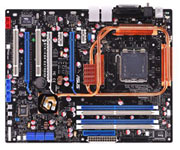
On the subject of expensive components, the ASUS Striker Extreme is one of the highest-priced motherboards on the market today. At $307, users demand - and, fortunately, receive - the best quality and feature set of any comparable motherboard. As is the case with all of ASUS' current "Republic of Gamers" line, there is the diagnostic LCD panel, heat-piping, and SupremeFX audio. The 680i chipset ensures full x16 bandwidth to both graphics cards in an SLI configuration, and a third x16 slot is included which runs at x8 speed. An alternate motherboard selection (if you aren't going to run an SLI configuration) is the ASUS P5WDG2 WS Professional.
Two Crucial BL2KIT12864AA1065 kits bring the Intel system to 4GB of memory. Though clocked at unimpressive 5-5-5-15 timings, this RAM can typically be made to run substantially more aggressively with little effort. Even more impressive is the price - the kits can be had for $130 each (after the massive $85 mail-in rebate, that is).
The remaining components are the same as were chosen in the AMD Ultra High-End platform. The Intel system is almost always going to be faster than the current AMD Quad FX platform, as we showed in our Quad FX article, but the dual sockets and HyperTransport interconnects do allow the AMD platform to scale better in many situations when moving from dual core to quad core. Of course, the power requirements of Quad FX are also quite a bit higher than Intel's Core 2 Quad solutions.
The sweet spot in terms of price/performance for Intel lies in the "mainstream high-end" segment, while we start to see diminishing returns as we move upwards. With Intel's new P35 chipsets and Penryn processors making their introduction in the not-too-distant future, it may make sense to avoid the extreme high-end echelon of processors altogether at the moment.
| Ultra High-End Intel System | |||
| Hardware | Component | Price | Rebates |
| Processor | Core 2 Extreme QX6700 | $967 | - |
| Motherboard | ASUS Striker Extreme | $305 | - |
| Memory | 2 x Crucial Tracer Ballistix BL2KIT12864AA1065 (4x1GB) | $430 | $170 |
| Video Card | 2x MSI NX8800GTX-T2D768E-HD OC GeForce 8800GTX | $1140 | $40 |
| Hard Drive | WD Raptor WD1500ADFD plus WD 5000YS | $361 | - |
| Optical Drive | Pioneer DVR-212BK | $42 | - |
| Operating System | Windows Vista Home Premium 64-bit (OEM) | $125 | - |
| System Total | $3370 | $3160 | |
| Complete Package | $3906-$5565 | $3696-$5355 | |
 |
It's also important to remember that all of Intel's Core 2 Extreme processors have unlocked multipliers, so it's extremely easy to turn your QX6700 into a QX6800. QX6800 parts might have little bit more headroom when it comes to overclocking, but if all you're interested in is a good quad core overclocking chip we would probably take a step back to the Q6600 instead and save some money to invest in a better cooling solution and power supply. Needless to say, combining SLI with a heavily overclocked quad core processor can result in some serious power requirements. (Ed: And in the winter such computers can serve as great space heaters!)
Note that while both the QX6700 and X6800 processors cost roughly double what AMD's flagship FX-74 processor goes for, you need to purchase two FX-74 processors. Intel holds the overall performance crown, and users who want that performance will pay the price, plain and simple. Say it with us: competition is healthy for consumers.
 |
Two Crucial BL2KIT12864AA1065 kits bring the Intel system to 4GB of memory. Though clocked at unimpressive 5-5-5-15 timings, this RAM can typically be made to run substantially more aggressively with little effort. Even more impressive is the price - the kits can be had for $130 each (after the massive $85 mail-in rebate, that is).
The remaining components are the same as were chosen in the AMD Ultra High-End platform. The Intel system is almost always going to be faster than the current AMD Quad FX platform, as we showed in our Quad FX article, but the dual sockets and HyperTransport interconnects do allow the AMD platform to scale better in many situations when moving from dual core to quad core. Of course, the power requirements of Quad FX are also quite a bit higher than Intel's Core 2 Quad solutions.
The sweet spot in terms of price/performance for Intel lies in the "mainstream high-end" segment, while we start to see diminishing returns as we move upwards. With Intel's new P35 chipsets and Penryn processors making their introduction in the not-too-distant future, it may make sense to avoid the extreme high-end echelon of processors altogether at the moment.
Originally published at https://www.anandtech.com/show/2241 (Wayback Machine).