
Intel P35: Intel's Mainstream Chipset Grows Up
- Posted in
- CPUs
Gaming Performance
As usual, gaming performance was tested with a variety of current games. We ran benchmarks with our standard 1280x1024 resolution with all games set to High Quality mode. Given the number of users that run 19" LCDs these days, 1280x1024 represents one of the most commonly used resolutions. We will provide final CrossFire numbers in our P35 roundup.Battlefield 2
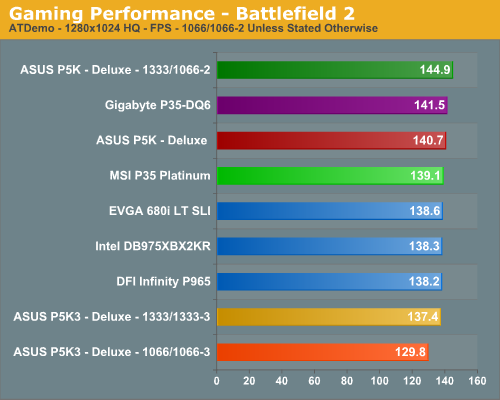
This benchmark is performed using DICE's built-in demo playback functionality with additional capture capabilities designed in house. When using the built-in demo playback features of BF2, frames rendered during the loading screen are counted in the benchmark. In order to get a real idea of performance, we use the instantaneous frame time and frames per second data generated from our benchmark run. We discard the data collected during the loading screen and calculate a result that represents actual game play. While DICE maintains that results over 100fps aren't always reliable, our methods have allowed us to get useful data from high performing systems.
During the benchmark, the camera switches between players and vehicles in order to capture the most action possible. There is a significant amount of smoke, explosions, and vehicle usage as this a very GPU intensive Battlefield 2 benchmark. We run Battlefield 2 using the highest quality graphics settings available in the video settings. The game itself is best experienced with average in-game frame rates of 40 and up.
Serious Sam 2
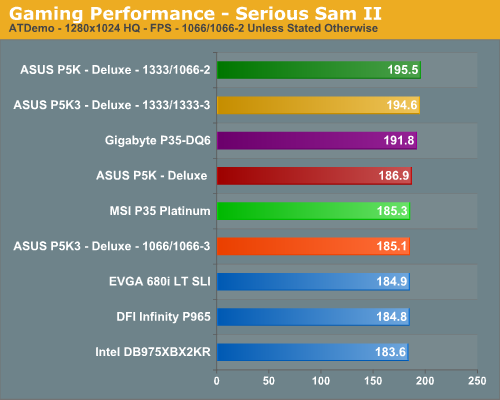
This benchmark is performed using Croteam's built-in demo capability in the Serious Sam II engine. We utilize the included Branchester Demo and capture the playback results using the Ctrl-~ function. The benchmark features a large number of combatants, explosions, and general mayhem. The benchmark is primarily GPU sensitive with the actual percentage of GPU/CPU/Audio activity being displayed during the benchmark run. We typically find this game is very playable at average in-game rates of 60 and above. We maximize all settings except antialiasing and anisotropic filtering within the general and advanced video settings.
F.E.A.R.
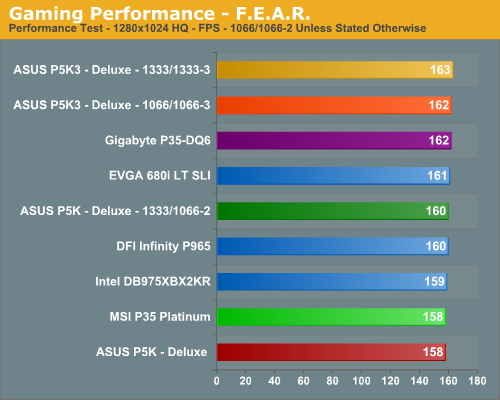
F.E.A.R. uses a built-in performance test that generates graphical test scenes based upon the actual game engine. This test consists of a couple of different action sequences, a stressful water flyby, and heavy use of shadows while traveling through hallways. F.E.A.R. is a very graphics intensive game and we switch all settings to maximum for both the system and GPU. During our testing of F.E.A.R., we noted that the "soft shadows" don't really look soft and the performance hit is drastic, so we disable this setting. An average frame rate for F.E.A.R. can dip drastically during game play and that is not good for a first person shooter but the game is still playable around 35fps although we prefer a solid 45fps.
Gaming Summary
We see the DDR3 setups struggling in the Battlefield 2 tests in a game that is both CPU and memory sensitive. The high latencies of our DDR3 systems are taking their toll in this game. Fortunately, in the CPU/GPU bandwidth hungry F.E.A.R., the DDR3 platforms have a slight advantage. Our Serious Sam 2 benchmark is CPU/memory sensitive and the increased bandwidth offered by the 1333FSB boards allows them to take the lead.
Originally published at https://www.anandtech.com/show/2236 (Wayback Machine).