
ATI Radeon HD 2900 XT: Calling a Spade a Spade
- Posted in
- GPUs
AMD CFAA Performance and Image Quality
While we've already talked about CFAA, let's take a look at how it compares to other AA methods. We've already seen NVIDIA's CSAA in action, which is able to better determine how subsample colors should be weighted within a pixel. How does it stack up to AMD's tent filters? Let's take a look:
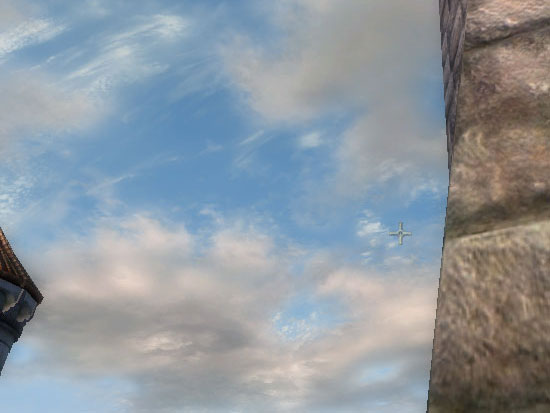
Zip file of uncropped JPG images (1.7MB)
Clearly CFAA does do a good job at reducing the impact of high contrast edges. As we mentioned before though, this doesn't come without drawbacks. Antialiasing shouldn't just filter out high frequency image data (which comes in the form of high contrast edges). The problem lies in the fact that some of these edges are supposed to be there.
Applying a blur to everything isn't the best general purpose answer. Ideally we want to balance eliminating high frequency data we don't want (aliased edges) while preserving the high frequency data we do want (fine grained detail in either geometry or interior textures). A balance needs to be kept here, and (as we've seen many times in the past) the answer for the end user can often be subjective.
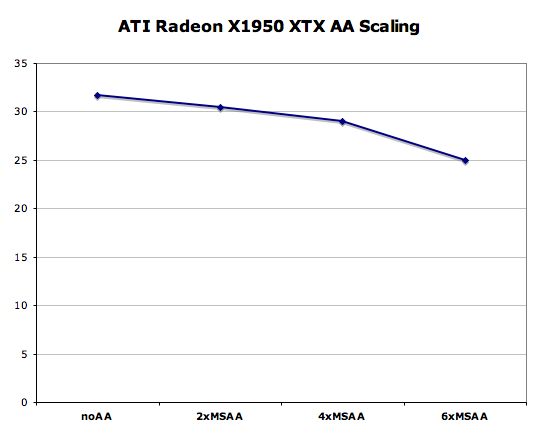
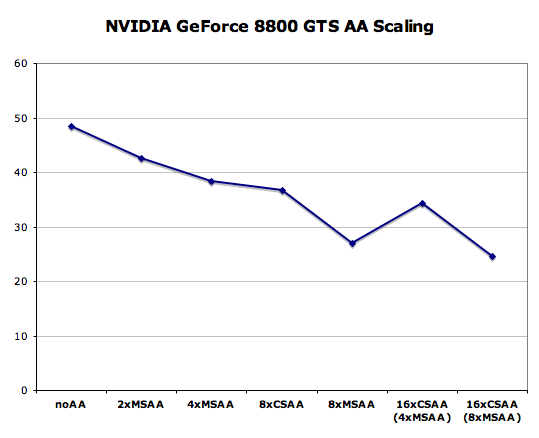
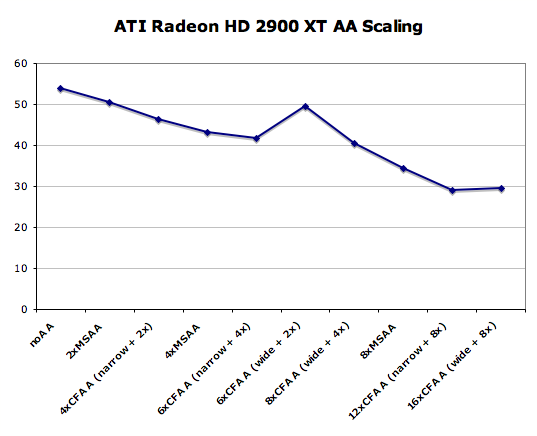
This is certainly an interesting solution, but we will stick with simple 4x box filtered MSAA for our current and future tests as it still offers the best balance between image quality and performance - especially at very small pixel sizes. But before we leave the subject completely, let's take a look at how CFAA performs on R600. We'll compare it to all the non-transparent texture aware AA modes available on the X1950 XTX and 8800 GTS 640MB.
Originally published at https://www.anandtech.com/show/2231 (Wayback Machine).