
The AMD Ryzen 7 9700X and Ryzen 5 9600X Review: Zen 5 is Alive
CPU Benchmark Performance: Rendering & Simulation
Rendering tests, compared to others, are often a little more simple to digest and automate. All the tests put out some sort of score or time, usually in an obtainable way that makes it fairly easy to extract. These tests are some of the most strenuous in our list, due to the highly threaded nature of rendering and ray-tracing, and can draw a lot of power.
If a system is not properly configured to deal with the processor's thermal requirements, the rendering benchmarks are where it would show most easily as the frequency drops over a sustained period of time. Most benchmarks, in this case, are re-run several times, and the key to this is having an appropriate idle/wait time between benchmarks to allow temperatures to normalize from the last test.
Also in this section are our simulation-based tests, including our typical gaming simulation benchmarks, which consist of our Dwarf Fortress and Factorio benchmarks.
Rendering
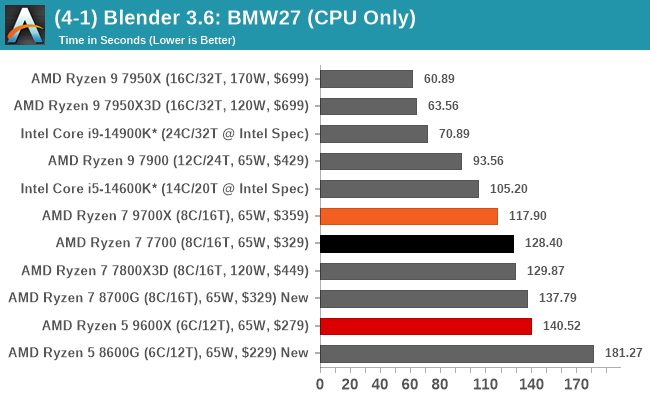
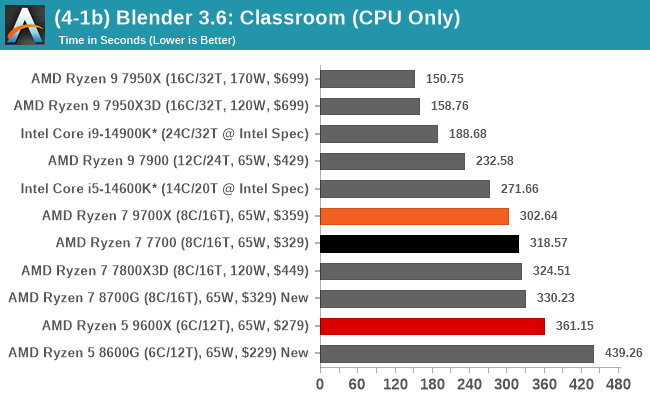
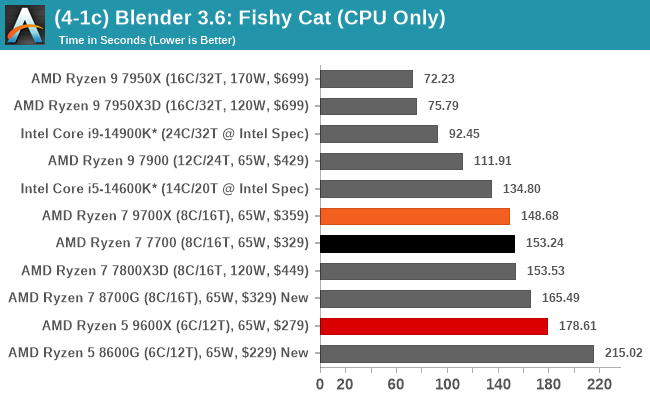
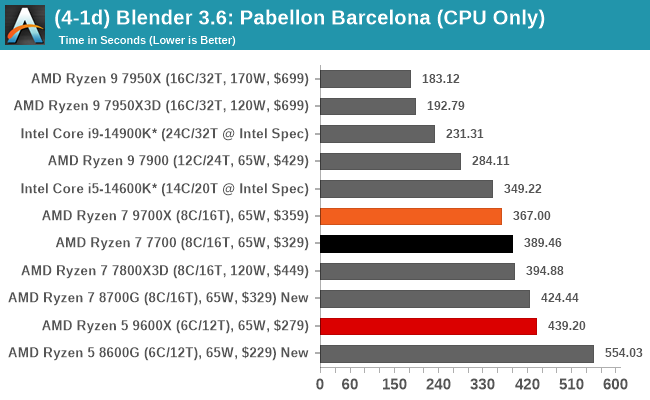
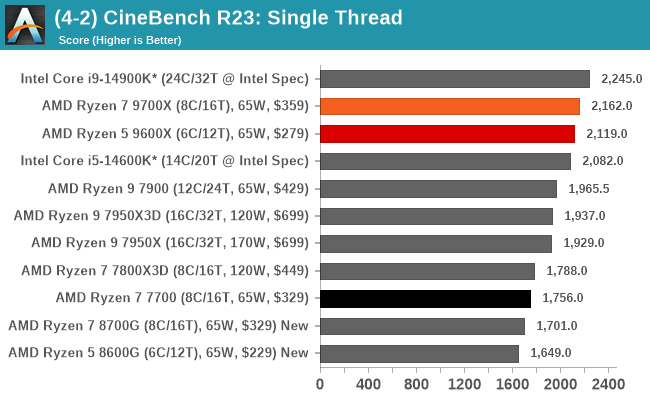
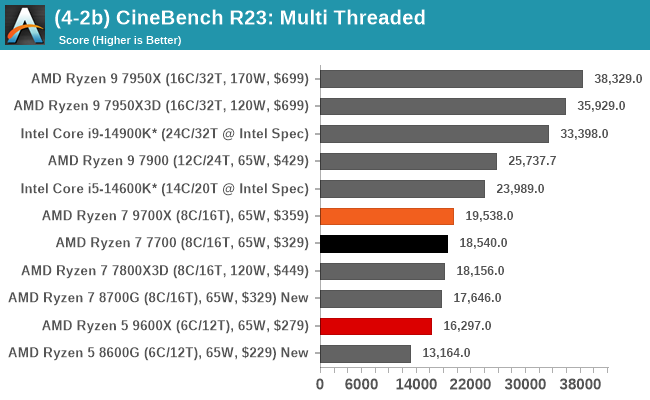
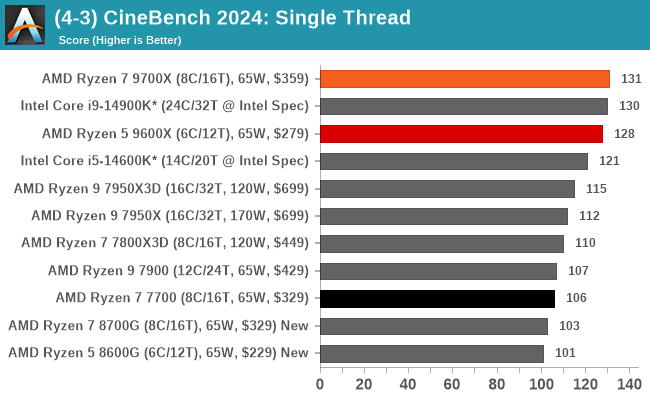
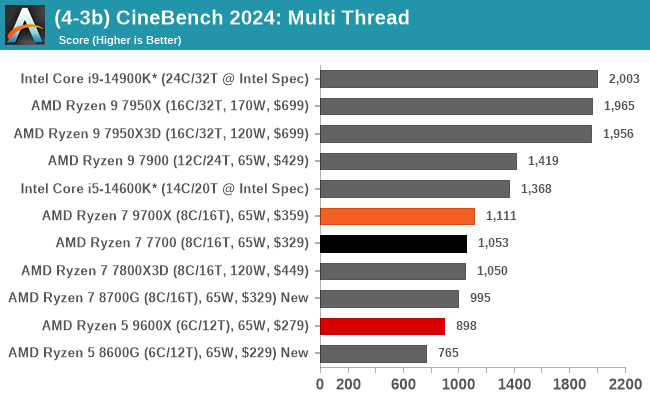
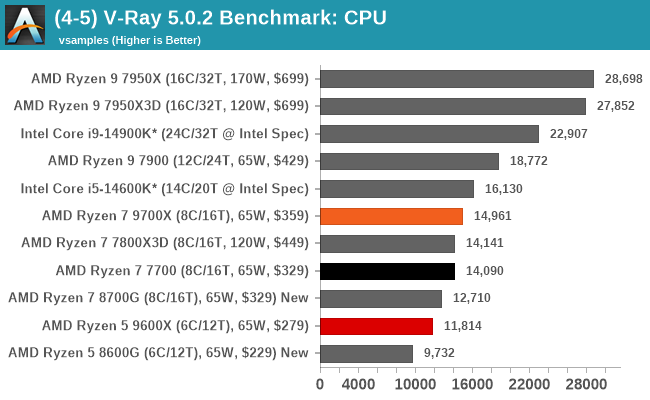
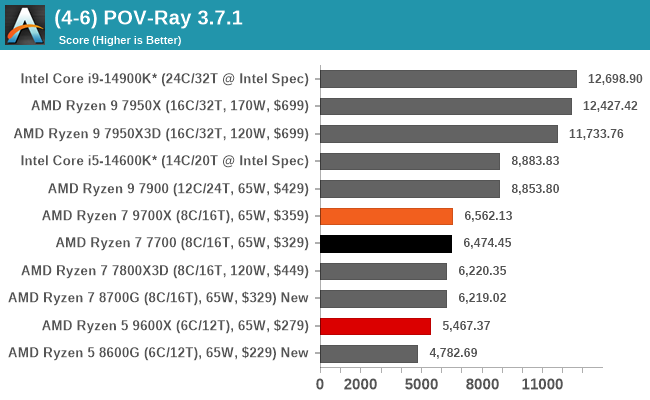
In rendering, especially in single-threaded scenarios, Zen 5 does have an advantage over Zen 4, especially in both iterations of Cinebench. Multi-threaded performance over Zen 4 core for core, so the Ryzen 7 9700X vs the Ryzen 7 7700m, there's really not much in it at all. Zen 5 wins single-threaded, but in multi-threaded workloads that aren't AVX-512 enabled, then there's no major difference.
Simulation
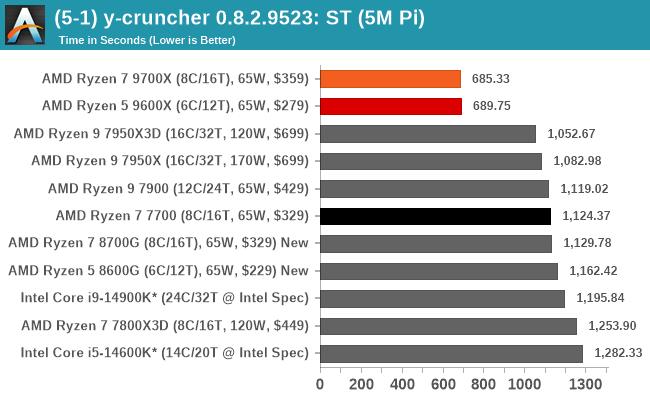
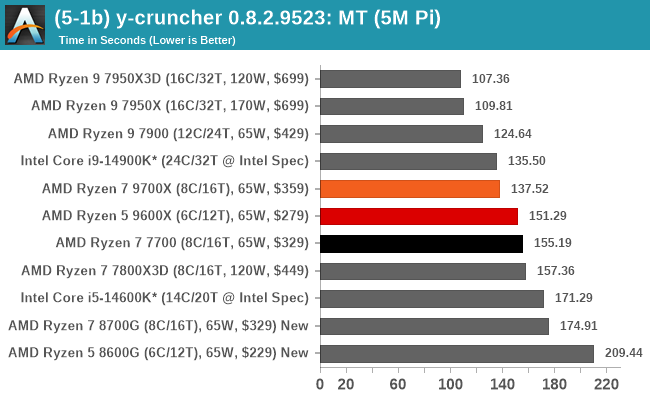
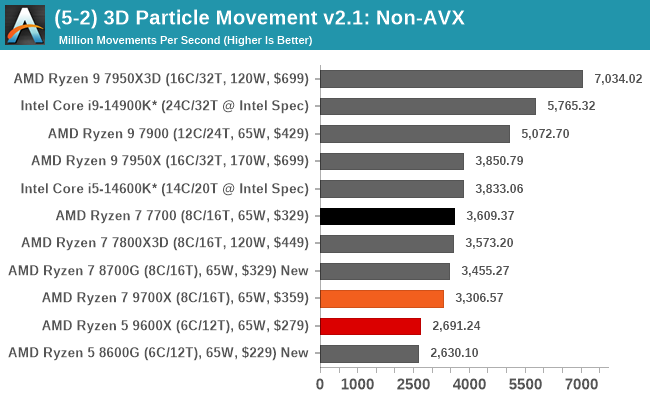
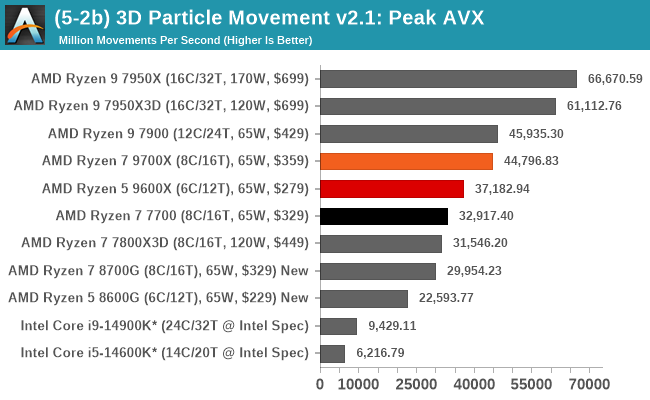
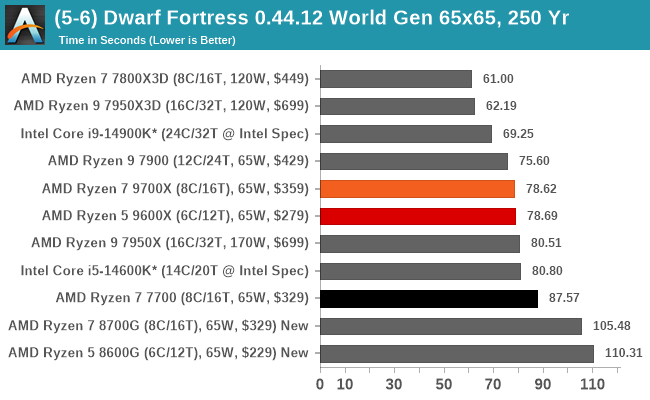
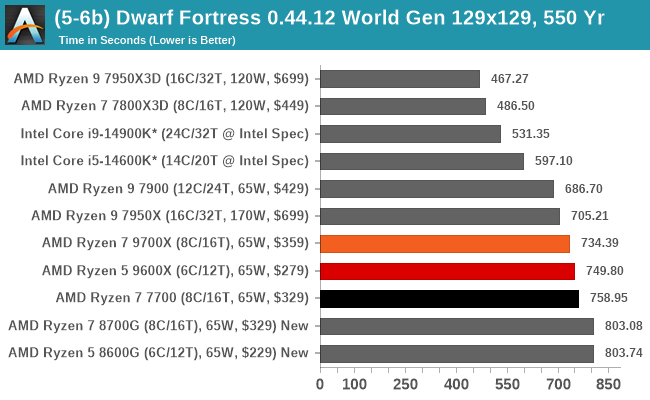
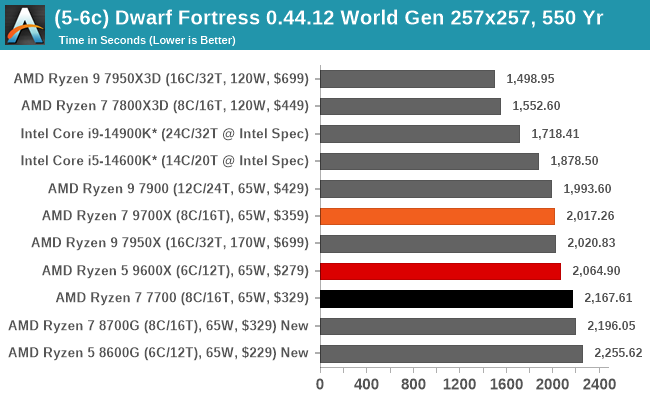
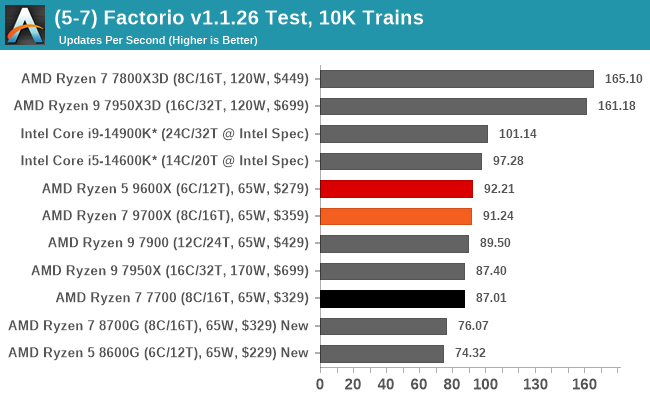
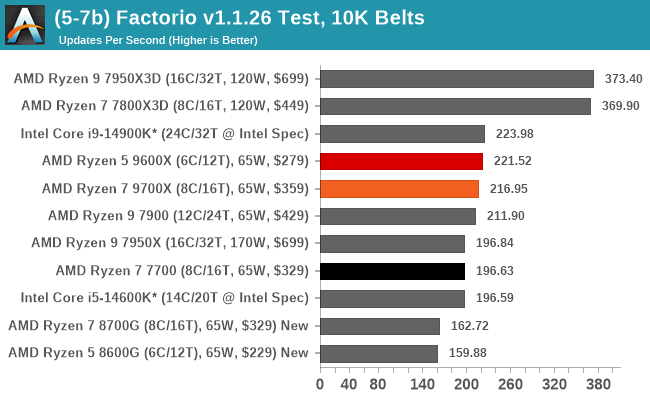
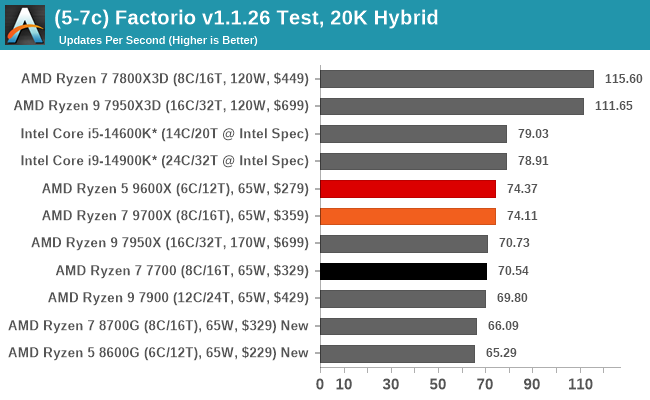
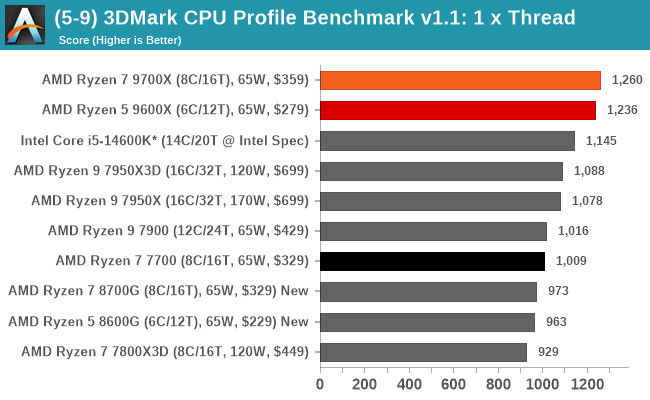
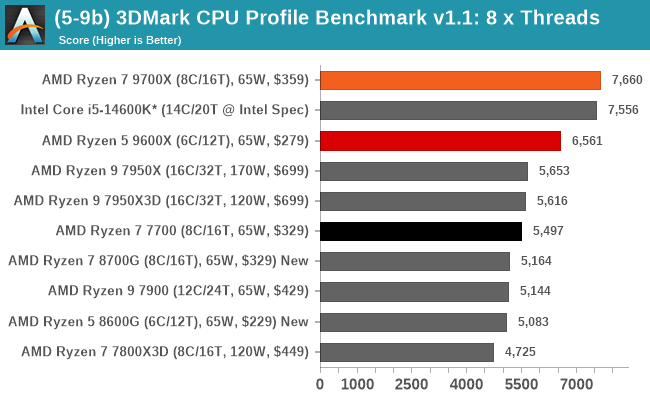
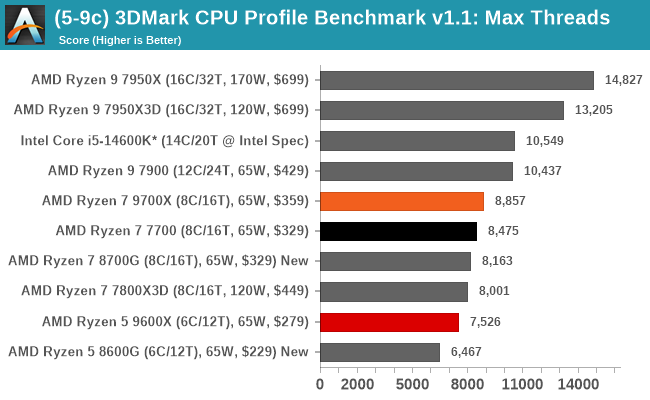
In the Y-cruncher single-threaded Pi calculation, Zen 5 is streets ahead of the completion, as the full 512-bit data path for AVX-512 instructions opens up some of that untapped raw performance. On the other hand, without the AVX-512, or in highly multi-threaded scenarios, both the Ryzen 7 9700X and Ryzen 5 9600X compete with the rest of the chips on test at an even keel.
Originally published at https://www.anandtech.com/show/21493/the-amd-ryzen-7-9700x-and-ryzen-5-9600x-review (Wayback Machine).