
The AMD Ryzen AI 9 HX 370 Review: Unleashing Zen 5 and RDNA 3.5 Into Notebooks
System & Storage Performance
The next section of our updated notebook test suite includes web and office-based tests. Our updated notebook suite runs in parallel with our current CPU test suite for 2024. It also allows us to blend mobile chips tested with desktop chips, mainly to see how efficiency and performance levels stack up for each generation we try.
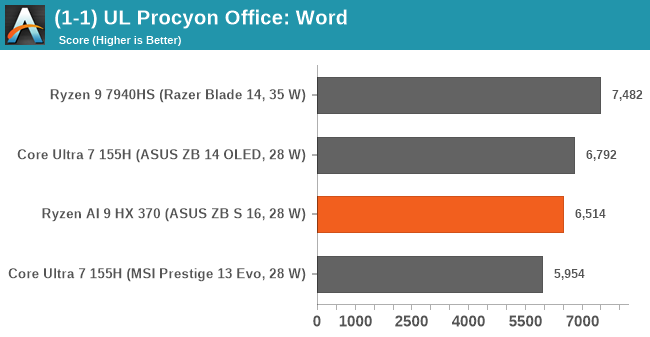
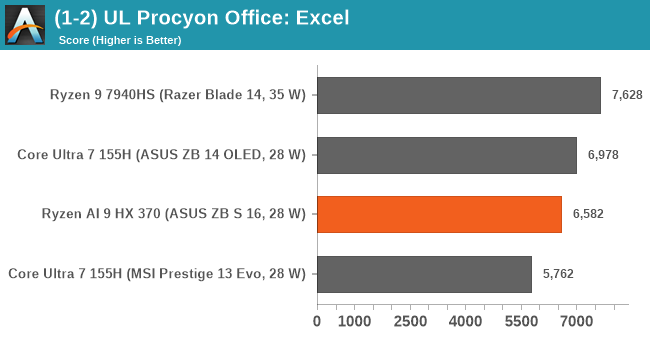
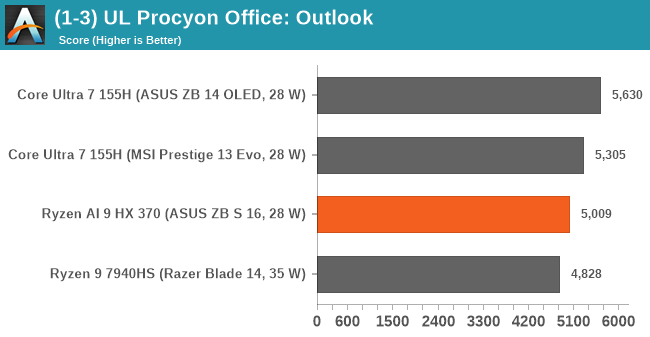
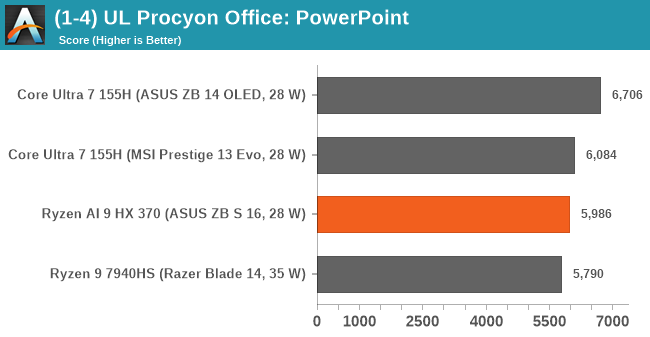
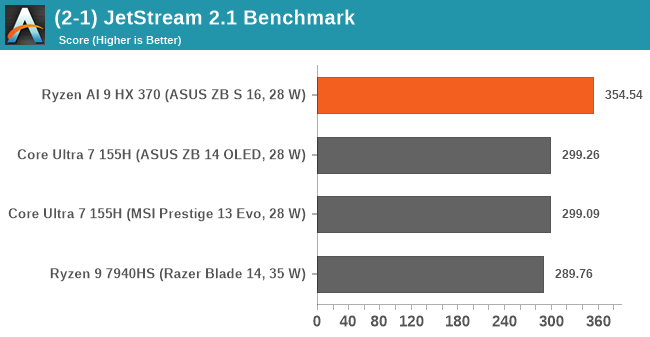
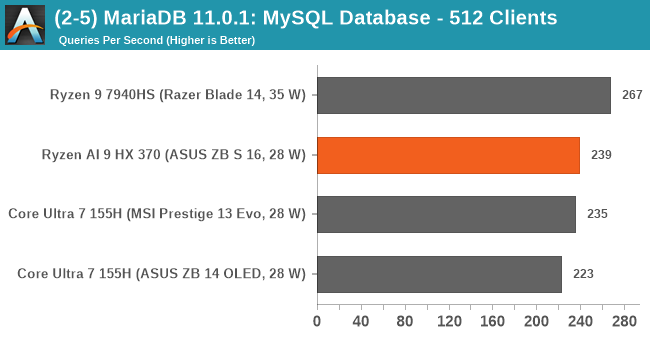
Looking at the Ryzen AI 9 HX 370's performance in our web and office-based tests, we see middle-of-the-road performance compared to the other mobile chips on the test. One example of where we see the Ryzen AI 9 HX 370 comfortably come out on top is in the JetStream 2.1 web-based benchmark, which looks at a wide variety of JavaScript and WebAssembly workloads. Things overall aren't really much different between the chips in terms of performance in this section of the suite.
Storage
When it comes to ultrathin notebooks, finding the right balance between storage performance and having the means to be able to keep it cool is quite the trade-off. There's more to storage performance than just putting in the fastest drive you can; other variables include the interface used, the quality of the controller, and the overall drive. The ASUS Zenbook S 16 (UM5606WA) includes a single 1 TB drive, which, in our sample, is made by Micron. ASUS uses the Micron 2400 MTFDKBA1T0QFM, a QLC drive with a PCIe 4.0 x4 interface controller.

Looking at read and write performance using CrystalDiskMark 8.0.5, we see sequential read speeds of just over 5000 MB/s, with write speeds around the 2750 MB/s mark. It's a decent level of throughput for an ultrathin notebook, but it's not setting any records. The Micron drive used here is an budget design – DRAMless with QLC NAND – and for better or worse, is pretty typical fare for OEM laptops.
When judging and measuring storage performance, it comes down to real-world performance and ensuring optimal cooling, especially on these fast NVMe drives, which can run very hot and thermally throttle, reducing performance.
Originally published at https://www.anandtech.com/show/21485/the-amd-ryzen-ai-hx-370-review (Wayback Machine).