
The AMD Zen 5 Microarchitecture: Powering Ryzen AI 300 Series For Mobile and Ryzen 9000 for Desktop
AMD Ryzen AI 300: RDNA 3.5 Graphics Brings The Visuals
Another new technology coming with Zen 5 for the Ryzen AI 300 mobile series chips is upgraded integrated graphics. AMD's RDNA 3.5 graphics architecture represents what looks to be a stepping stone (sans the .5) to the next generation of AMD's graphics architecture. This latest iteration has been designed to enhance both performance and efficiency, with a focus on optimizing every last drop of performance per watt. It's worth noting that AMD hasn't provided many details about RDNA 3.5, so we'll dive into the key features and advancements.
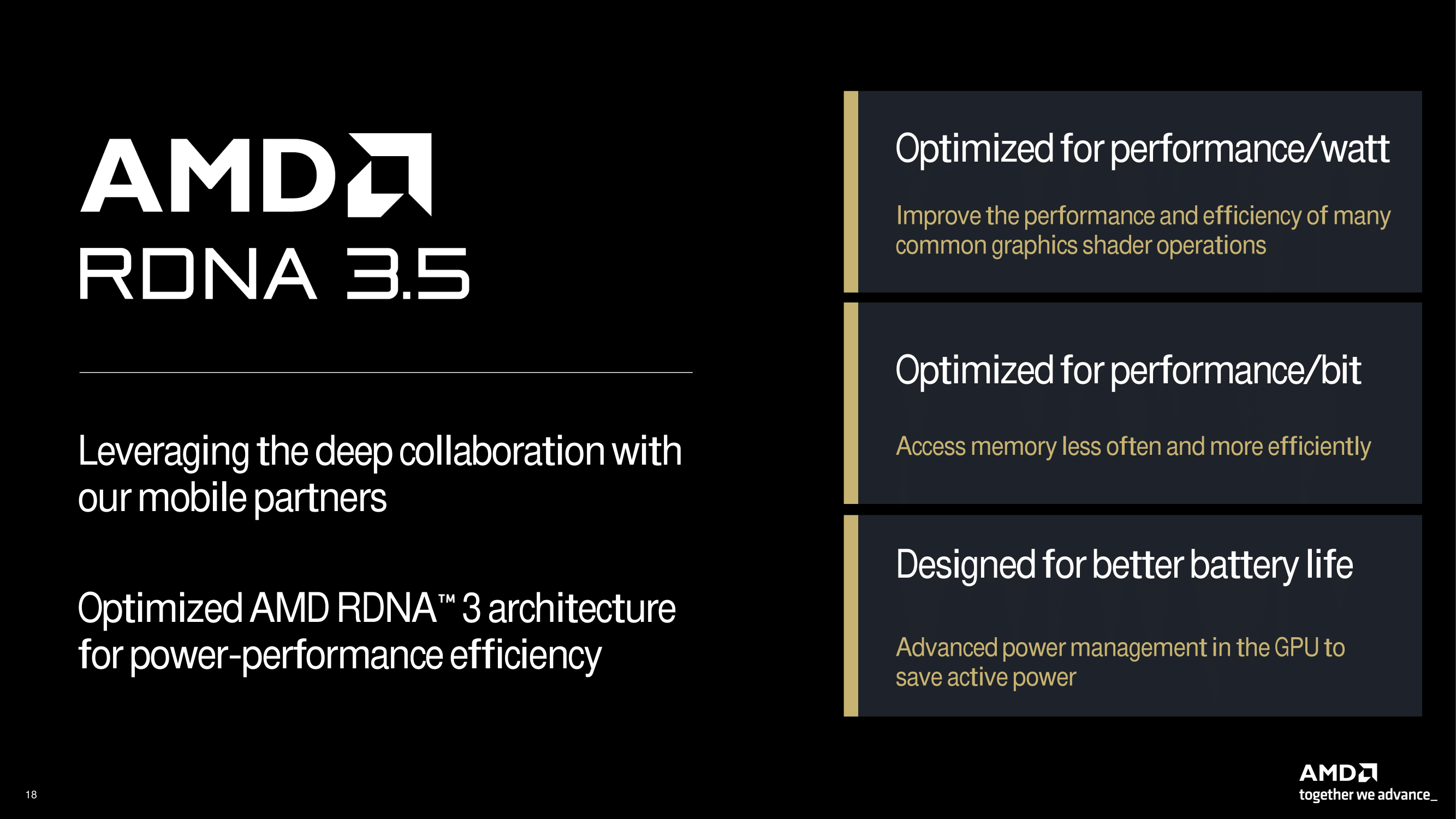
The AMD RDNA 3.5 graphics architecture represents the next step in integrated graphics for their Ryzen AI 300 mobile SoCs, with some notable upgrades over RDNA 3. AMD has been working closely with ISVs and developers to ensure that RDNA 3.5 provides everything AMD says it will be working hand-in-hand with mobile partners for better performance per watt in games. Some improvements include general graphic shader operations, which are optimized to ensure things work as they should. AMD has put a lot of focus on the performance per bit, which not only reduces the times of memory accesses but it also makes the operations smoother. The general cusp of the improvements is all around power vs. performance, with AMD aiming for the middle ground to ensure a longer battery life, which is vital in mobile and portable devices.
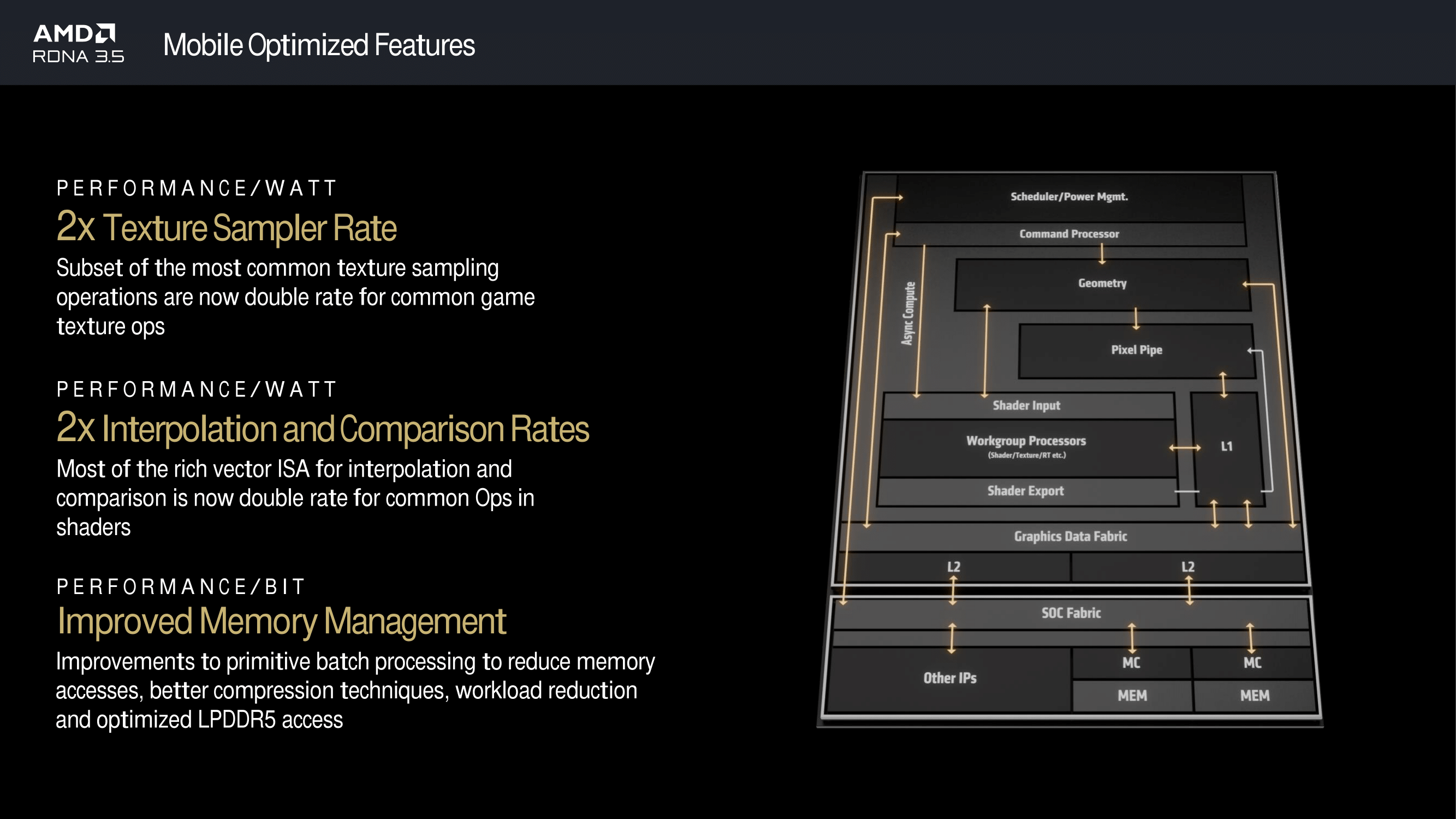
Much of the improvements over RDNA 3 come through several features that have been specially optimized for mobile platforms. This ensures that the Radeon 890M, which is the model with the Ryzen AI 300 series, has the best of both worlds in terms of efficiency and visual performance. The rate of texture sampling has been doubled, which ensures double-rate performance from the GPU. What it means on the surface is enhanced detail and clarity of the textures and graphics during gameplay. This, in theory, should help improve detailed textures so they look great when playing high-resolution games. Further to this, RDNA 3.5 has 2X the interpolation and comparison rate, as vector ISA operations can work much better to bring out detail in high-quality graphics.
Another critical improvement is better memory management techniques. These reduce the frequency of memory access, meaning data processing should, in theory, be faster and overall more energy-efficient. Optimized LPDDR5 access should also guarantee fast and efficient memory use, which in turn should aid battery life.
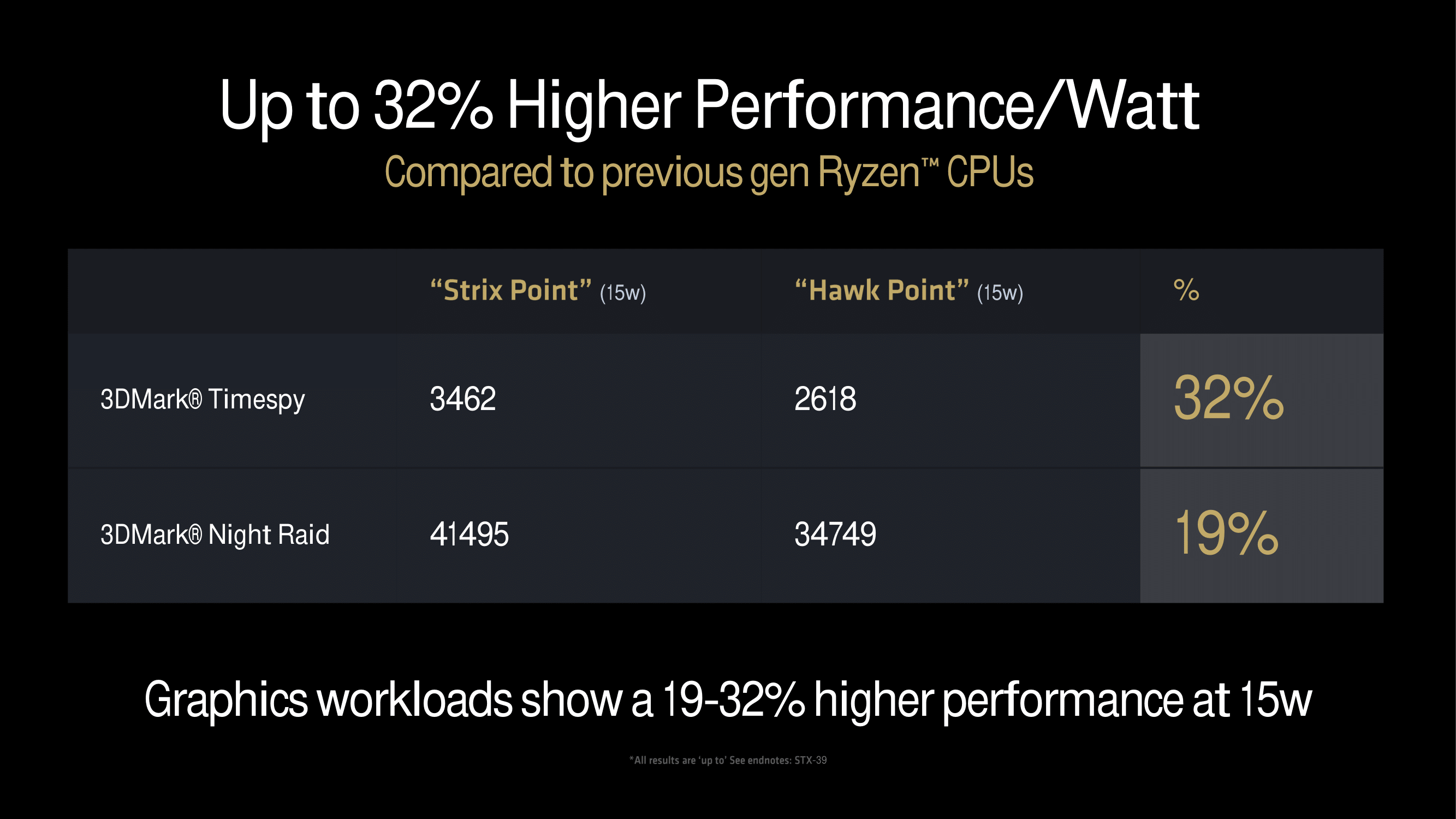
AMD has provided some performance figures comparing RDNA 3.5 to RDNA 3, with some pretty impressive claims if they translate into real-world performance. On paper, the RDNA 3.5 architecture shows a significant performance uplift compared to the previous generation Ryzen 8040 series, with up to 32% higher performance per watt. In graphics workloads like 3DMark Timespy and 3DMark Night Raid, AMD claims that RDNA 3.5 has an uplift of between 19 and 32% in terms of performance at 15 W.
Because of these improvements, RDNA 3.5 is improved in various ways compared to its predecessor, RDNA 3. For example, RDNA 3.5 greatly increases the GPU's capacity to execute complicated graphics operations more effectively by optimizing key things such as texture sampling and interpolation. Improving the memory management in RDNA 3.5 also allows for better power optimization and data handling to address major GPU performance issues. All of these should bring real-world performance benefits. However, as with any mobile SoC, these still aren't on the level of discrete graphics, which typically have more die area to play with, a higher transistor budget at the manufacturing level, and, of course, more power.
Originally published at https://www.anandtech.com/show/21469/amd-details-ryzen-ai-300-series-for-mobile-strix-point-with-rdna-35-igpu-xdna-2-npu (Wayback Machine).