
Splinter Cell: Double Agent: A Performance Analysis
- Posted in
- GPUs
Settings
We tested Double Agent at two major settings; the first we refer to as high quality, and the other we will call medium quality (though the game doesn't have specific settings that correspond with this). With high quality settings, all the graphics settings are set to "on" and/or to their highest quality level (with the exception of AA and HDR which are mutually exclusive on cards that don't support floating point with AA, such as the GeForce 7 series).
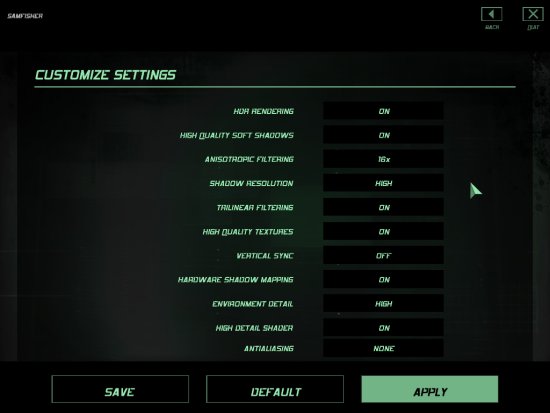
We found that the settings which had some of the largest impacts on performance with Splinter Cell: Double Agent were the different shadow settings, specifically high quality soft shadows and high detail shader. By turning off these effects as well as trilinear filtering, we were able to significantly improve performance, making the game much more playable on lower-end hardware.
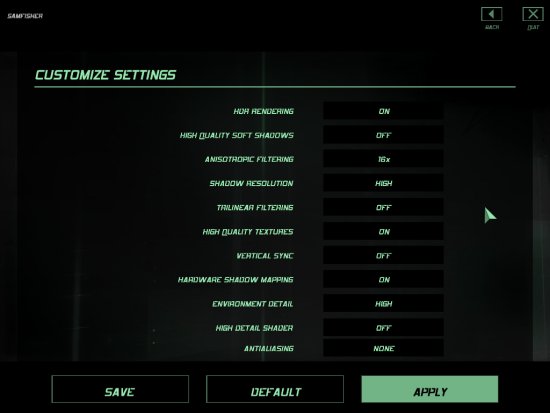
We chose these settings for our lower quality tests both because of the improved performance they offer while still allowing for some great visuals. Certain settings like high detail environments and high detail shader might offer better performance when switched to low or off, but we found the sacrifice in graphical quality too great to justify anything but "high" for these options. Luckily, the game isn't the most graphically intensive game out right now, and it happens to run well at highest quality on a wide variety of cards, particularly with ATI hardware.
Without the shadow effects enabled, the game does look a bit less striking, but the performance gains we see with these settings off is a good trade-off, especially for lower end hardware. Also, there is almost no difference visually with these settings on or off in our first benchmark because it takes place at night, and this will be the case for many areas in the game. Of course, if you have a card that can handle the extra stress, the complex shadow effects make levels like the cruise ship look much more stunning.
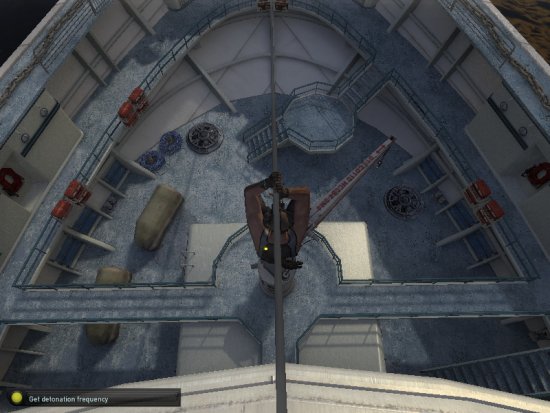
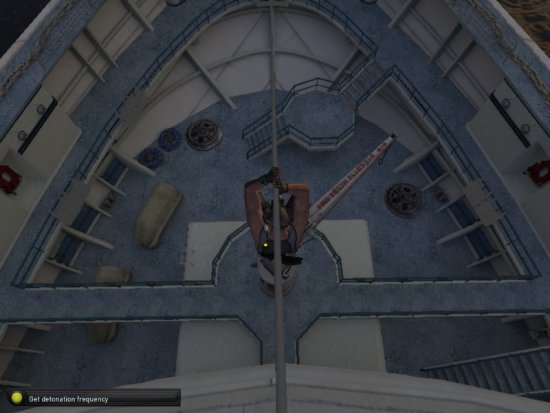
As we mentioned, because there is no timedemo function like with the previous Splinter Cell: Chaos Theory, we had to use FRAPS to record the frame rate for both of our benchmarks. Even though we used FRAPS rather than a timedemo to record our average frame rates during these scenes, our results were fairly consistent between multiple runs. To be as accurate as possible, we also ran each benchmark multiple times and took the mean result.
We tested Double Agent at two major settings; the first we refer to as high quality, and the other we will call medium quality (though the game doesn't have specific settings that correspond with this). With high quality settings, all the graphics settings are set to "on" and/or to their highest quality level (with the exception of AA and HDR which are mutually exclusive on cards that don't support floating point with AA, such as the GeForce 7 series).
We found that the settings which had some of the largest impacts on performance with Splinter Cell: Double Agent were the different shadow settings, specifically high quality soft shadows and high detail shader. By turning off these effects as well as trilinear filtering, we were able to significantly improve performance, making the game much more playable on lower-end hardware.
We chose these settings for our lower quality tests both because of the improved performance they offer while still allowing for some great visuals. Certain settings like high detail environments and high detail shader might offer better performance when switched to low or off, but we found the sacrifice in graphical quality too great to justify anything but "high" for these options. Luckily, the game isn't the most graphically intensive game out right now, and it happens to run well at highest quality on a wide variety of cards, particularly with ATI hardware.
Without the shadow effects enabled, the game does look a bit less striking, but the performance gains we see with these settings off is a good trade-off, especially for lower end hardware. Also, there is almost no difference visually with these settings on or off in our first benchmark because it takes place at night, and this will be the case for many areas in the game. Of course, if you have a card that can handle the extra stress, the complex shadow effects make levels like the cruise ship look much more stunning.
As we mentioned, because there is no timedemo function like with the previous Splinter Cell: Chaos Theory, we had to use FRAPS to record the frame rate for both of our benchmarks. Even though we used FRAPS rather than a timedemo to record our average frame rates during these scenes, our results were fairly consistent between multiple runs. To be as accurate as possible, we also ran each benchmark multiple times and took the mean result.
Originally published at https://www.anandtech.com/show/2130 (Wayback Machine).