
AMD Ryzen 7 8700G and Ryzen 5 8600G Review: Zen 4 APUs with RDNA3 Graphics
dGPU Gaming Performance: 1080p
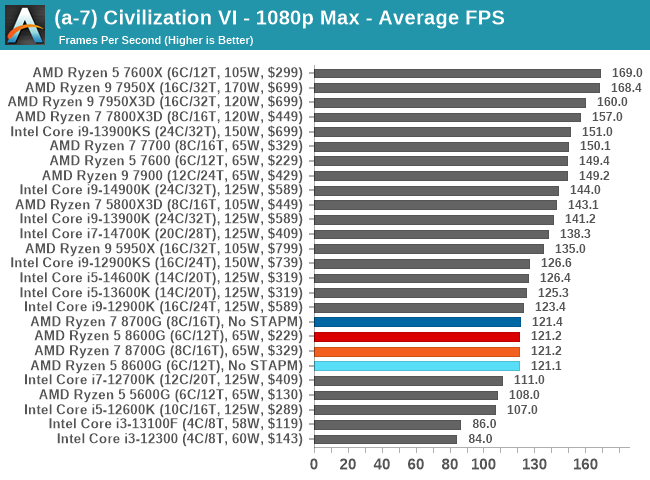
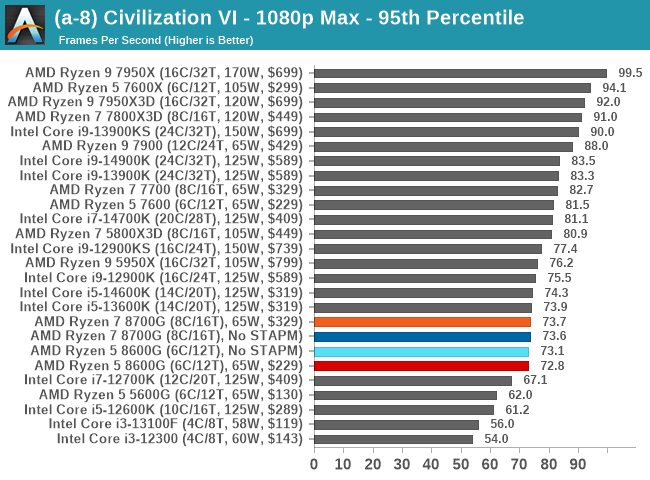
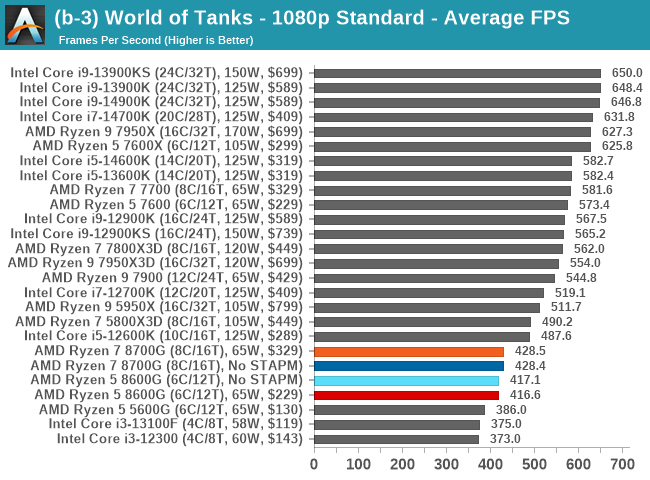
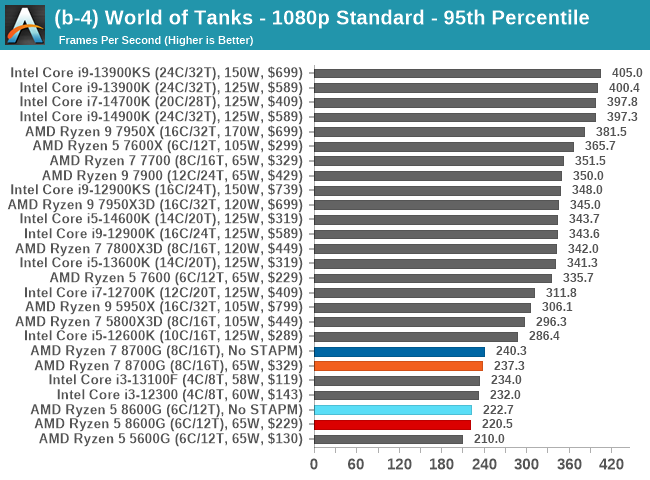
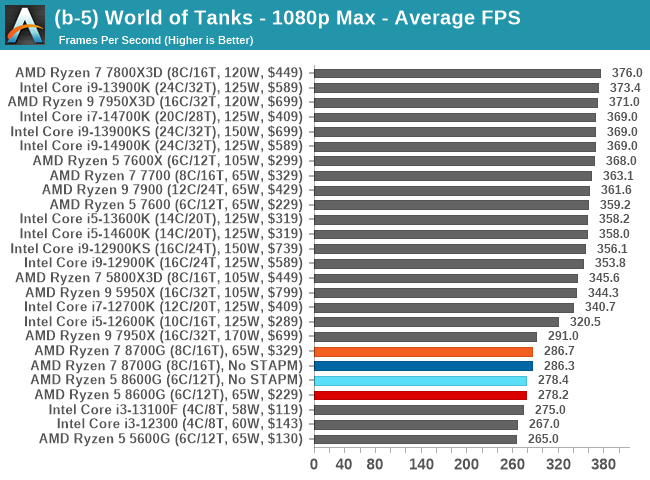
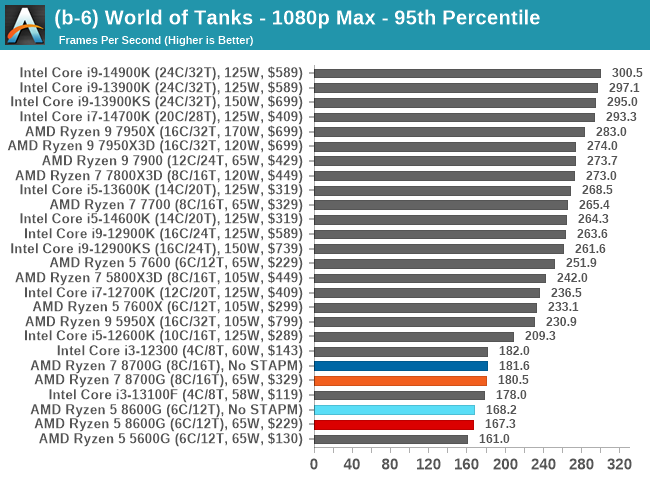
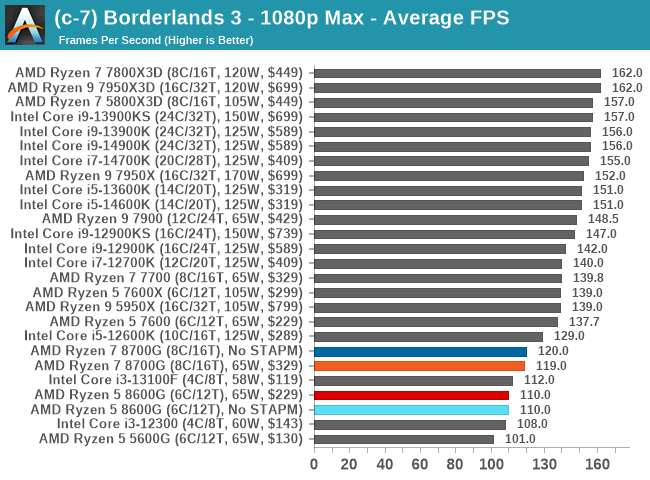
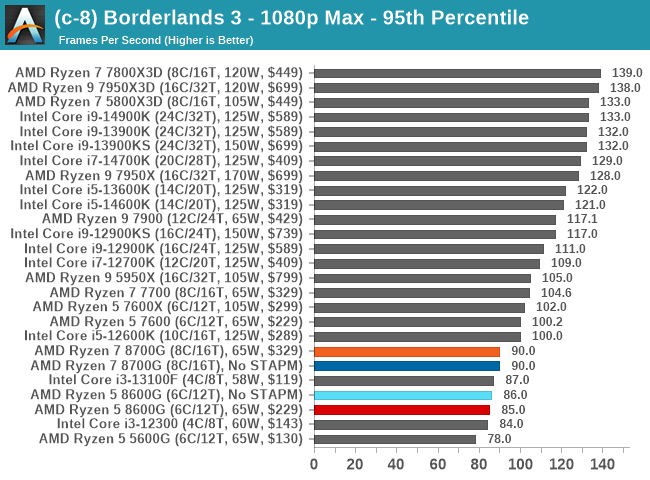
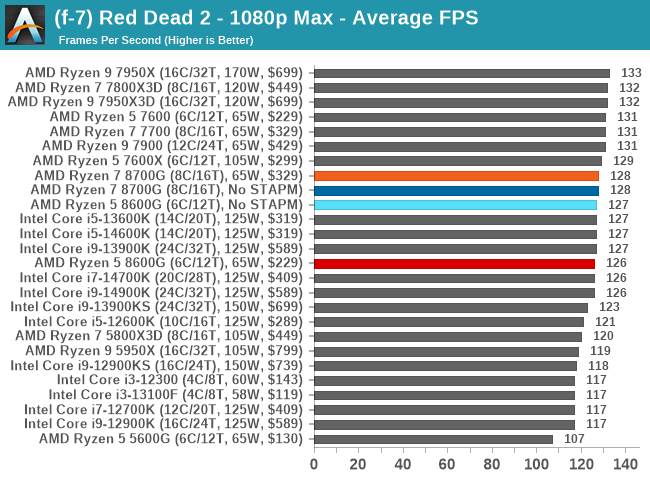
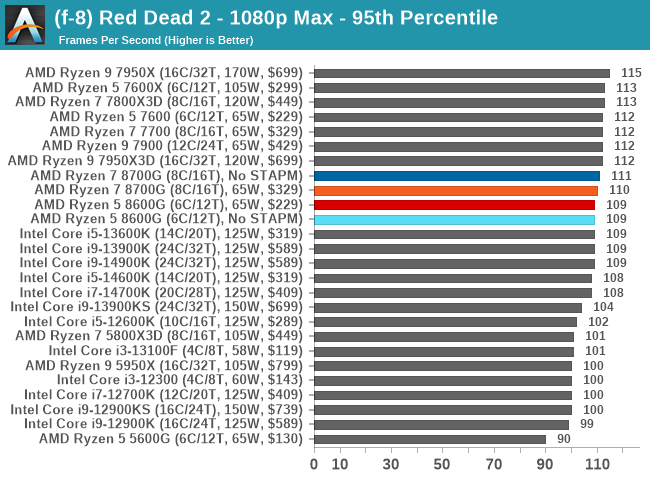
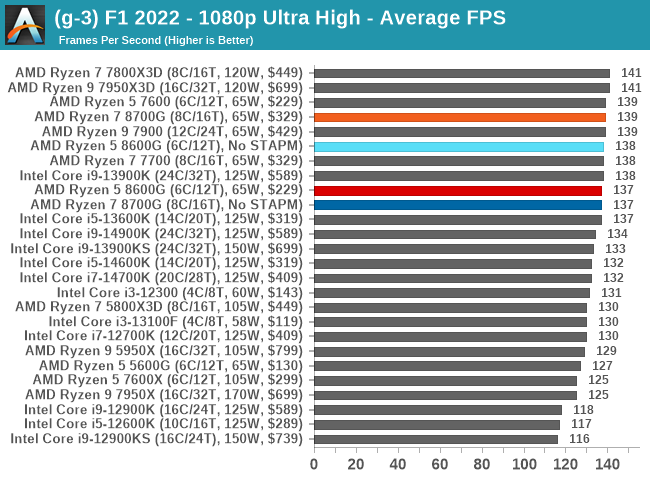
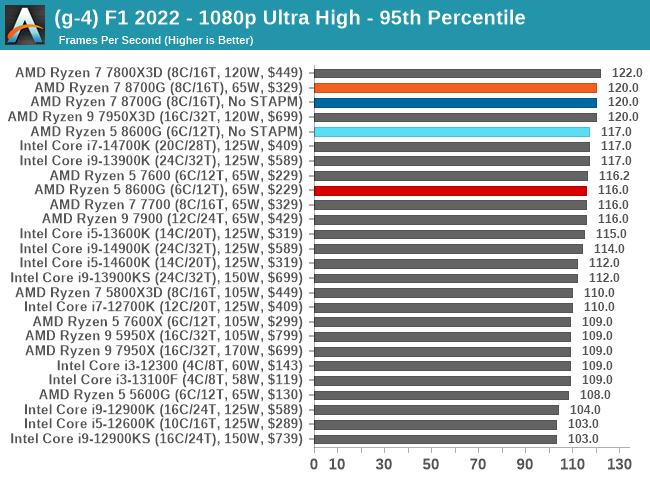
Moving along, here's a look at a more balanced gaming scenario, running games at 1080p with maximum image quality.
We are using DDR5-5200 memory as per the JEDEC specifications on the Ryzen 7 8700G and Ryzen 5 8600G, as well as DDR4-3200 on the Ryzen 7 5700G and Ryzen 5 5600G. The same methodology is also used for the AMD Ryzen 7000 series and Intel's 14th, 13th, and 12th Gen processors. Below are the settings we have used for each platform:
- DDR5-5200 CL44 - Ryzen 8000G
- DDR4-3200 CL22 - Ryzen 5000G
- DDR5-5600B CL46 - Intel 14th & 13th Gen
- DDR5-5200 CL44 - Ryzen 7000
- DDR5-4800 (B) CL40 - Intel 12th Gen
Civilization VI
World of Tanks
Borderlands 3
Red Dead Redemption 2
F1 2022
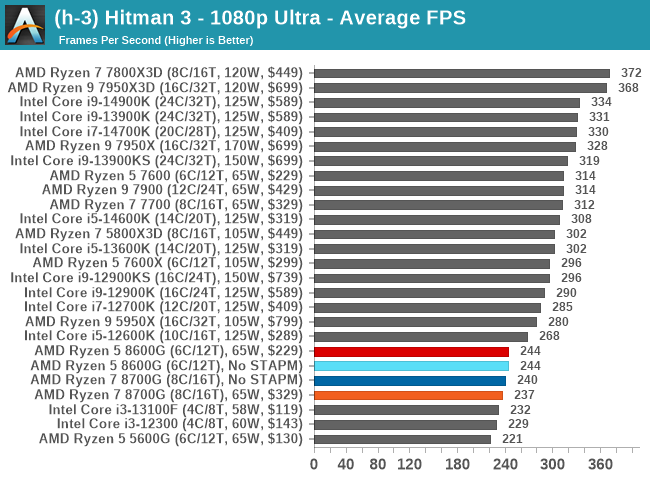
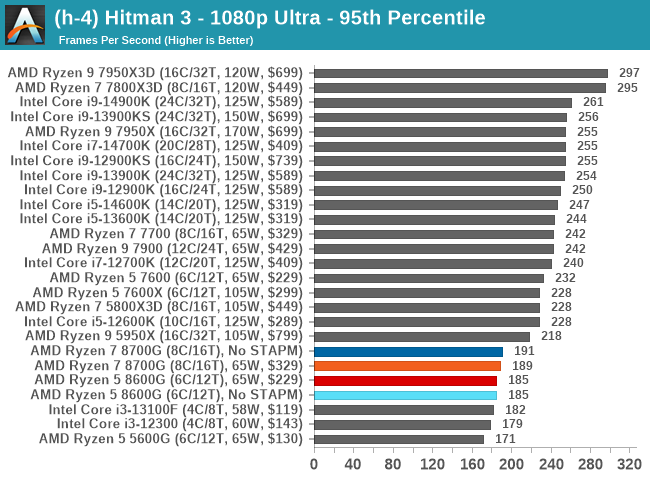
Hitman 3
Total War: Warhammer 3
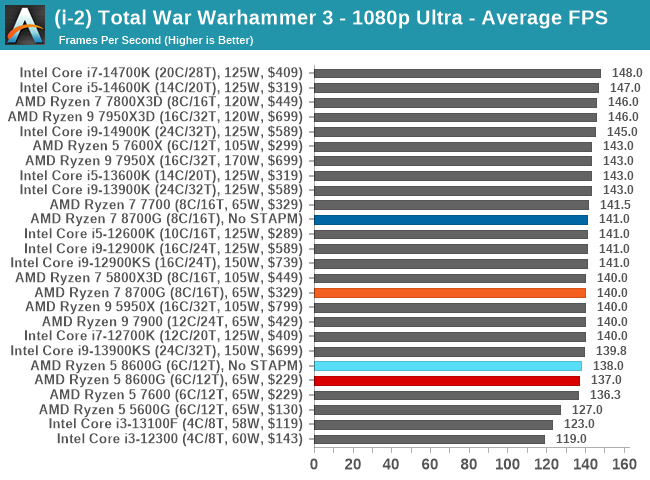
At 1080p resolutions, we see the Ryzen 7 8700G and Ryzen 5 8600G in a better light, but they still generally underperform compared to the fully-fledged desktop chips. While we can see that adding a discrete graphics card will improve performance at 1080p resolutions, we would still recommend users opt for a chip such as the Ryzen 5 7600X over the Ryzen 7 8700G if a user plans to buy a graphics card during the system planning stage.
With STAPM limitations removed, we see nearly identical performance when testing with a discrete graphics card as we did with STAPM implemented.
Originally published at https://www.anandtech.com/show/21242/amd-ryzen-7-8700g-and-ryzen-5-8600g-review (Wayback Machine).