
The Be Quiet! Dark Rock Elite CPU Cooler Review: Where Quiet Meets Quality
Testing Results, Maximum Fan Speed
To begin with, we are having a look at the Be Quiet! Dark Rock Elite, with its stock 135 mm fans running at their maximum speed.
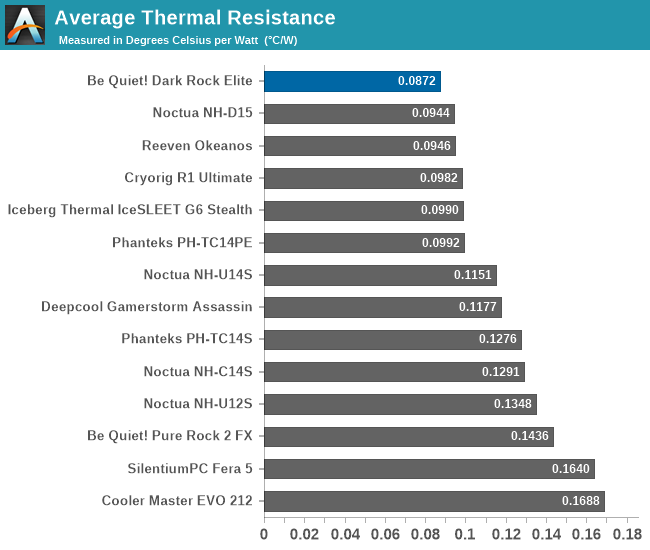
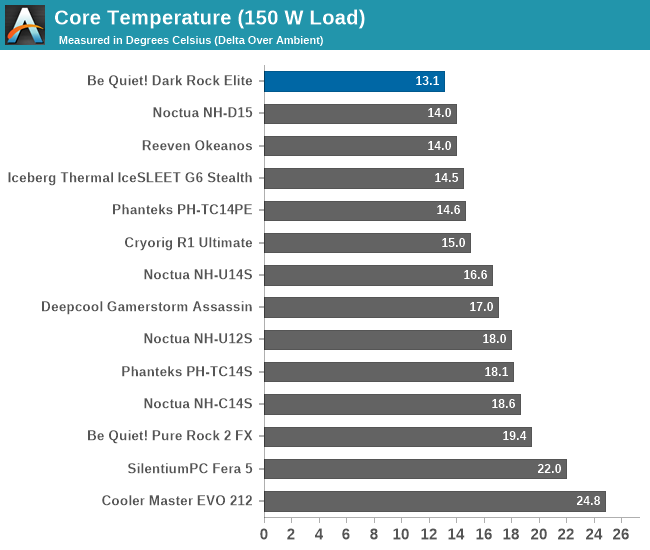
| Core Temperature, Constant Thermal Load (Max Fan Speed) |
The Dark Rock Elite's performance data reveals it to be a formidable competitor in the high-end air cooling market. With an average thermal resistance of 0.0872 °C/W, it surpasses many of its peers in the same category, including top-tier coolers like the Noctua NH-D15 and the Cryorig R1 Ultimate. The cooler demonstrates a consistent thermal profile, optimizing its thermal resistance, particularly at higher loads, indicative of its design to handle demanding CPU applications.
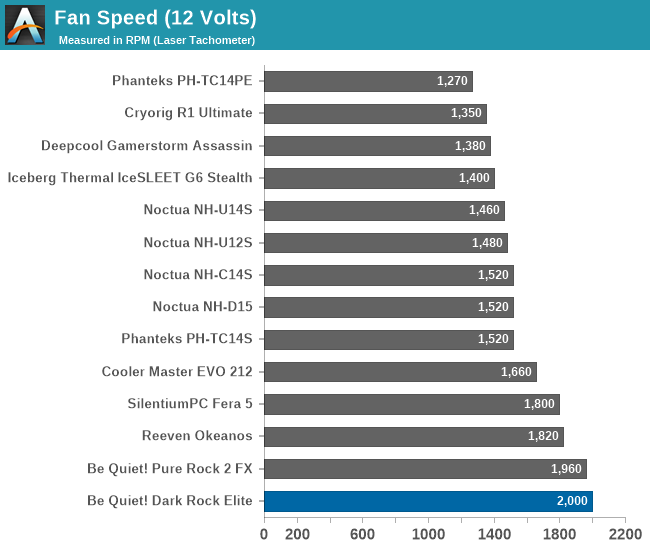
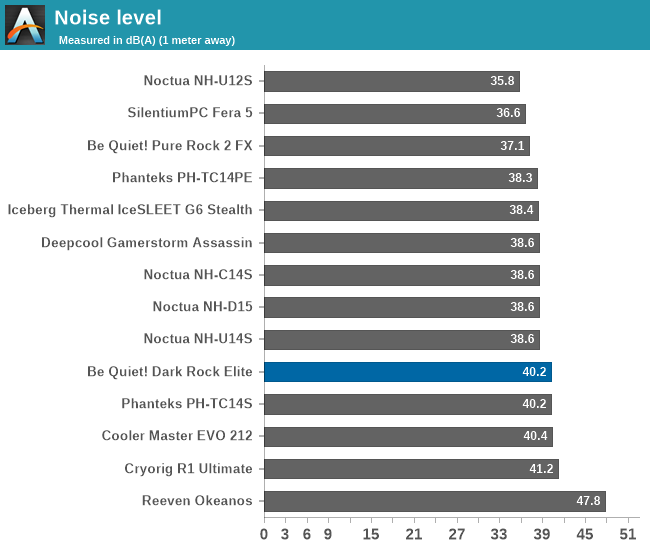
The cooler's Silent Wings PWM fans maintain relatively low noise levels at peak operation. At maximum fan speed, the noise level is about 40.2 dB(A), which, while definitely not silent, is impressively quiet for two fans operating at 2000 RPM.
Testing Results, Low Fan Speed
In this test, we are switching things up a bit, looking at the cooler's performance with the Light Wings fan taken down to half speed.
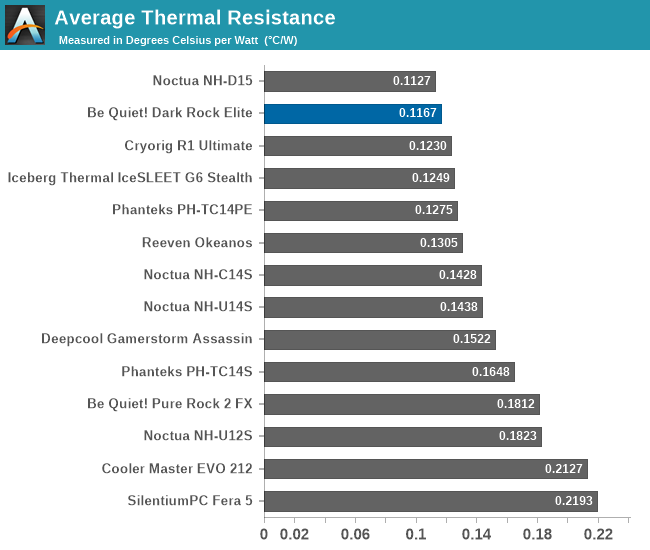
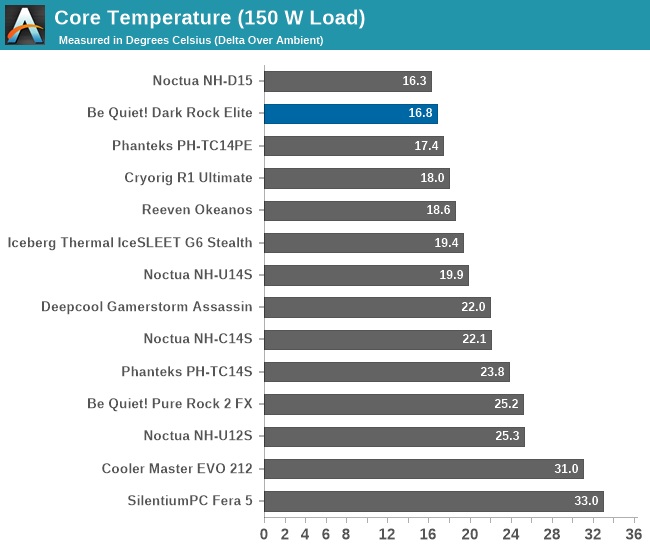
| Core Temperature, Constant Thermal Load (Low Fan Speed) |
Naturally, reducing the speed of the fans down to 1000 RPM has a negative impact on the cooler's thermal performance – just a little higher impact than what we would theoretically anticipate. The average thermal resistance of 0.1167 °C/W is excellent, but the cooler loses ground against its primary competition. It loses the top place in our charts regarding raw thermal performance, and its acoustic performance is yet to be evaluated.
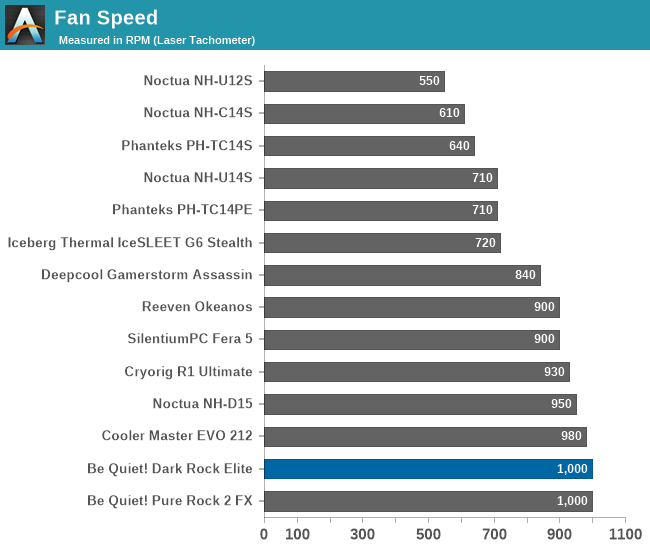
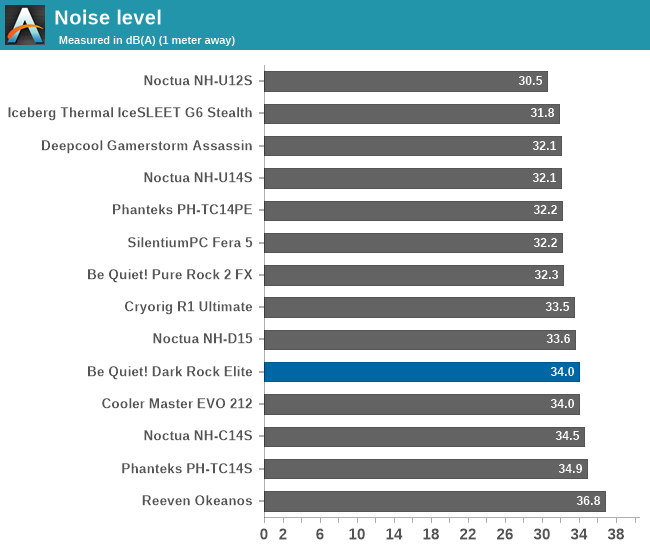
Reducing the speed of the Silent Wings 135 mm fans down to 1000 RPM also reduces the noise output to 34 dB(A), a figure that is practically inaudible within typical home office conditions. The cooler would only be noticeable in a dead-silent environment, assuming no other noise sources exist.
Thermal Resistance VS Sound Pressure Level
During our thermal resistance vs. sound pressure level test, we maintain a steady 100W thermal load and assess the overall performance of the coolers by taking multiple temperature and sound pressure level readings within the operating range of the stock cooling fans. The result is a graph that depicts the absolute thermal resistance of the cooler in comparison to the noise generated. For both the sound pressure level and absolute thermal resistance readings, lower figures are better.

The comparative chart clearly delineates the performance of the Be Quiet! Dark Rock Elite cooler in relation to its competitors, illustrating its performance capabilities. The data reveals that the Dark Rock Elite marginally surpasses the recently introduced Iceberg IceSLEET G6 in terms of performance. It also stands on par with the esteemed Noctua NH-D15. Notably, while the NH-D15 demonstrates a slight performance advantage at reduced fan speeds, the Dark Rock Elite gains the upper hand with increased fan speeds. Furthermore, the chart compares coolers of varying tiers, highlighting the performance disparities between a mid-range option like the Pure Rock 2 FX and coolers positioned at the entry-level segment.
Originally published at https://www.anandtech.com/show/21167/the-be-quiet-dark-rock-elite-cpu-cooler-review-where-quiet-meets-quality (Wayback Machine).