
ASRock Industrial NUC BOX-N97 and GMKtec NucBox G2 Review: Contrasting Compact ADL-N Options
GPU Performance: Synthetic Benchmarks
The integrated GPU in Alder Lake-N is a pared-down version of the one used in Alder Lake. Both the N97 and N100 have the 24EU version, but the N97 clocks it at 1.2 GHz compared to the 750 MHz N100 configuration. However, DDR4 vs. LPDDR5 may also impact GPU performance. Keeping these aspects in mind, the GPU performance has to be evaluated in the context of each workload. We put the systems through some standard 3D workloads to get an idea of what they have to offer for GPU-intensive tasks. Prior to that, a detailed look at the capabilities of the GPU is warranted.
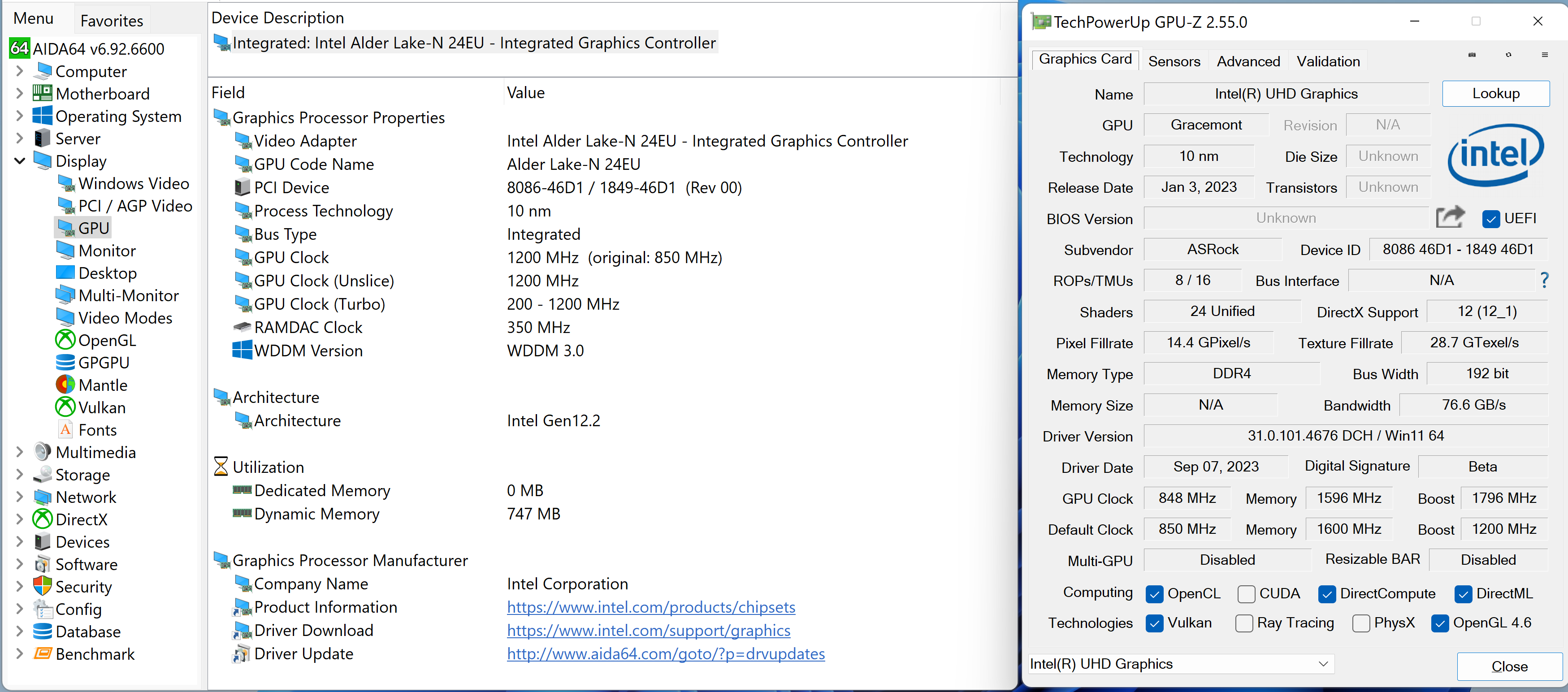
NUC BOX-N97 AIDA64 and GPU-Z GPU Information
The 1200 MHz boos clock in the NUC BOX-N97's iGPU allows for pixel and texture fillrates of 14.4 Gpix/s and 28.7 GTex/s despite the DDR4 memory limiting memory bandwidth to 76.6 GBps.
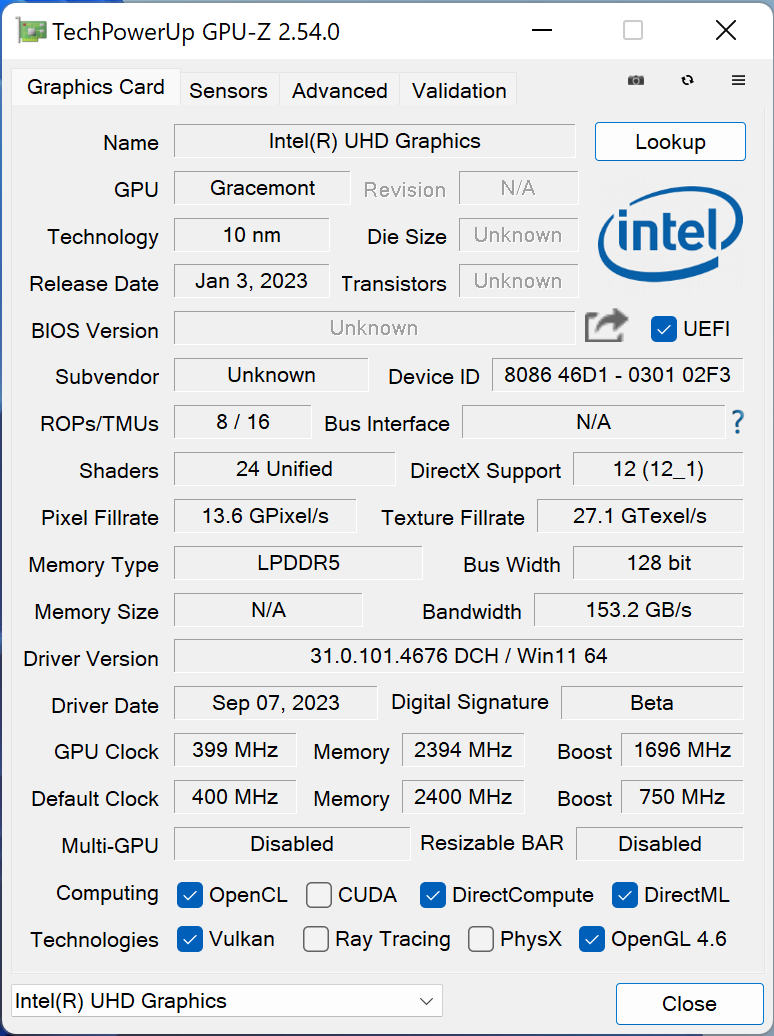
GMKtec NucBox G2 GPU-Z GPU Information
On the other hand, the 750 MHz clock of the N100's iGPU lowers the pixel and texture fillrates despite the massive jump in the memory bandwidth to 153.2 GBps.
GFXBench
The DirectX 12-based GFXBench tests from Kishonti are cross-platform, and available all the way down to smartphones. As such, they are not very taxing for discrete GPUs and modern integrated GPUs. We processed the offscreen versions of the 'Aztec Ruins' benchmark.
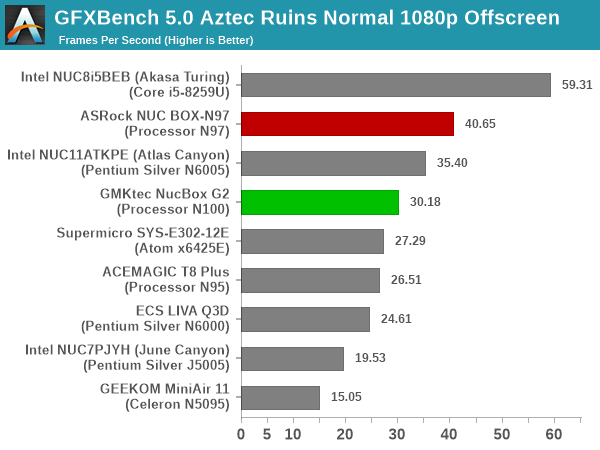
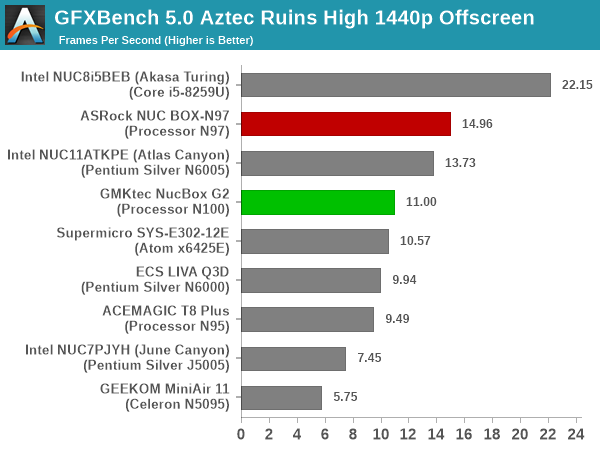
The N97's faster iGPU clock enables a healthy lead for the NUC BOX-N97 over the other systems in both cases.
UL 3DMark
Four different workload sets were processed in 3DMark - Fire Strike, Time Spy, Night Raid, and Wild Life.
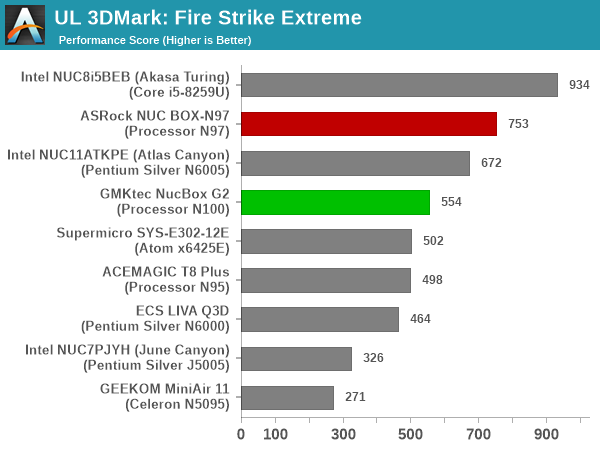
The Fire Strike benchmark has three workloads. The base version is meant for high-performance gaming PCs. It uses DirectX 11 (feature level 11) to render frames at 1920 x 1080. The Extreme version targets 1440p gaming requirements, while the Ultra version targets 4K gaming system, and renders at 3840 x 2160. The graph below presents the overall score for the Fire Strike Extreme and Fire Strike Ultra benchmark across all the systems that are being compared.
| UL 3DMark - Fire Strike Workloads | |||
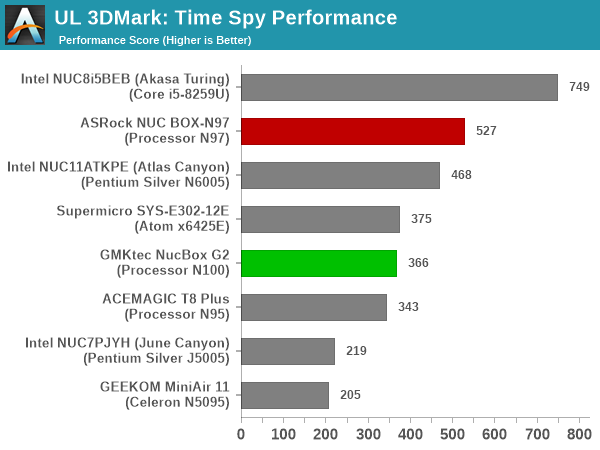
The Time Spy workload has two levels with different complexities. Both use DirectX 12 (feature level 11). However, the plain version targets high-performance gaming PCs with a 2560 x 1440 render resolution, while the Extreme version renders at 3840 x 2160 resolution. The graphs below present both numbers for all the systems that are being compared in this review.
| UL 3DMark - Time Spy Workloads | |||
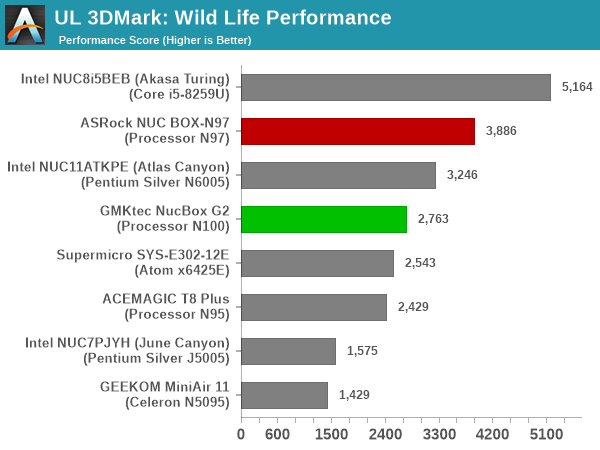
The Wild Life workload was initially introduced as a cross-platform GPU benchmark in 2020. It renders at a 2560 x 1440 resolution using Vulkan 1.1 APIs on Windows. It is a relatively short-running test, reflective of mobile GPU usage. In mid-2021, UL released the Wild Life Extreme workload that was a more demanding version that renders at 3840 x 2160 and runs for a much longer duration reflective of typical desktop gaming usage.
| UL 3DMark - Wild Life Workloads | |||
The Night Raid workload is a DirectX 12 benchmark test. It is less demanding than Time Spy, and is optimized for integrated graphics. The graph below presents the overall score in this workload for different system configurations.
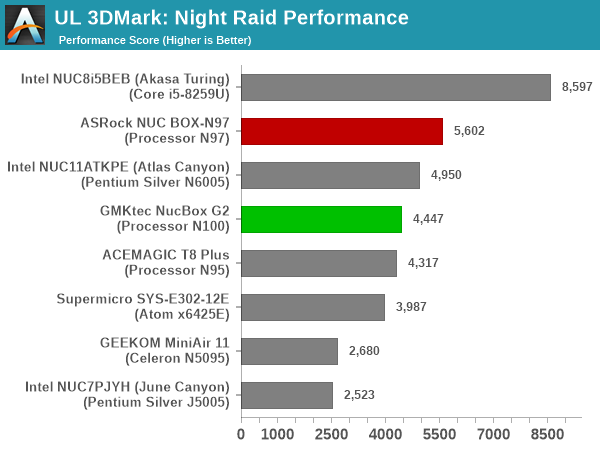
The relative performance of the different systems doesn't change with workload or resolution. The 1.2 GHz iGPU in the NUC BOX-N97 takes the honors despite the weaker DDR4 memory subsystem. The Atlas Canyon NUC based on Jasper Lake manages to sneak in-between the NUC BOX-N97 and the NucBox G2 due to its higher EU count and 900 MHz clock, despite its previous-generation architecture.
Originally published at https://www.anandtech.com/show/21085/asrock-industrial-nuc-boxn97-and-gmktec-nucbox-g2-review-contrasting-compact-adln-options (Wayback Machine).