
Intel Core i9-14900K, Core i7-14700K and Core i5-14600K Review: Raptor Lake Refreshed
CPU Benchmark Performance: Encoding
One of the interesting elements of modern processors is encoding performance. This covers two main areas: encryption/decryption for secure data transfer and video transcoding from one video format to another.
In the encrypt/decrypt scenario, how data is transferred and by what mechanism is pertinent to on-the-fly encryption of sensitive data - a process by which more modern devices are leaning towards for improving software security.
We've updated our list of encoding benchmarks for our 2024 CPU suite to include some of the most relevant and recent codecs, such as AV1, HEVC, and VP9. Not only this, but we have also included FLAC audio encoding as well as WebP2 image encoding into the mix to show not only how the latest processors perform with these codecs but also to show discrepancies in performance throughout the different segments.
We are using DDR5 memory on the Core i9-14900K, Core i7-14700K, Core i5-14600K, and Intel's 13th Gen at the relative JEDEC settings. The same methodology is also used for the AMD Ryzen 7000 series and Intel's 12th Gen (Alder Lake) processors. Below are the settings we have used for each platform:
- DDR5-5600B CL46 - Intel 14th & 13th Gen
- DDR5-5200 CL44 - Ryzen 7000
- DDR5-4800 (B) CL40 - Intel 12th Gen
Note: As we are running with a completely refreshed CPU test suite, this means we are currently re-testing other processors for our data sets. These will be added to the below graphs as soon as we have more results, and these will also be added to our Bench database. Thanks for your understanding.
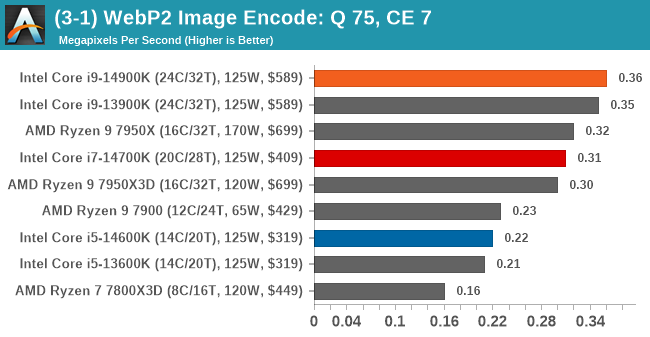
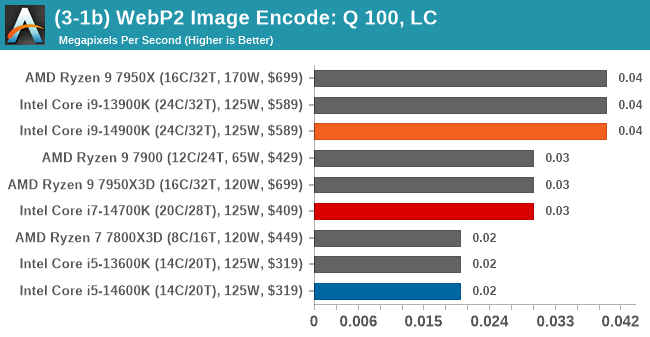
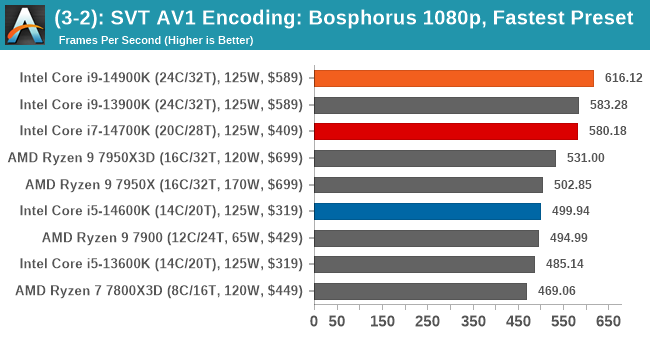
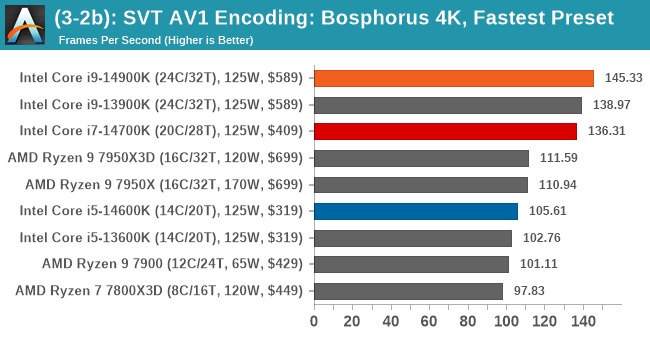
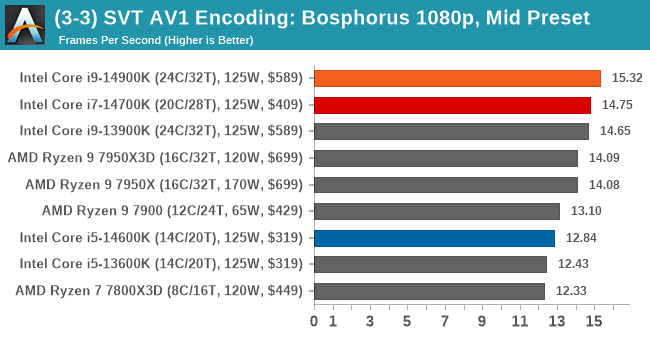
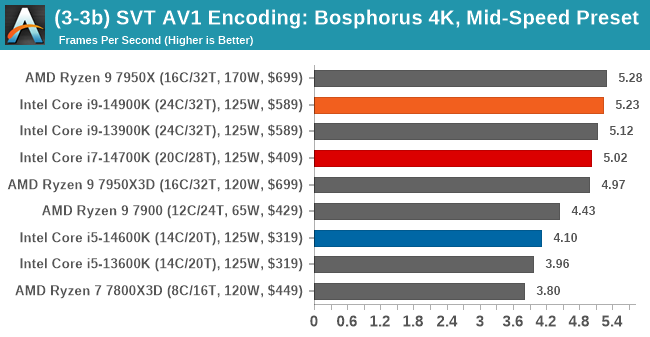
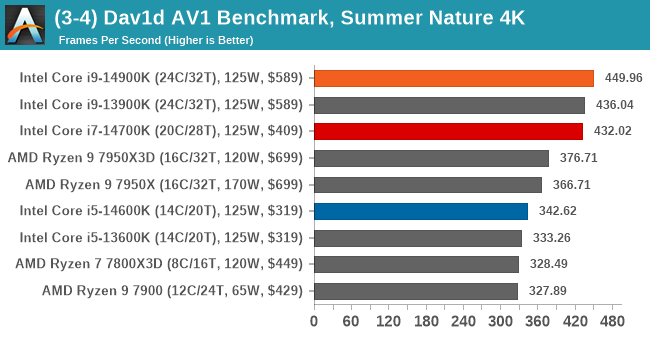
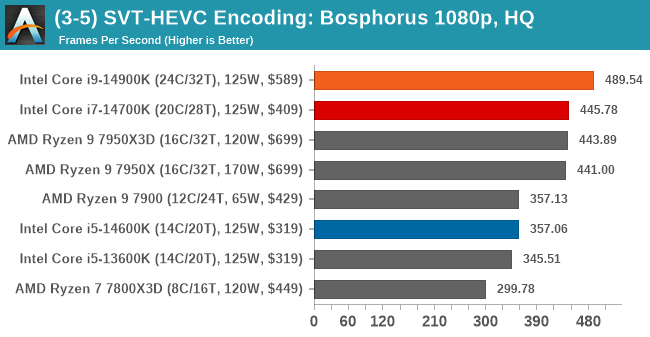
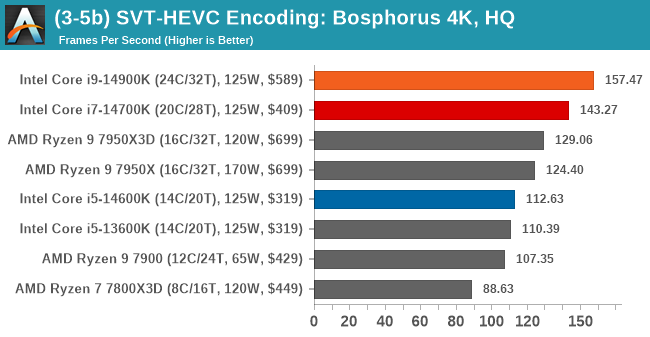
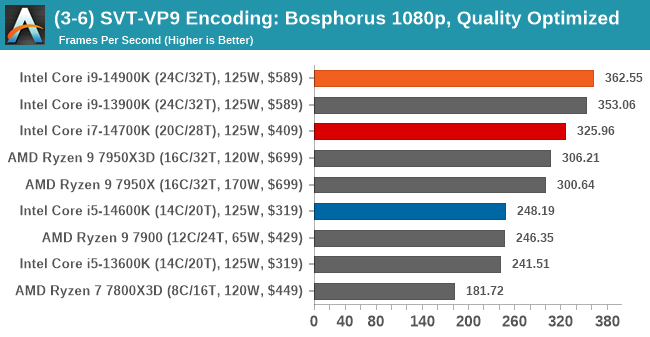
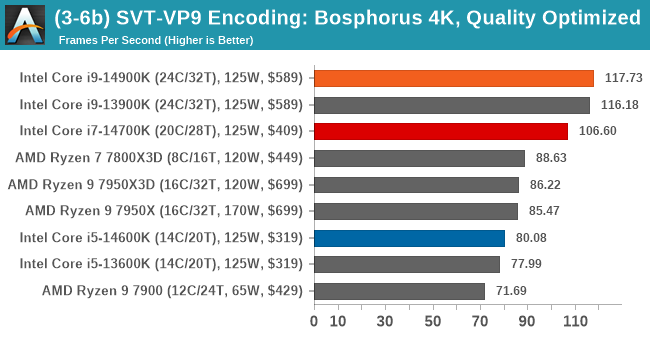
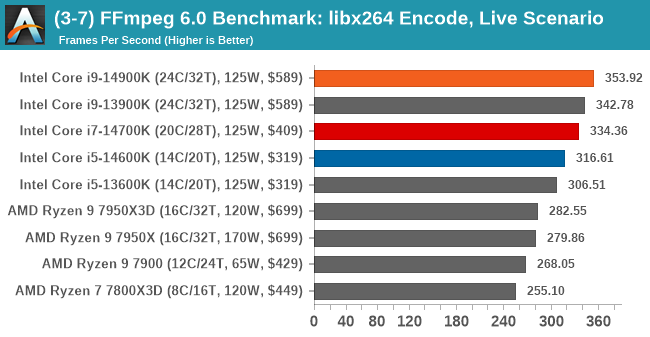
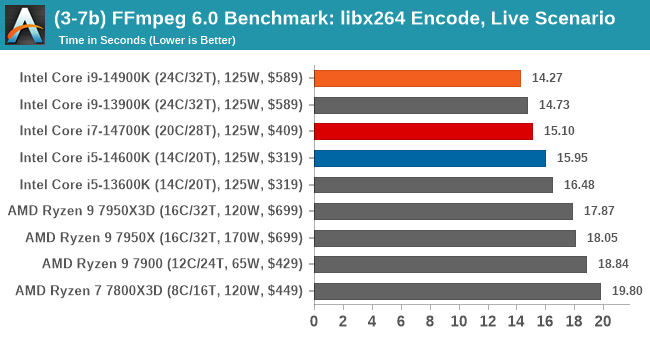
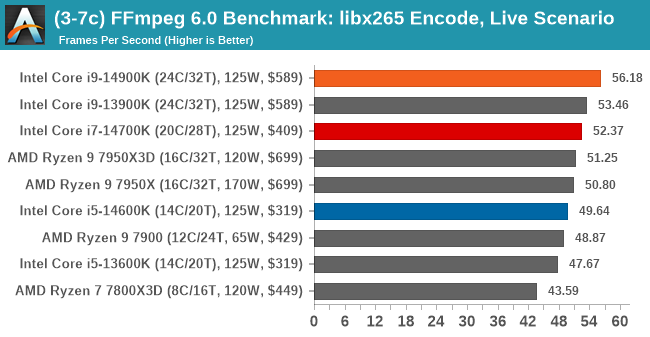
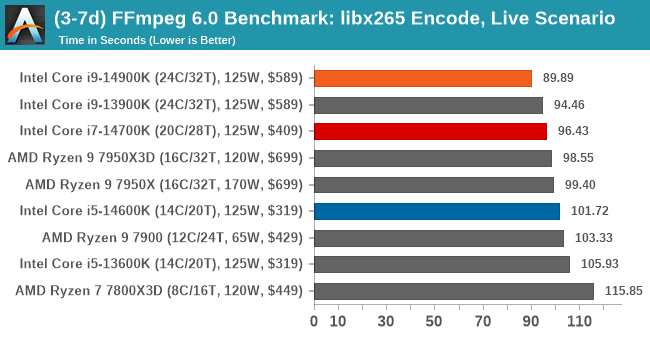
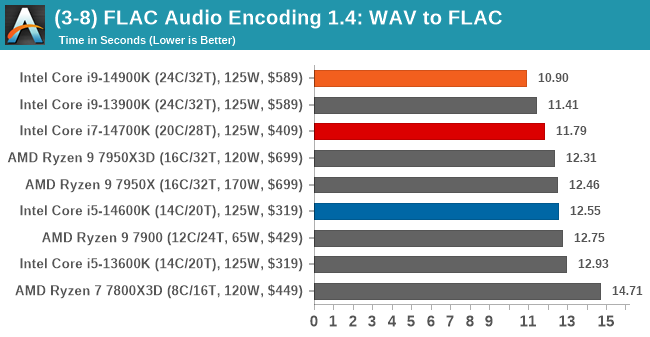
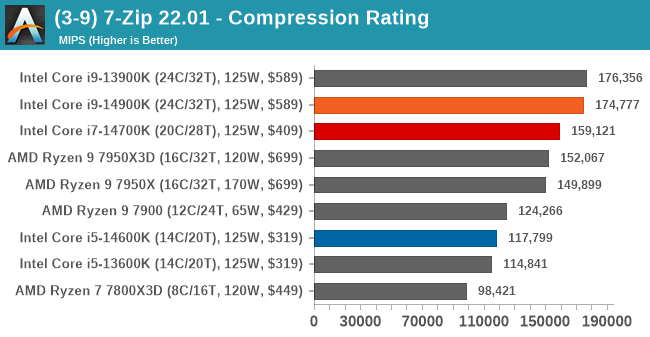
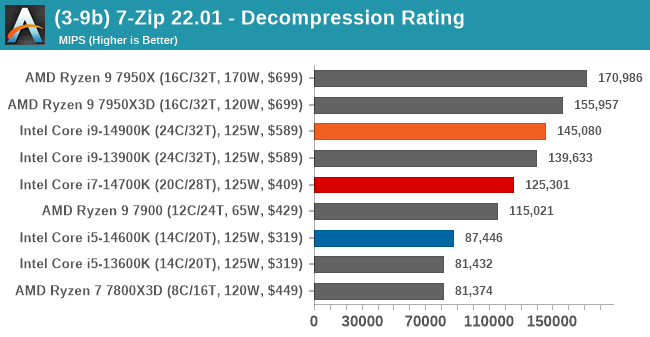
Moving onto encode and decode performance, there's not much difference between the Core i9-14900K and the Core i9-13900K. What's clear from our testing is that in encoding, Intel has the advantage over AMD with their flagship processors. The Core i7-14700K is also right up there in terms of performance, while the cheaper and less powerful Core i5-14600K trades blows with the AMD Ryzen 9 7900.
Originally published at https://www.anandtech.com/show/21084/intel-core-i9-14900k-core-i7-14700k-and-core-i5-14600k-review-raptor-lake-refreshed (Wayback Machine).