
ASUS P5NSLI: Core 2 Duo and SLI on a Budget
- Posted in
- Motherboards
Quick Thoughts
The ASUS P5NSLI is a very affordable enthusiast board for the Intel market that provides an excellent feature set for around US $115. The performance of the board in the majority of the synthetic and game benchmarks was very good but not always class leading. However, the board was consistently competitive with the Intel chipset offerings while offering the added bonus of SLI capability. The stability of the board was excellent in all areas of testing and general usage with the proper memory settings. However, we were generally frustrated with the limited memory voltage options as this board thrives on additional bandwidth and reductions of latencies.
With that said, let's move on to our initial performance opinions regarding this board.
In the video area, the inclusion of dual PCI Express X16 slots on an NVIDIA chipset provides for SLI capability and is a definite plus if you utilize SLI. The X16 slots will operate in X8 mode if dual card graphic cards or SLI is implemented. The secondary X16 slot can also be utilized as an X1 slot for PCI Express peripherals. The SLI performance of the board is similar to the ASUS P5N32-SLI SE at this time, although we have not completed testing. The board fully supported our ATI X1900XTX video card in limited testing.
In the performance area, the ASUS P5NSLI generated very competitive benchmark scores in the gaming, general application, and synthetic tests although its memory performance could use some additional BIOS tweaking. The stability of the board was excellent during testing provided we did not stray to far from our memory SPD settings at each memory speed tested. The resulting lockups, memory corruption issues in XP, and the loss of a drive image when pushing the memory timings and clock speed concerns us for a production release BIOS. The limited memory voltage selection is another setback for the enthusiast although many users will not have an issue with the 2.1V maximum.
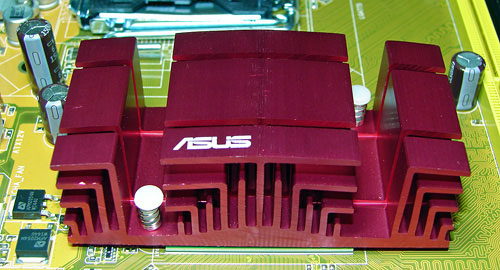
The ASUS P5NSLI at this time requires additional BIOS tuning in our opinion to solve memory compatibility issues we discovered during our initial testing. The board operates perfectly if the Auto settings are chosen or if the user has the time to find the limit of their memory when used on this board. Our general rule of thumb was to lower the timings no more than one step during testing and sometimes that was too much.
Overall, the board offers an affordable performance oriented platform for gaming. We look forward to additional testing with the board and providing results with our standard benchmark suite. We are still enthusiastic about the performance potential of this chipset considering the price and performance it delivers, though it will never be a great overclocker. In the end, this is a practical motherboard for the gamer on a budget; nothing more, nothing less.
The ASUS P5NSLI is a very affordable enthusiast board for the Intel market that provides an excellent feature set for around US $115. The performance of the board in the majority of the synthetic and game benchmarks was very good but not always class leading. However, the board was consistently competitive with the Intel chipset offerings while offering the added bonus of SLI capability. The stability of the board was excellent in all areas of testing and general usage with the proper memory settings. However, we were generally frustrated with the limited memory voltage options as this board thrives on additional bandwidth and reductions of latencies.
With that said, let's move on to our initial performance opinions regarding this board.
In the video area, the inclusion of dual PCI Express X16 slots on an NVIDIA chipset provides for SLI capability and is a definite plus if you utilize SLI. The X16 slots will operate in X8 mode if dual card graphic cards or SLI is implemented. The secondary X16 slot can also be utilized as an X1 slot for PCI Express peripherals. The SLI performance of the board is similar to the ASUS P5N32-SLI SE at this time, although we have not completed testing. The board fully supported our ATI X1900XTX video card in limited testing.
In the performance area, the ASUS P5NSLI generated very competitive benchmark scores in the gaming, general application, and synthetic tests although its memory performance could use some additional BIOS tweaking. The stability of the board was excellent during testing provided we did not stray to far from our memory SPD settings at each memory speed tested. The resulting lockups, memory corruption issues in XP, and the loss of a drive image when pushing the memory timings and clock speed concerns us for a production release BIOS. The limited memory voltage selection is another setback for the enthusiast although many users will not have an issue with the 2.1V maximum.
The ASUS P5NSLI at this time requires additional BIOS tuning in our opinion to solve memory compatibility issues we discovered during our initial testing. The board operates perfectly if the Auto settings are chosen or if the user has the time to find the limit of their memory when used on this board. Our general rule of thumb was to lower the timings no more than one step during testing and sometimes that was too much.
Overall, the board offers an affordable performance oriented platform for gaming. We look forward to additional testing with the board and providing results with our standard benchmark suite. We are still enthusiastic about the performance potential of this chipset considering the price and performance it delivers, though it will never be a great overclocker. In the end, this is a practical motherboard for the gamer on a budget; nothing more, nothing less.
Originally published at https://www.anandtech.com/show/2068 (Wayback Machine).