
nForce 500: nForce4 on Steroids?
- Posted in
- CPUs
Improved Feature: Control Panel / nTune 5.0
One of most interesting features of the nForce 500 launch is the revamped control panel and nTune 5.0 performance applications. NVIDIA has combined all of their various program applets into an integrated control panel to provide a common user interface, a common interface that certainly makes it easier for the user to control the various functions of the board and video (NVIDIA based) from a central point. |
| Click to enlarge |
The new control panel offers configuration sections for 3D Settings for NVIDIA GPUs, Display settings, Networking options, Performance, System Stability testing, Storage, and Video/Television settings. The majority of information contained in each section will already be familiar to those with nForce4 boards, only with the same look and feel as the other control panels as well as some extended configuration options.
 |
| Click to enlarge |
A new application being featured is a System Stability test program that will run application level stress testing on the platform or on an individual component for a user specified amount of time. We found the application would generally fail settings that were a little more conservative than we utilize in stress testing, but it is nice to know the program will err on the safe side.
 |
| Click to enlarge |
The most interesting application is nTune 5.0 that can be found by clicking the Performance icon. nTune has undergone a complete transform and now includes the ability to dynamically write a significant number of performance settings directly to the BIOS without requiring a reboot. You also have the option for letting the system dynamically create an overclocking profile and automatically adjust the BIOS settings under the Automatic Tuning section.
 |
| Click to enlarge |
The Adjust Motherboard Settings section is certainly the most interesting of the performance oriented applets as changes in these fields are dynamically written to the BIOS. The settings can be saved in profiles that can be loaded within Windows without having to reset the system and enter the BIOS. This can help with situations where optimal settings for games might differ from those for audio/video playback. The system also allows for automatic or direct fan speed control on supported board headers.
 |
 |
| Click to enlarge |
The Dynamic BIOS Access section offers the ability to change BIOS setting in four different categories that will take effect on reboot. The two sections not displayed are for power management and peripheral settings.
 |
| Click to enlarge |
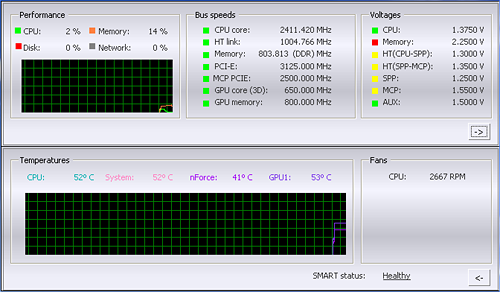 |
NVIDIA also includes a System Information utility along with a Windows based monitoring application. Overall, the polished look, feel, and operation of the new control panel along with the performance improvements offered in nTune 5.0 has raised the bar for user enhancements offered by the core logic and motherboard suppliers.
Originally published at https://www.anandtech.com/show/2014 (Wayback Machine).