
Intel Unveils Meteor Lake Architecture: Intel 4 Heralds the Disaggregated Future of Mobile CPUs
I/O Tile: Extended and Scalable Depending on Segment
The smallest of Meteor Lake's tiles is the I/O tile, which is primarily designed to offer additional connectivity features. This, of course, is down to two things; specific vendor's needs and the grade of processor itself. As Meteor Lake is scalable, the I/O tile is perhaps the crux of enabling specific features such as Thunderbolt 4 on devices. A lower-end Intel Core 3 Meteor Lake chip is likely to drop flashy I/O-specific features such as TB4 to save on cost, as entry-level notebooks aren't going to use it.
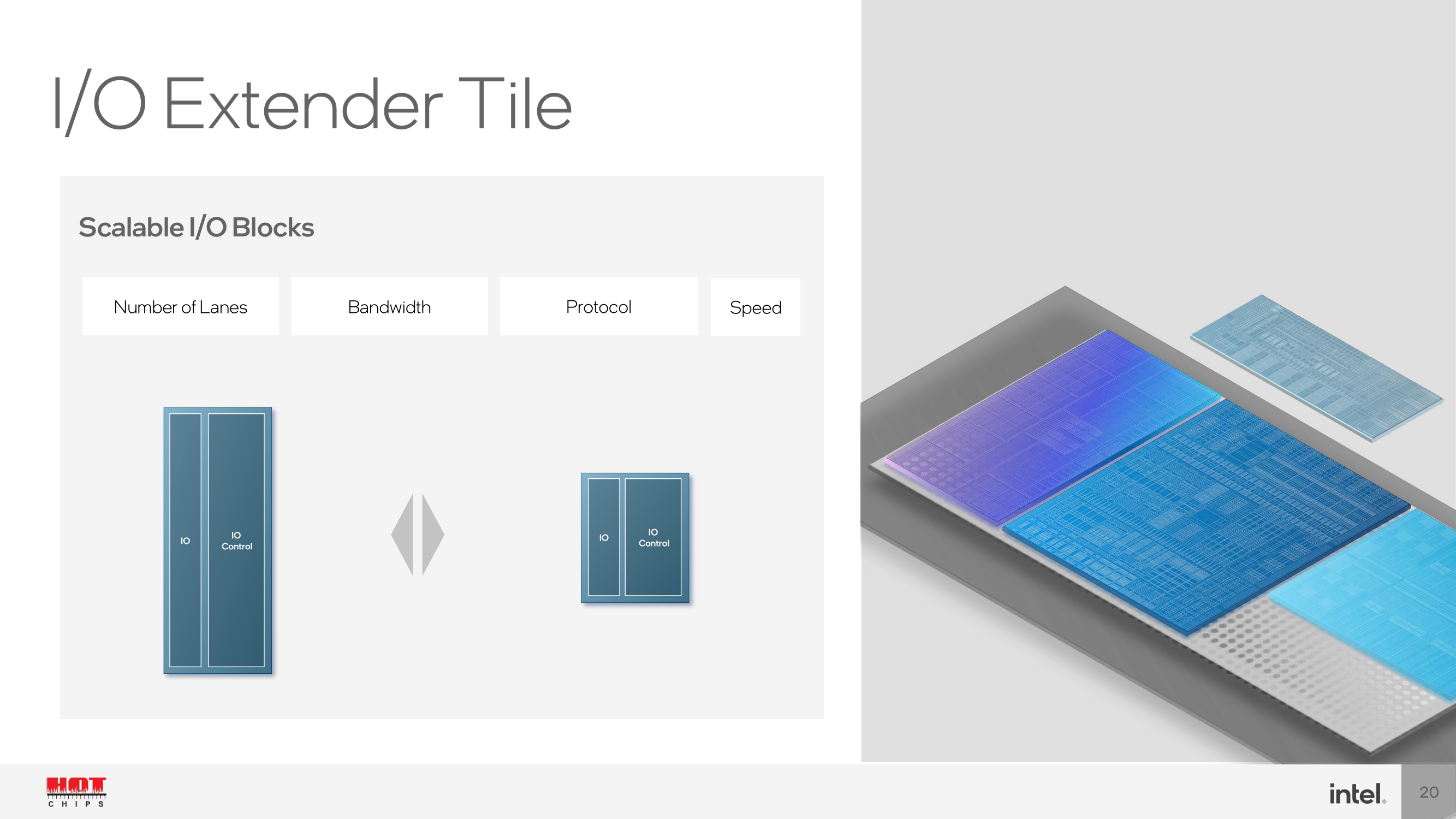
The higher end of the Meteor Lake product stack will feature Thunderbolt 4, and although it will be on the I/O tile for notebook vendors to utilize, having a scalable I/O fabric allows Intel to implement a modular approach to I/O features instead of one that is more one size fits all. The I/O tile includes additional PCIe lanes, but this number will vary depending on the processor itself; a higher-end chip will have more for additional storage needs, whereas a lower-end chip will have the minimum for connectivity and whatnot. Something else is that the I/O tile isn't a PCIe Coherent Fabric, which means data can only be transferred without the support for cache coherency between memory and devices.
Originally published at https://www.anandtech.com/show/20046/intel-unveils-meteor-lake-architecture-intel-4-heralds-the-disaggregated-future-of-mobile-cpus (Wayback Machine).