
Cebit 2006: High end Motherboards and Server News
- Posted in
- Trade Shows
ASUS
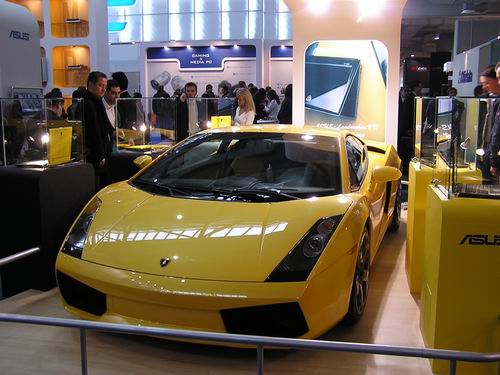
Asus, like Intel and AMD, also believed that a fast car at the booth would subconsciously associate their products with speed and performance.
MSI
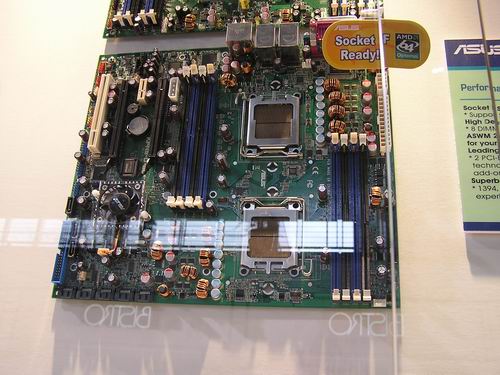
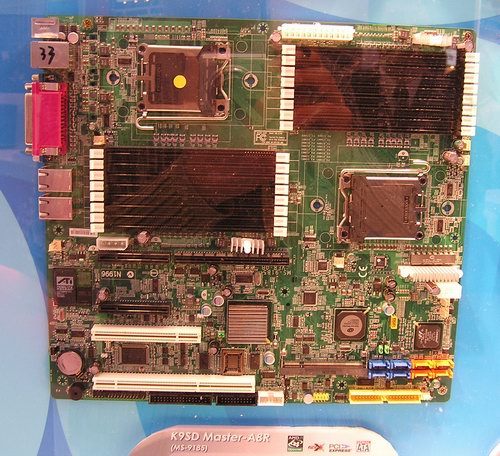
The people at MSI showed the MSI K9SDMaster, the newest Opteron Socket-F server board.
MSI also displayed the first fully working Socket-F based Opteron server, but we were not allowed to boot up the machine and run some benchmarking. Several MSI servers are currently running in our lab, so this is probably just a small postponement. Expect some hard numbers soon…
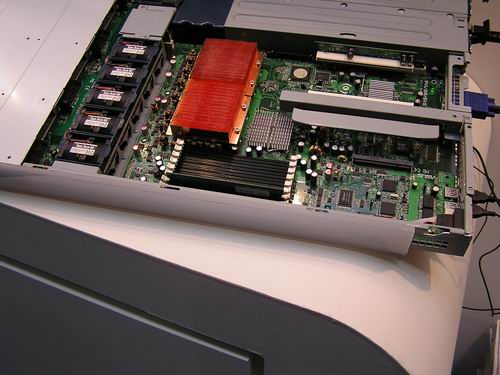
MSI had also several servers for the Bensley platform available, with SAS support. MSI has quite a unique product with the P1-104A2M server (which will be reviewed soon), a P-m Dothan based server, which is small enough that you can fit two of them back-to-back in a 1U rack space. The next release will feature a Core Duo CPU, making the small, relatively silent and power-saving server even more attractive.
Asus, like Intel and AMD, also believed that a fast car at the booth would subconsciously associate their products with speed and performance.
MSI
The people at MSI showed the MSI K9SDMaster, the newest Opteron Socket-F server board.
MSI also displayed the first fully working Socket-F based Opteron server, but we were not allowed to boot up the machine and run some benchmarking. Several MSI servers are currently running in our lab, so this is probably just a small postponement. Expect some hard numbers soon…
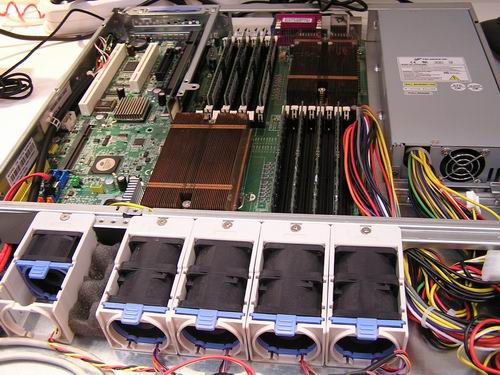
MSI had also several servers for the Bensley platform available, with SAS support. MSI has quite a unique product with the P1-104A2M server (which will be reviewed soon), a P-m Dothan based server, which is small enough that you can fit two of them back-to-back in a 1U rack space. The next release will feature a Core Duo CPU, making the small, relatively silent and power-saving server even more attractive.
Originally published at https://www.anandtech.com/show/1971 (Wayback Machine).