
Asus A8R32-MVP Deluxe: First ATI RD580
- Posted in
- Motherboards
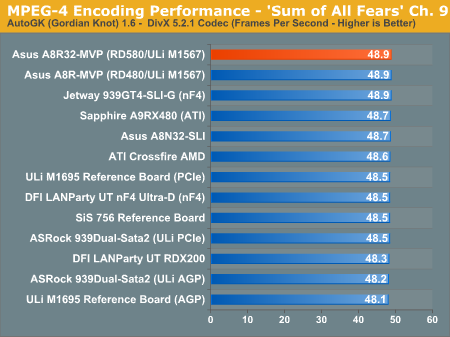
Graphics Performance and Encoding
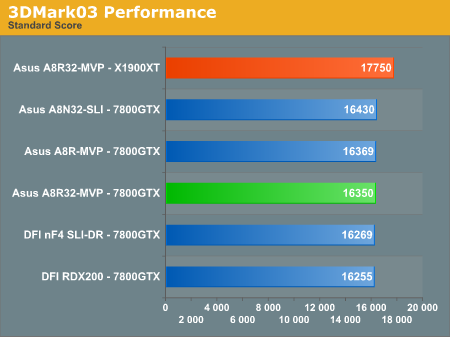
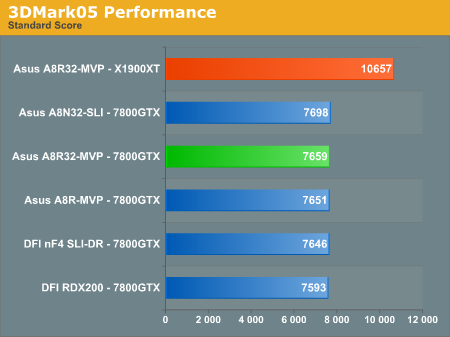
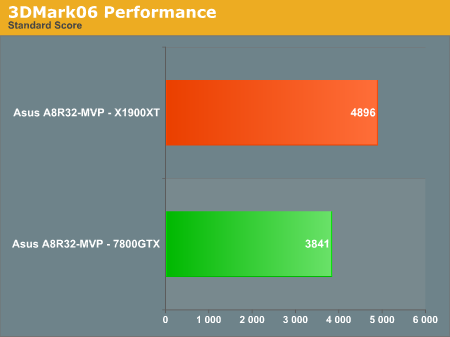
The 3DMark benchmarks, published by FutureMark, are probably the most widely quoted gaming performance benchmarks available. While the benchmarks are based on game sequences written by FutureMark to reveal subtle differences in gaming performance, they still have to be considered synthetic benchmarks. They are useful for broad Graphics comparisons, but they are no substitute for benchmarks with real gaming engines that are currently being played.
3DMark06 was recently introduced and you can find more in-depth information about this new 3DMark at in the AnandTech article Futuremark's Latest Attempt: 3DMark06 Tested.
Originally published at https://www.anandtech.com/show/1948 (Wayback Machine).