
Asus A8R32-MVP Deluxe: First ATI RD580
- Posted in
- Motherboards
Asus A8R32-MVP: Board Layout
Since the A8R32-SLI Deluxe is an upgrade to the current A8R-MVP, the best way to compare the two boards is to take a closer look at what has changed in the upgrade.
The only other layout change of any significance involves the PCIe slots. Asus has spread the 2 PCIe slots to a distance of 2 slots between the two x16 slots. This allows better video card cooling. It also requires a slight rearrangement of the available slots, but the total slots - 2 x16 PCIe, 1 x1 PCIe, and 2 PCI - remains the same.
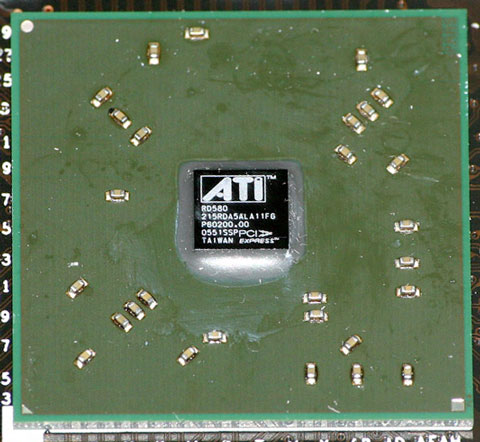
If you look closely, you will see that the RD580 does not need a supplementary 4-pin Molex connection like the earlier 480, and that connector has been removed from the A8R32-MVP. We had no problems with stability of 2 video cards, even with dual X1900XT video cards, so the extra power connection is not necessary for stable dual video on the A8R32-MVP.
The rest of the updates to the A8R32-MVP Deluxe are not so obvious at first look.
The ALC882 has superb specifications, providing five 24-bit stereo DACs and three 20-bit stereo DACs driving the multimedia features. All DACs provide sample rates to 192kHz and up to 4 channels of microphone input are supported. Signal-to-Noise ratio is specified to be greater than 103dB. Realtek features the ALC882 as a premium HD part.
Another addition that justifies the Asus move of the A8R32-MVP to the Deluxe moniker is the addition of a second Gigabit LAN. Where the A8R has just the slower PCI Gigabit Ethernet, the A8R32 adds a second full-speed Gigabit LAN on the PCIe bus. This will be an important addition for some buyers.
The refinements to the A8R32-MVP Deluxe layout are subtle, but they improve on the already excellent design of the A8R-MVP. Asus has a reputation for paying attention to details in their board layouts, and they do not disappoint with the A8R32-MVP.
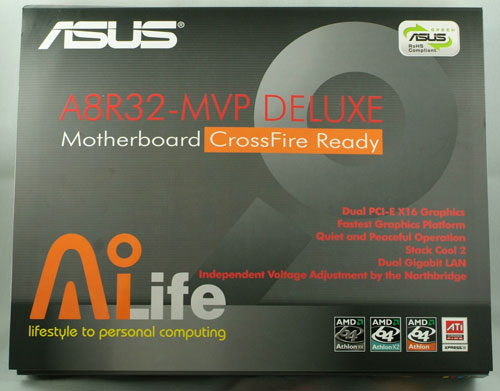
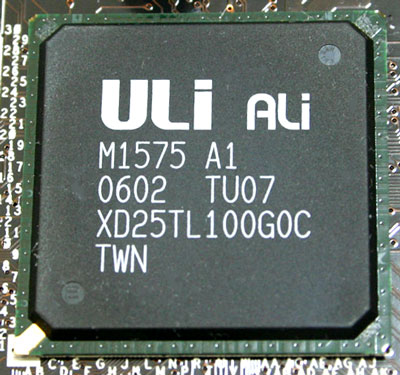
Since the A8R32-SLI Deluxe is an upgrade to the current A8R-MVP, the best way to compare the two boards is to take a closer look at what has changed in the upgrade.
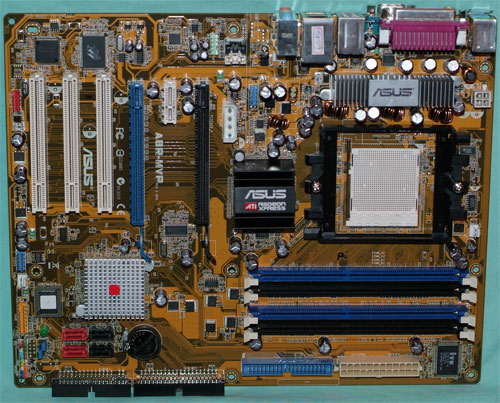

Click to enlarge.
The only other layout change of any significance involves the PCIe slots. Asus has spread the 2 PCIe slots to a distance of 2 slots between the two x16 slots. This allows better video card cooling. It also requires a slight rearrangement of the available slots, but the total slots - 2 x16 PCIe, 1 x1 PCIe, and 2 PCI - remains the same.
If you look closely, you will see that the RD580 does not need a supplementary 4-pin Molex connection like the earlier 480, and that connector has been removed from the A8R32-MVP. We had no problems with stability of 2 video cards, even with dual X1900XT video cards, so the extra power connection is not necessary for stable dual video on the A8R32-MVP.
The rest of the updates to the A8R32-MVP Deluxe are not so obvious at first look.
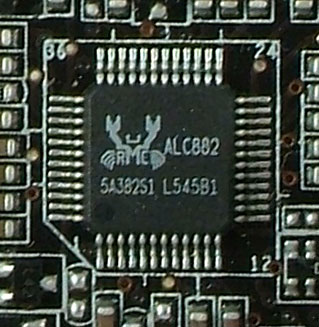
The ALC882 has superb specifications, providing five 24-bit stereo DACs and three 20-bit stereo DACs driving the multimedia features. All DACs provide sample rates to 192kHz and up to 4 channels of microphone input are supported. Signal-to-Noise ratio is specified to be greater than 103dB. Realtek features the ALC882 as a premium HD part.
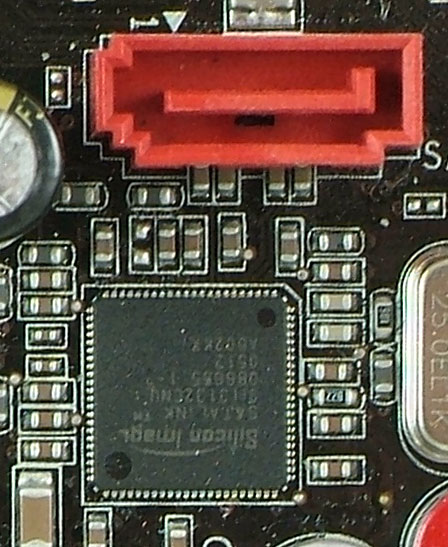
Another addition that justifies the Asus move of the A8R32-MVP to the Deluxe moniker is the addition of a second Gigabit LAN. Where the A8R has just the slower PCI Gigabit Ethernet, the A8R32 adds a second full-speed Gigabit LAN on the PCIe bus. This will be an important addition for some buyers.
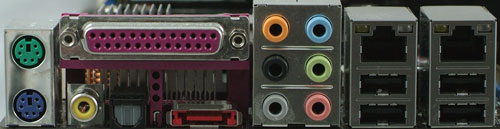
The refinements to the A8R32-MVP Deluxe layout are subtle, but they improve on the already excellent design of the A8R-MVP. Asus has a reputation for paying attention to details in their board layouts, and they do not disappoint with the A8R32-MVP.
Originally published at https://www.anandtech.com/show/1948 (Wayback Machine).