
The NVIDIA 6800 GS Closer Look: EVGA, Leadtek, PNY, and Evertop
- Posted in
- GPUs
Power, Heat and Noise
Power Load
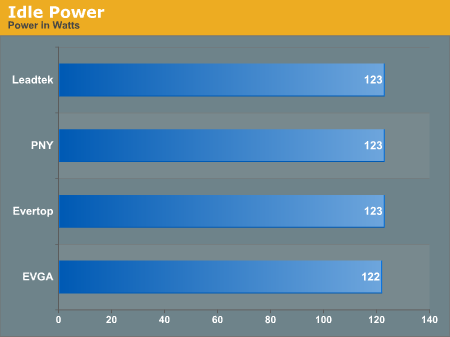
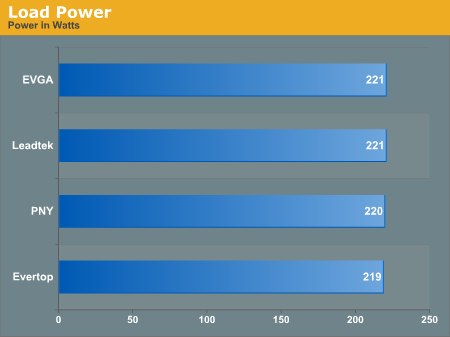
To test the power load of the card, we measure the total watt usage of our test computer at the wall outlet, recording the power usage of our system in two different states. The first state is with the card installed and the computer is idle, and the second is during intensive performance tests (looped Splinter Cell benchmarks). This way, we are able to get a general idea of how the power usage varies between cards.
Heat
We also wanted to see how much heat these cards generated. We found that the EverTop 6800 GS generated the least amount of heat by a wide margin compared to the other three. The unique HSF design of this card may contribute to its low level of heat.
Noise
We were curious to see what kind of noise these cards generated as well. What is interesting here is that, similar to our heat tests, one card stood out among the rest. The EverTop GS was by far the most quiet of these cards, again perhaps due in part to the radical HSF design. The fact that it is the lowest clocked of these cards also plays a part here. The EverTop is the only card to use a non-reference HSF. Obviously, the Zalman fan, though bulky, does a better job of cooling the card while it keeps quiet. Below are the noise levels for each card.
For reference, the noise level of the room with the system off was 39.1.
Power Load
To test the power load of the card, we measure the total watt usage of our test computer at the wall outlet, recording the power usage of our system in two different states. The first state is with the card installed and the computer is idle, and the second is during intensive performance tests (looped Splinter Cell benchmarks). This way, we are able to get a general idea of how the power usage varies between cards.
Heat
We also wanted to see how much heat these cards generated. We found that the EverTop 6800 GS generated the least amount of heat by a wide margin compared to the other three. The unique HSF design of this card may contribute to its low level of heat.
| Graphics Card | Temperature |
| EverTop GeForce 6800 GS | 56 C |
| EVGA e-GeForce 6800 GS | 64 C |
| PNY GeForce 6800 GS Overclocked | 67 C |
| Leadtek WinFast PX6800 GS Extreme | 69 C |
Noise
We were curious to see what kind of noise these cards generated as well. What is interesting here is that, similar to our heat tests, one card stood out among the rest. The EverTop GS was by far the most quiet of these cards, again perhaps due in part to the radical HSF design. The fact that it is the lowest clocked of these cards also plays a part here. The EverTop is the only card to use a non-reference HSF. Obviously, the Zalman fan, though bulky, does a better job of cooling the card while it keeps quiet. Below are the noise levels for each card.
| Graphics Card | Noise Level |
| EverTop GeForce 6800 GS | 45.9 |
| PNY GeForce 6800 GS Overclocked | 50.1 |
| EVGA e-GeForce 6800 GS | 50.5 |
| Leadtek WinFast PX6800 GS Extreme | 50.7 |
For reference, the noise level of the room with the system off was 39.1.
Originally published at https://www.anandtech.com/show/1934 (Wayback Machine).