
Seagate 7200.9 160GB: The Highest Platter Density to Date!
- Posted in
- Storage
Real World Tests
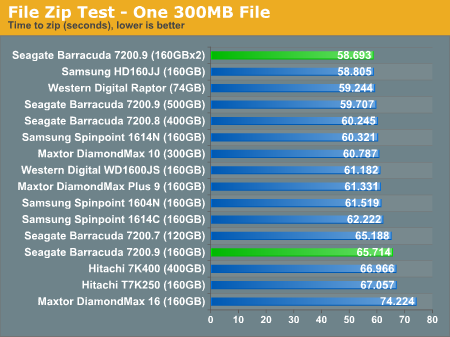
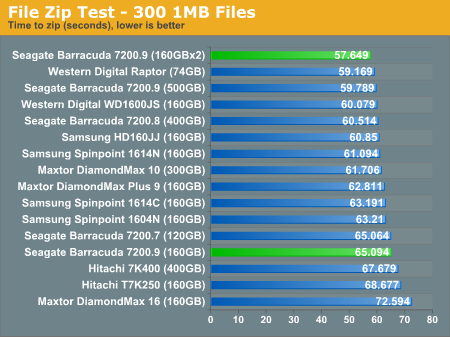
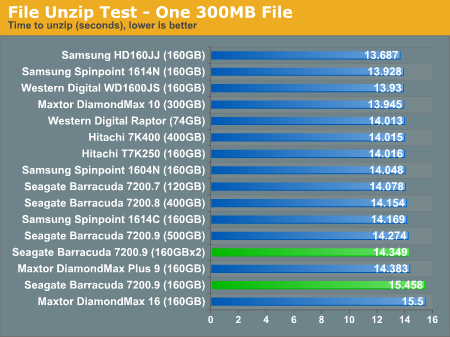
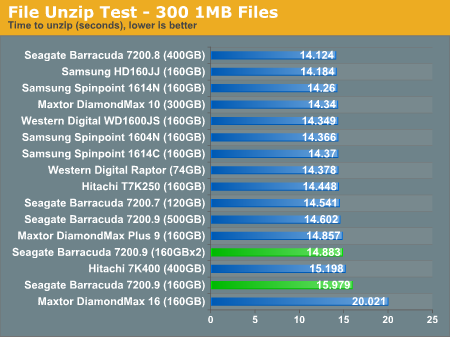
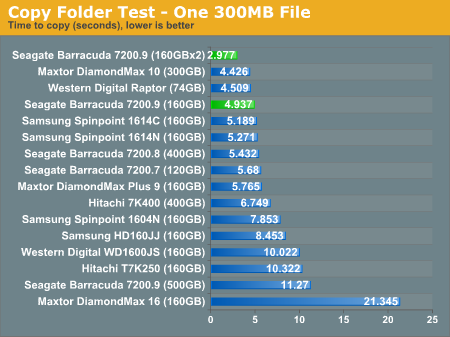
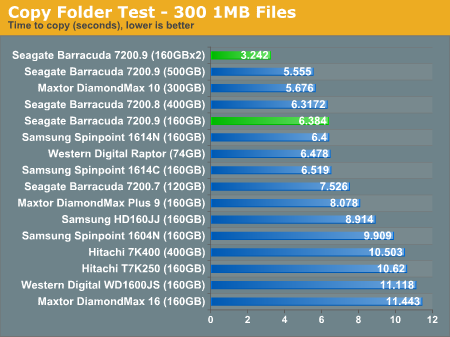
Synthetic benchmarks are not always the best gauge in measuring the "real" performance of hardware, which is why we have incorporated a few real world tests in our storage reviews. One of our tests, the file system performance test, measures the drive's ability to handle file zip, unzip, and copy operations. This is a great measure of how one drive compares to another and we have put together a group of tasks that most of us typically use.
File System Tasks Within Drive
- File Zip Test - We take a 300MB file and measure the time that it takes for our test bed to compress it to ZIP format. We then run the test again with 300 1MB files to see how the drive performs when working with multiple files.
- File Unzip Test - Using the same methodology as the File Zip Test, we take a ZIP file of a single 300MB file as well as a ZIP file of 300 1MB files and measure the time that it takes to uncompress each ZIP successfully.
- File Copy Test - We measure how long it takes for the system with our test drive to copy a single 300MB file as well as 300 1MB files.
Originally published at https://www.anandtech.com/show/1933 (Wayback Machine).