
Intel D975XBX: Intel brings their Bad-Axe to Market
- Posted in
- Motherboards
Audio Performance
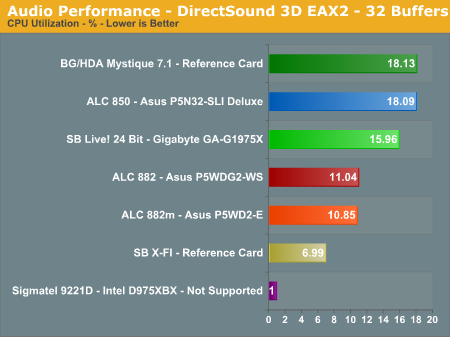
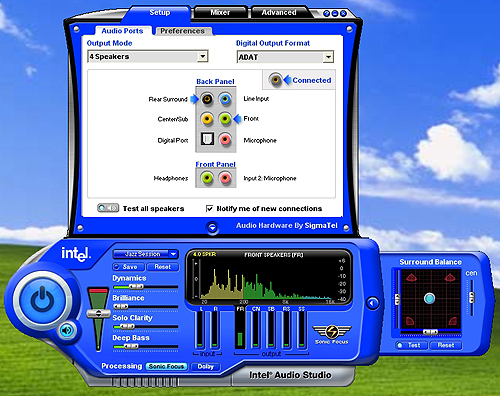
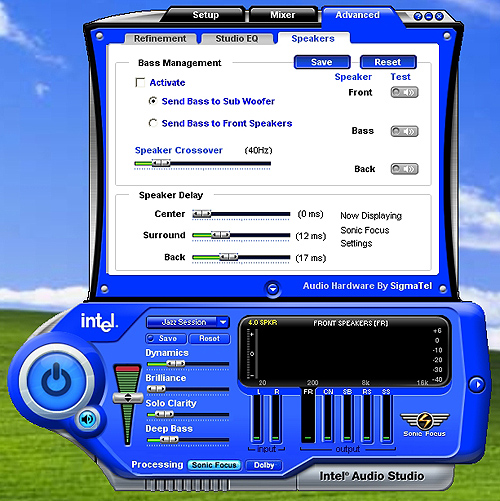
The Sigmatel STAC9221D codec on the Intel D975XBX board does not fully support 3D Hardware, EAX1, or EAX2 modes as the other on-board codecs do at this time. Consequently, its performance is highly dependent upon the CPU and gaming support will be limited to generic OpenAL or 2D modes.
Obviously, if you are a serious gamer, then a dedicated sound card is still a requirement to ensure consistent frame rate averages across a wide variety of games. We noticed in our Battlefield 2, Serious Sam II, and Half Life 2 testing that the ALC882M solution would stutter in intensive scenes, creating frame rates in the low teens momentarily. We will be testing the Realtek R1.30 drivers in our next article to see if the minimal frame rates and stutter issues have been improved.
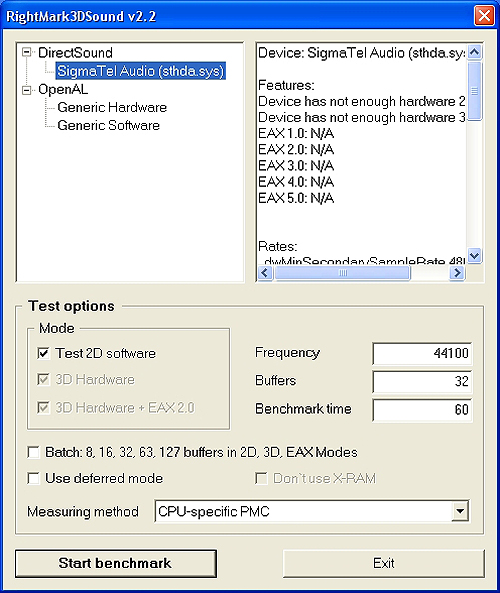
The Sigmatel STAC9221D codec on the Intel D975XBX board does not fully support 3D Hardware, EAX1, or EAX2 modes as the other on-board codecs do at this time. Consequently, its performance is highly dependent upon the CPU and gaming support will be limited to generic OpenAL or 2D modes.
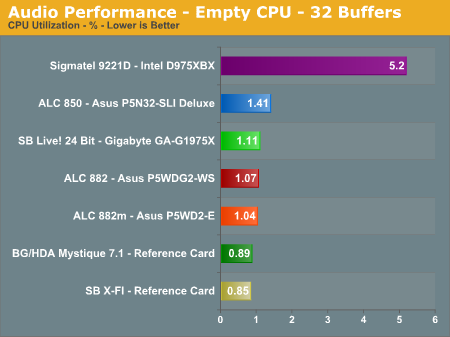
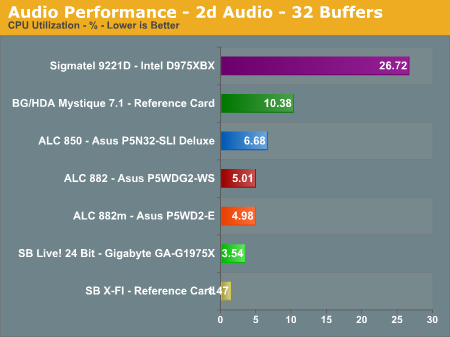
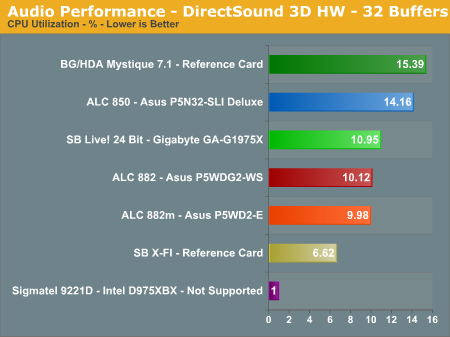
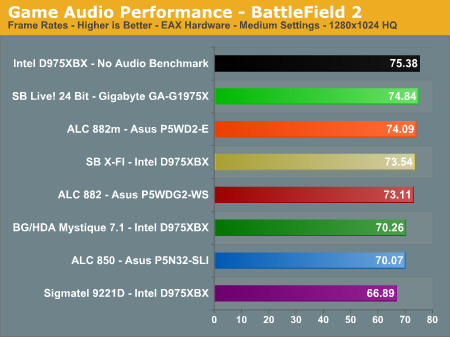
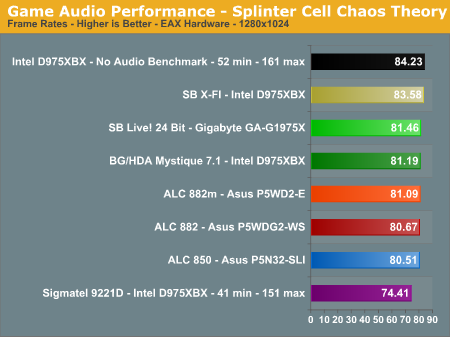
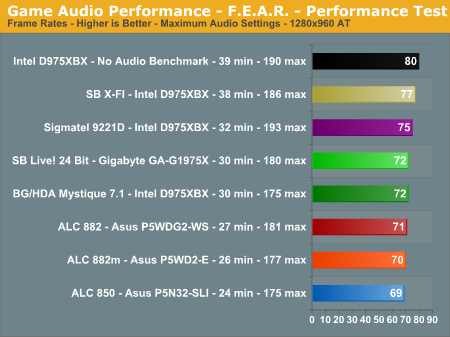
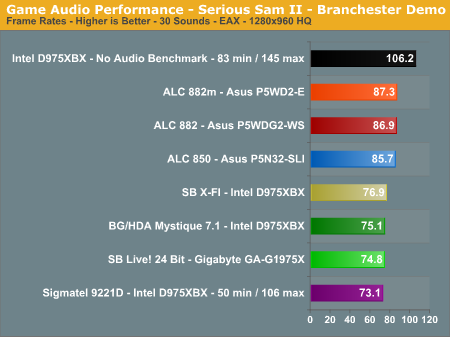
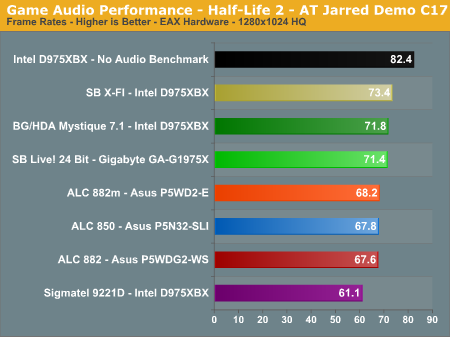
Obviously, if you are a serious gamer, then a dedicated sound card is still a requirement to ensure consistent frame rate averages across a wide variety of games. We noticed in our Battlefield 2, Serious Sam II, and Half Life 2 testing that the ALC882M solution would stutter in intensive scenes, creating frame rates in the low teens momentarily. We will be testing the Realtek R1.30 drivers in our next article to see if the minimal frame rates and stutter issues have been improved.
Originally published at https://www.anandtech.com/show/1932 (Wayback Machine).